A fall in a store, apartment building, parking area, or sidewalk can happen in seconds. But proving a Philadelphia premises liability claim may require looking well beyond the moment of the accident. A central question is often whether someone responsible for the property knew—or reasonably should have known—about the dangerous condition before the injury occurred.
Philadelphia premises liability prior complaints can be important when they show a recurring leak, broken surface, poor lighting, snow accumulation, elevator problem, or another condition that was reported before the accident. Eric A. Shore helps injured people understand how records, witnesses, and property-management practices may fit together. This article explains how prior complaints can support notice, who may possess useful evidence, why control of the location matters, and when legal assistance may be appropriate.
How Philadelphia Premises Liability Prior Complaints Can Prove Notice
A property owner is not automatically responsible for every accident. Generally, a premises claim requires examining issues such as the existence of a dangerous condition, whether the responsible party had actual or constructive notice, whether reasonable precautions were taken, and whether the condition caused the injury. The governing rules can depend on the facts and the location in Philadelphia, PA.
Actual notice and constructive notice
Actual notice may exist when an owner, employee, property manager, or contractor was directly told about a hazard or observed it. A tenant’s maintenance request, an employee’s report, or an incident entry may help show that someone received information before the accident.
Constructive notice is different. It generally concerns whether the condition lasted long enough, or occurred often enough, that a reasonable inspection or maintenance system should have discovered it. A single complaint may be useful, but a pattern of complaints, repeated repairs, or recurring conditions can provide stronger context.
What records may matter?
Potentially relevant Philadelphia property hazard notice evidence may include:
- Maintenance requests and tenant communications
- Inspection checklists and property-management records
- Work orders, repair invoices, and service-company records
- Employee reports, incident logs, and internal escalation records
- Prior claims or complaints concerning the same area or condition
- Surveillance footage showing the hazard, warnings, or cleanup efforts
These materials do not automatically establish liability. Their value may depend on timing, detail, reliability, and whether they concern the same hazard. They also may be held by several different parties. For a broader discussion, see the best evidence for a Philadelphia injury claim.
How Prior Complaints Can Reveal a Recurring Property Hazard
Prior complaints are most useful when they connect an earlier report to the condition involved in the accident. The connection may involve the same location, the same mechanism of injury, or a repeated maintenance problem. For example, multiple reports about water near a refrigeration unit may matter differently from a complaint about an unrelated spill in another aisle.
Employees, tenants, and visitors may hold important details
Employees may know whether a hazard was reported during a shift, whether warning signs were placed, or how often the condition required cleanup. Tenants may have submitted requests about a leaking ceiling, defective stairway, inadequate lighting, or repeated water intrusion. Other visitors may have noticed the condition before the injured person arrived.
Witnesses can also describe conversations with management, prior falls, delayed repairs, or a recurring pattern that is not obvious from one photograph. Preserving witness accounts after a Philadelphia accident may help preserve details before memories fade.
A grocery store illustrates how recurring-condition evidence can develop. Customer complaints, employee cleanup records, refrigeration repairs, and repeated reports of wet flooring may collectively provide context. The details of recurring spill and maintenance evidence in a Philadelphia grocery store may differ from those in an apartment or office building, but the basic evidentiary question is similar: what did the responsible parties know, and when?
Outdoor conditions may recur in predictable ways
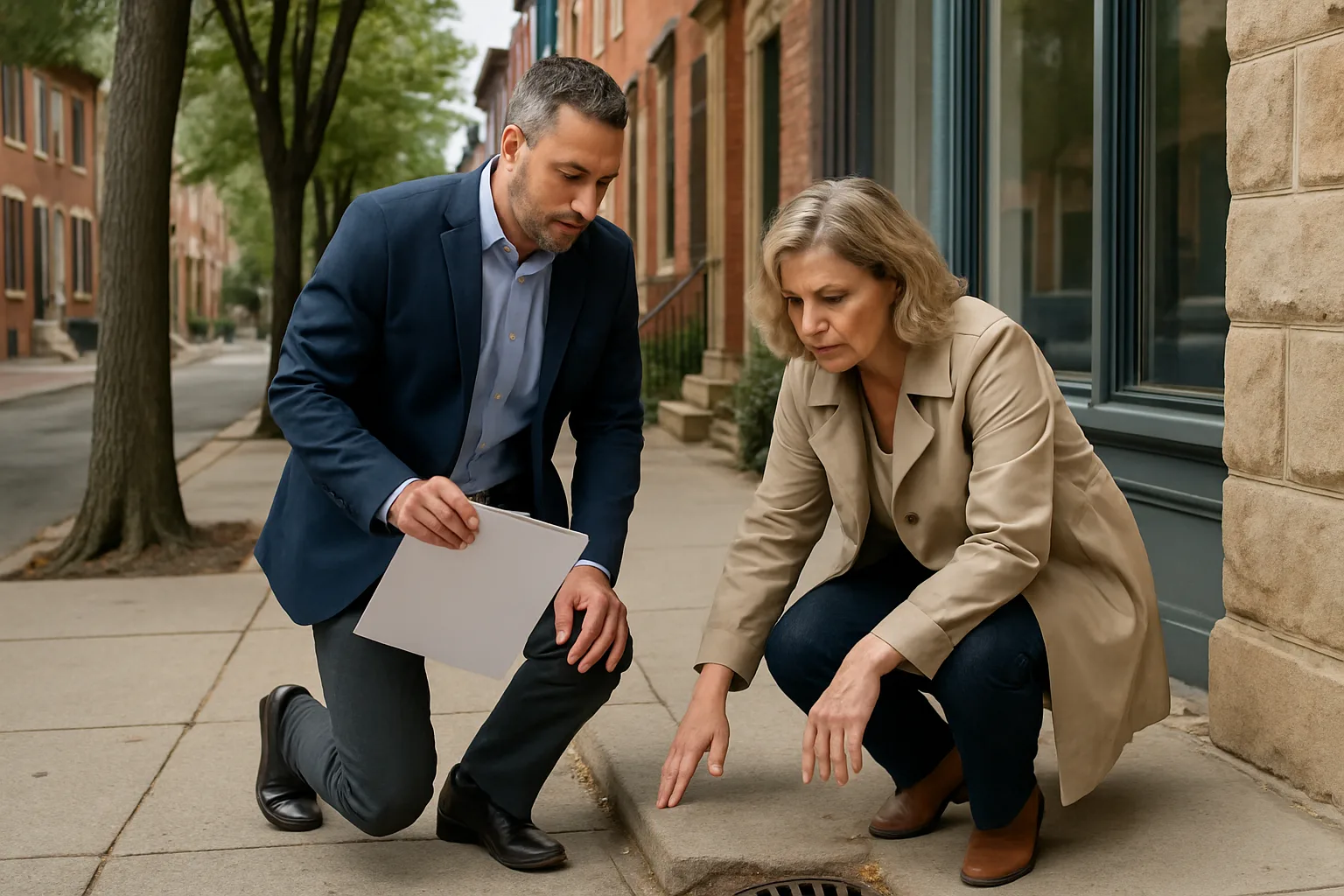
Notice evidence is not limited to indoor spills. Repeated snow or ice accumulation, poor drainage, potholes, broken paving, or an uneven transition may create recurring problems. Reports about the same drainage point or walkway can be relevant when evaluating how Philadelphia lawyers assess recurring snow and ice hazards. Weather, inspection practices, timing, and the identity of the responsible party remain important factual questions.
Who Controls the Records and Why Does That Matter?
Finding a prior complaint is only part of the analysis. An injured visitor may also need to determine who owned, possessed, operated, inspected, or maintained the area. A landlord, commercial tenant, property manager, snow contractor, elevator company, or municipality may have different responsibilities depending on the property and the applicable agreement or law.
For example, an elevator problem may generate service tickets held by a building owner, management company, or maintenance contractor. Reviewing Philadelphia elevator owner and maintenance responsibilities can help explain why identifying each participant matters. Similarly, determining who owned, controlled, and maintained a Philadelphia sidewalk may be necessary before evaluating which records or notice arguments apply.
Common evidence mistakes after a premises accident
People often focus only on photographing the exact spot. Photos can be valuable, but other steps may also matter. Depending on the circumstances, an injured visitor may want to preserve or identify:
- The precise location, route, lighting, weather, and surrounding conditions
- Names and contact information for witnesses, employees, or tenants
- Statements made about earlier complaints, repairs, warnings, or similar incidents
- The property owner, manager, tenant, maintenance company, or contractor
- Medical records and documentation connecting the injury to the event
A business or insurer may control records that are not publicly available. Records can also change through ordinary retention practices. Depending on the circumstances, an attorney may send preservation requests, seek relevant documents, compare work orders with complaint dates, and evaluate whether the available evidence supports notice and causation.
When should an injured visitor seek legal help?
A consultation may be particularly useful when the responsible party is unclear, the condition was allegedly recurring, surveillance may exist, or a business denies receiving prior complaints. A Philadelphia personal injury lawyer who can investigate prior complaints may evaluate potential defendants, preservation concerns, and the records needed to assess the claim. The decision to pursue a case depends on the facts, applicable law, and available evidence.
Frequently Asked Questions
Can one prior complaint prove a Philadelphia premises liability claim?
Not necessarily. One complaint may support an argument that a responsible party had notice, but its significance depends on what it reported, when it was made, who received it, and whether it involved the same condition. Other evidence—such as inspection records, work orders, photographs, witnesses, and incident logs—may be needed to connect the complaint to the accident and address other elements of a claim.
Are property owners required to give me maintenance records?
Not always. Records may be held by an owner, tenant, manager, contractor, or insurer, and access may depend on the stage and nature of a legal matter. An attorney may be able to evaluate appropriate information-gathering methods under Pennsylvania procedure. A reader should not assume that a refusal to provide records, by itself, proves that a hazard existed or that anyone was negligent.
Do prior complaints matter if the hazard was repaired before my fall?
They may still provide context, but the timing and nature of the repair are important. A completed repair could support an argument that the condition was known, while also raising questions about whether the repair addressed the actual problem. Records showing repeated repairs, temporary fixes, or later recurrence may be relevant. The facts must be evaluated carefully rather than inferred from a complaint alone.
Can prior complaints help with a Philadelphia sidewalk accident?
Potentially, but sidewalk claims can involve complicated questions about ownership, control, maintenance duties, notice, and municipal involvement. A complaint about a particular defect may be useful only if it can be tied to the location and condition involved. Because Pennsylvania and local rules may vary by property and claim type, a licensed attorney can explain how those issues may apply to a particular accident.
How Eric A. Shore Can Help
Eric A. Shore is dedicated to helping injured people examine the evidence behind Philadelphia premises claims. The firm can review the accident circumstances, identify potentially responsible parties, consider whether a hazard may have recurred, and assess the possible importance of maintenance requests, inspection records, work orders, incident logs, and witness information.
The team is committed to fighting for clients’ rights while recognizing that every claim depends on its own facts and applicable Pennsylvania law. If you were injured on property in Philadelphia, contact Eric A. Shore for a free consultation or case evaluation. The firm is ready to evaluate your situation and discuss your legal options.
The information in this article is for educational purposes only and does not constitute legal advice. Contact a qualified attorney licensed in Philadelphia, PA for advice specific to your situation.