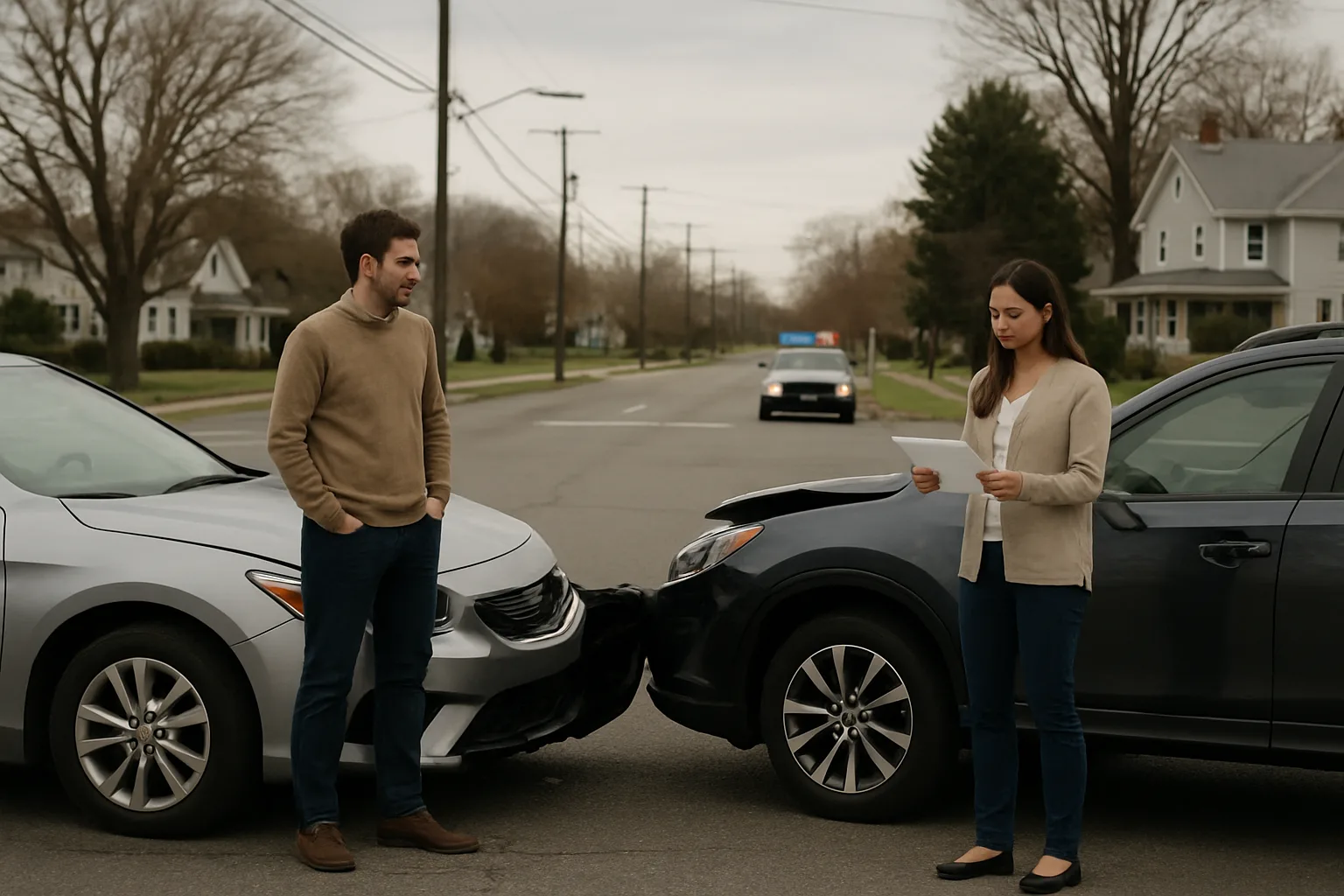
A collision is stressful enough without discovering that the other driver may have no liability insurance. If the driver is uninsured, underinsured, or leaves the scene, you may need to investigate several possible sources of coverage while preserving evidence that could otherwise disappear. A New Jersey uninsured driver accident claim is not automatically denied, but it also does not automatically produce compensation from a particular insurer. For a broader overview of documenting losses and pursuing options, review this New Jersey car accident lawyer resource.
Eric A. Shore can help readers understand the issues that often matter, including the police report, vehicle ownership, household policies, medical-payment benefits, uninsured or underinsured motorist coverage, and proof of the other vehicle. This article explains a step-by-step framework for reporting the collision, identifying possible insurance, preserving proof, and notifying insurers without making unsupported assumptions. Laws and policy terms can change, so New Jersey-specific legal guidance should be based on the facts of the particular crash.
What Should You Do First in a New Jersey Uninsured Driver Accident Claim?
The first priority is safety and emergency assistance. If anyone may be injured, contacting 911 can bring medical help and law enforcement to the scene. When it is safe, exchange identifying and vehicle information, photograph the surrounding roadway and vehicle damage, and look for witnesses. Do not confront another driver about insurance or fault.
Step 1: Report the crash and obtain the official record
A police report may identify the drivers, registered vehicles, location, witnesses, and insurance information reported at the scene. It may also note whether a driver could not provide proof of insurance. A police report is important, but it is not the only evidence of fault or coverage. Officers may not determine every issue that later matters to an insurance claim.
Readers can use this New Jersey crash report guide to understand how to obtain and review the record. Check it for errors or missing information, and preserve related photographs, witness details, tow records, and communications. In a hit-and-run, even partial information—such as a vehicle description, location, direction of travel, or nearby camera—may help identify the vehicle.
Step 2: Confirm whether the driver was truly uninsured
A driver’s statement at the scene may be incomplete or mistaken. Coverage could have lapsed, belonged to another vehicle, or involved a different policyholder. The police report may contain useful information, but an insurer or attorney may need to investigate policy status, vehicle ownership, and available household coverage. Avoid treating an initial statement as the final answer.
Which Insurance Policies Might Apply After an Uninsured Crash?
A New Jersey uninsured motorist claim may involve your own automobile policy rather than the other driver’s liability policy. Depending on the policy and circumstances, uninsured motorist coverage may address certain bodily injury losses caused by an uninsured or unidentified driver. Underinsured motorist coverage may become relevant when the responsible driver has insurance, but the available limits are insufficient for the claimed injuries. Policy language, selected limits, exclusions, notice requirements, and facts can control.
Step 3: Identify personal and household insurance benefits
Locate every potentially relevant policy, including your own policy and policies issued to household members. Do not assume that a person must be the named insured on a policy before it can matter; eligibility depends on the policy terms and the facts. An attorney may also examine whether the vehicle was owned, borrowed, leased, or used with permission.
Possible first-party benefits can include medical-payment arrangements or personal injury protection benefits, depending on the applicable New Jersey policy and circumstances. These benefits may help address medical expenses initially, but an insurer paying a bill does not necessarily mean it has accepted responsibility for the entire injury claim. This discussion of why your own insurance may pay medical bills after a New Jersey crash explains that distinction.
Step 4: Treat a hit-and-run as an evidence problem as well as an insurance problem
When the other vehicle cannot be identified, potential uninsured-motorist coverage may require proof that a qualifying collision occurred and that an unidentified vehicle caused or contributed to it. Requirements vary by policy and circumstances. Useful proof may include prompt police reporting, independent witnesses, photographs, vehicle damage patterns, medical records, roadway evidence, and nearby surveillance.
There may be deadlines or notice provisions under an insurance policy. Delayed reporting can create disputes, even when the delay was understandable. A careful review of the applicable policy and facts can help determine what information must be provided and when.
How Can You Preserve Evidence and Communicate With Insurers?
Insurance questions are only one part of a New Jersey uninsured driver accident claim. The condition of the vehicles, roadway, and nearby property can change quickly. Medical records and wage-loss documentation may also become harder to organize if they are not collected consistently.
Step 5: Preserve proof before it disappears
Consider organizing the following materials in one secure file:
- Photographs or video of the vehicles, roadway, traffic controls, lighting, and visible damage.
- The police report, exchange-of-information materials, tow records, and repair estimates.
- Names and contact information for witnesses, passengers, responding officers, and businesses with possible camera footage.
- Medical records, bills, appointment information, and documentation of work missed because of the injuries.
- Insurance policies, declarations pages, claim numbers, letters, emails, and notes of telephone conversations.
This clear guide to organizing a car accident claim offers additional context for arranging collision, medical, wage-loss, and communication records. If surveillance may exist, preserving the location and approximate time can be important because businesses may routinely overwrite recordings.
Step 6: Notify insurers carefully
Policyholders generally should review their policies for prompt-notice requirements and notify potentially relevant insurers. Notification is different from agreeing that an insurer is responsible for every loss. When speaking with an adjuster, avoid guessing about speed, distance, fault, the extent of injuries, or whether another policy applies. Give accurate information and correct mistakes when noticed.
Before agreeing to a recorded interview, understand who is requesting it, what issues it covers, and whether you have had an opportunity to obtain legal guidance. This article about whether to give an insurer a recorded statement discusses why a recorded statement can require care when coverage and fault remain uncertain.
A lawyer evaluating the claim may review policy language, the accident report, physical evidence, medical documentation, witness accounts, and insurer communications. That review does not guarantee coverage or a particular result. It can, however, help clarify which questions remain open and what evidence may support the claim.
Frequently Asked Questions
Can I make an NJ uninsured motorist claim if the other driver fled?
Possibly, depending on the policy, the facts, and New Jersey requirements that may apply to an unidentified-vehicle claim. Promptly reporting the collision and preserving independent evidence can be important. A driver description alone may not resolve the claim. An attorney can review the policy, police report, vehicle damage, witness information, and medical documentation to assess whether uninsured-motorist coverage may be available.
What if the other driver has some insurance but not enough?
Underinsured motorist coverage in New Jersey may be relevant when the responsible driver’s liability limits do not fully address the claimed losses. The analysis can involve both policies, available limits, the nature of the injuries, damages, and policy terms. Do not assume that the other driver’s limits are adequate or inadequate until the applicable coverage information has been confirmed.
Does a police report prove who caused the crash?
No. A police report can preserve valuable information about the scene, drivers, witnesses, and reported insurance status, but it may not resolve every question of fault or coverage. Other evidence can include photographs, vehicle damage, witness accounts, traffic footage, physical roadway evidence, and medical records. In New Jersey, the weight of each item depends on the circumstances.
Can I still have a claim if I was partly at fault?
Potentially, but the effect of shared fault depends on the facts, applicable New Jersey law, and the insurance policy involved. Fault is not determined solely by whether the other driver lacked insurance. Statements, photographs, witness evidence, roadway conditions, and vehicle damage may all matter. A licensed attorney can explain how comparative-fault issues may affect a particular claim.
How Eric A. Shore Can Help
Eric A. Shore is dedicated to helping injured people examine the evidence and insurance issues that can arise after New Jersey crashes. The firm is committed to fighting for clients’ rights while recognizing that every uninsured, underinsured, and hit-and-run collision has different policy language and proof requirements.
A case evaluation may include reviewing the crash report, identifying potentially applicable household policies, organizing medical and wage-loss records, preserving vehicle or surveillance evidence, and assessing communications with insurers. If you are uncertain about the next step in a New Jersey uninsured driver accident claim, contact Eric A. Shore for a free consultation or case evaluation to discuss your circumstances and legal options.
The information in this article is for educational purposes only and does not constitute legal advice. Contact a qualified attorney licensed in New Jersey for advice specific to your situation.