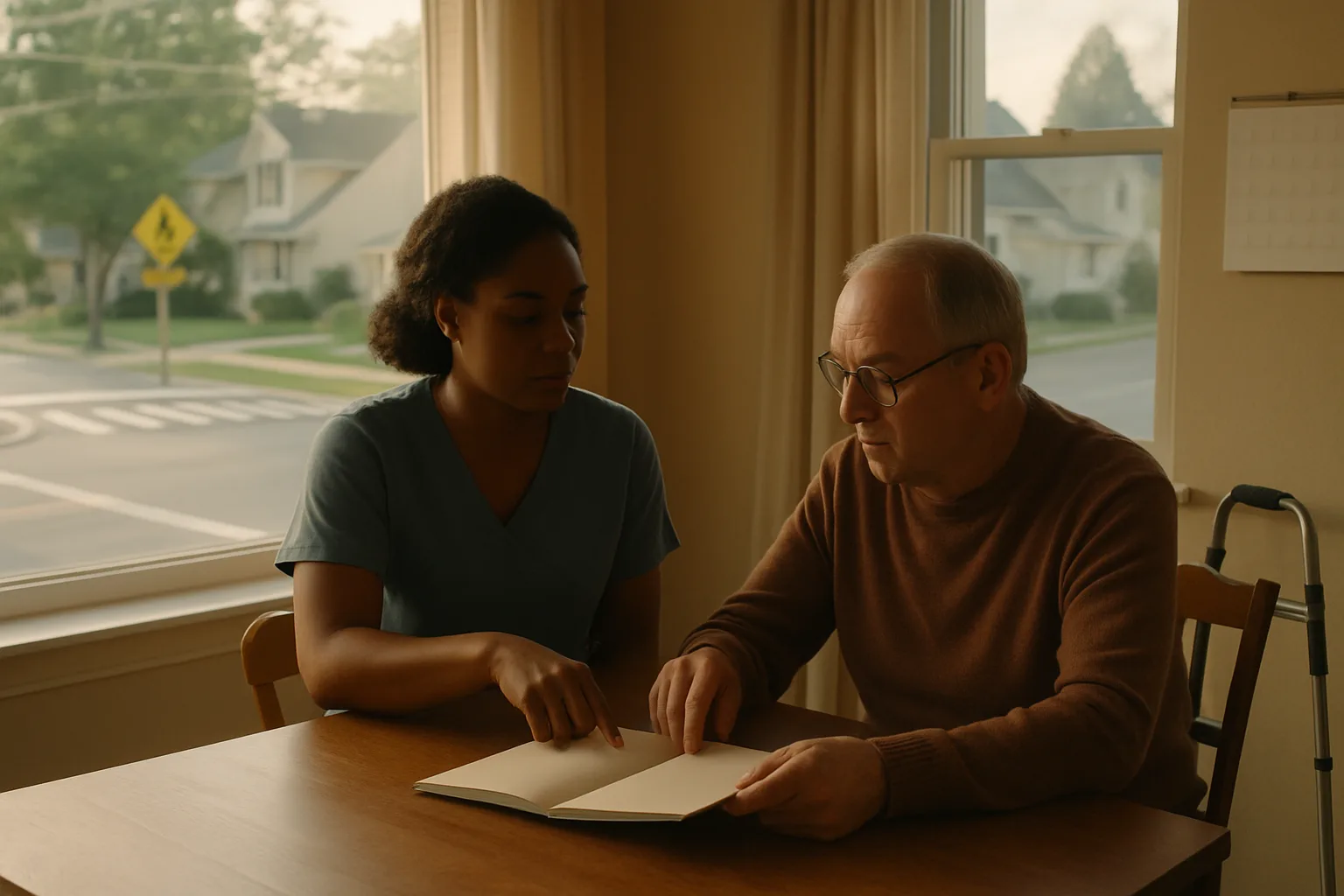
A pedestrian accident can change ordinary routines in ways that are easy to miss during a short medical appointment. A spouse may notice that a person needs help getting dressed, an adult child may see repeated problems with meals or medications, and a home-health aide may observe unsafe transfers or the need for frequent rest. This is why caregiver evidence for an SSDI claim after a New Jersey accident can be valuable. For practical background, review the steps to take after a New Jersey pedestrian accident and consider how the person’s functioning changed from before the crash.
The Social Security Administration evaluates functional limitations, not only the fact that an accident occurred or the diagnosis listed in a medical chart. Eric A. Shore can help families understand how day-to-day observations may fit into an SSDI claim without replacing medical evidence. This guide explains what caregivers can record, how to make observations specific, and how to organize information for an application or later appeal.
What Caregivers Should Document for an SSDI Claim After a NJ Accident
The most useful caregiver record is factual, dated, and based on personal observation. Instead of writing that someone is unable to function, describe what happened, when it happened, how often it occurred, and what assistance was needed. A record should also distinguish between limitations that existed before the accident and changes that appeared afterward.
Start with the person’s pre-accident baseline
A baseline gives the reader a fair comparison. Caregivers can describe what the person routinely did before the pedestrian accident, such as working, driving, shopping, preparing meals, managing medications, climbing stairs, or caring for children. Avoid overstating the person’s prior abilities. The goal is to explain the ordinary routine as accurately as possible.
After the accident, note changes such as:
- Needing another person nearby while bathing, walking, or using stairs.
- Requiring help with socks, shoes, cooking, transportation, or household chores.
- Stopping an activity because of pain, dizziness, weakness, fatigue, or difficulty concentrating.
- Taking longer to complete a familiar task or forgetting steps that were previously routine.
- Avoiding activities because of balance problems, fear of falling, or other safety concerns.
Caregivers should begin a dated record as soon as reasonably possible. The record can connect observations to discharge instructions, follow-up visits, therapy, medication changes, or periods of increased symptoms. It should not attempt to diagnose a condition or predict whether the claim will be approved.

Record frequency, duration, and assistance
A single difficult day may not show the full pattern. Note whether a limitation occurs once, several times a week, or most days. When possible, record how long the person can stand, walk, sit, sleep, focus, or perform a task before needing to stop. Also note the length and frequency of rest breaks.
For example, a useful entry might explain that the person attempted to prepare a simple meal, stood for approximately ten minutes, sat down twice, and needed another person to finish because of increasing symptoms. A conclusion such as severe limitations are present is less informative than a specific description of what the caregiver actually observed.
Recording Pain, Fatigue, Failed Tasks, and Safety Concerns
Clinical records are important, but appointments may not capture what happens during an entire day at home. Caregiver evidence for an SSDI claim can supplement those records by showing how symptoms affect sustained activity. This is especially relevant when a person appears composed during a brief visit but cannot repeat the same activity reliably at home.
Caregivers may document observations involving:
- Mobility: How far the person walks, whether a cane or another aid is used, how often the person stops, and whether stairs require supervision.
- Stamina: How long an activity continues before fatigue requires rest, and whether the person can resume the task afterward.
- Concentration: Missed steps, unfinished tasks, difficulty following instructions, or reminders needed for ordinary activities.
- Sleep and recovery: Trouble sleeping, daytime exhaustion, or the need to rest after basic personal care.
- Safety: Unsteady movement, leaving a stove unattended, forgetting to lock a door, difficulty judging traffic, or needing someone present during routine activities.
Caregivers should avoid assuming that every difficulty is caused by the accident. Instead, identify the observed event and, if known, what the person reported at the time. For example, a log could state that the person stopped folding laundry after several minutes, sat down, and reported increased discomfort. It may also note whether the task was completed later or remained unfinished.
For additional context, see how persistent pain can affect stamina and concentration after a New Jersey pedestrian crash. The same documentation principles can apply to headaches, orthopedic limitations, medication side effects, or cognitive difficulties, provided the caregiver records observations rather than offering a medical opinion.
What makes a third-party statement useful?
A third-party statement for SSDI in New Jersey is generally most helpful when it explains the caregiver’s relationship to the claimant, how often the caregiver has contact, and what the caregiver personally sees. Specific examples are usually more useful than broad labels. A statement should address changes over time, good and bad days, assistance provided, and whether the person can perform an activity repeatedly.
The strongest evidence for chronic pain disability claims often combines medical documentation with concrete descriptions of functional restrictions. Caregiver records should remain truthful, consistent, and limited to facts within the writer’s knowledge.
Avoiding Common Problems With Family Evidence for Social Security Disability
Families often want to help but may unintentionally make a record less useful. A caregiver should not copy medical terminology that they do not understand, estimate limitations they have not observed, or describe every difficult day as identical. The record should acknowledge variation and explain the circumstances surrounding each observation.
Common problems include:
- Using conclusions instead of examples: Saying the claimant is disabled does not explain what the claimant can or cannot do.
- Leaving out dates: Undated memories can be difficult to place in the overall claim history.
- Ignoring assistance: Document whether help involved reminders, physical support, transportation, supervision, meal preparation, or task completion.
- Failing to describe repetition: Completing an activity once does not necessarily show the ability to perform it throughout a workday or workweek.
- Overlooking the baseline: Without a pre-accident comparison, it may be unclear what changed.
- Relying only on a symptom score: Pain or fatigue descriptions should be connected to activity, duration, recovery time, and observable effects.
The Social Security Administration may ask the claimant or another person to complete function-related forms, including an Adult Function Report or an Adult Third-Party Function Report. Forms and evidence should be completed accurately and consistently with the medical record. Because SSDI is administered through a federal agency while the underlying accident occurred in New Jersey, caregivers should keep accident records, medical records, therapy information, and daily-function observations organized separately but cross-referenced by date.
If an initial claim is denied, a caregiver’s dated observations may still be relevant. They can help identify changes, clarify functional limits, and show what the caregiver personally observed during the period at issue. Read about what to do after Social Security Disability denies a claim for general information about the appeals process. Deadlines and procedural requirements can matter, so an attorney may review the specific notice and circumstances.
Frequently Asked Questions
Can a spouse or parent provide evidence for an SSDI claim after a New Jersey accident?
Yes. A spouse, parent, adult child, friend, or home-health aide may be able to describe observed changes in daily functioning. The value of the statement generally depends on the writer’s firsthand knowledge, frequency of contact, and level of detail. The caregiver should explain the relationship, describe the person’s pre-accident routine, and provide dated examples of limitations, assistance, fatigue, supervision, or safety concerns without offering a medical diagnosis.
What should a caregiver include in an Adult Third-Party Function Report?
The caregiver should answer based on personal observations and follow the form’s instructions. Useful information may include changes in personal care, household tasks, mobility, concentration, social activities, sleep, transportation, and the need for reminders or supervision. Specific examples are generally more informative than general conclusions. If the caregiver does not know an answer, it is better to say so than to guess or repeat information from another source.
Should caregivers document good days as well as difficult days?
Yes. A balanced record can explain how often good and difficult days occur, what the person can do on each type of day, and whether an activity can be repeated. Recording variation does not automatically undermine a claim. It may provide a more accurate picture of the person’s functioning. Caregivers should describe the circumstances, duration, assistance, and recovery time rather than trying to present a uniformly favorable account.
Can caregiver evidence help if Social Security denies the initial SSDI application?
It may. Dated caregiver observations can help clarify functional limits during reconsideration or a later appeal, particularly when they address a specific period and remain consistent with other evidence. They do not replace medical records or the applicable Social Security requirements. A caregiver should preserve original notes and identify when each observation was made. An attorney licensed to advise on the matter can discuss how the evidence may fit the procedural stage.
How Eric A. Shore Can Help
Eric A. Shore is dedicated to helping people and families understand the evidence that may matter in a Social Security Disability claim. The firm can review caregiver logs, function-related information, medical documentation, and the claimant’s work and daily-activity history to identify questions that may require clarification. A careful review can also help distinguish firsthand observations from assumptions and organize information for the appropriate stage of the claim.
If you are documenting changes after a New Jersey pedestrian accident, contact Eric A. Shore for a free consultation or case evaluation. The firm is committed to fighting for claimants’ rights while helping families explore their legal options.
The information in this article is for educational purposes only and does not constitute legal advice. Contact a qualified attorney licensed in New Jersey for advice specific to your situation. Laws and procedures vary by location and may have changed since publication.