
Written by Eric A. Shore, personal injury, disability, and employment law attorney, practicing since 1994, with offices in Pennsylvania, New Jersey, and Florida.
Yes. Mental health conditions can qualify for Social Security Disability Insurance or Supplemental Security Income if they keep you from working full time and are supported by medical evidence. But SSA does not approve a disability claim just because the diagnosis sounds serious.
I’m Eric Shore, founder of the Law Offices of Eric A. Shore, and I have been helping disabled people with SSDI and SSI claims since 1994.
Here is what people often do not realize. In a mental health disability claim, the question is not just whether you have depression, anxiety, PTSD, bipolar disorder, schizophrenia, or another condition. The question is what the condition does to your ability to function in a real work setting, day after day.
|
Question |
Short Answer |
|
Can mental health conditions qualify? |
Yes, if they prevent full-time work and meet SSA’s rules. |
|
Is a diagnosis enough? |
No. SSA wants medical evidence and proof of work-related limits. |
|
What evidence matters? |
Treatment records, medication history, therapy notes, hospital records, side effects, and statements about daily functioning. |
|
What if I was denied? |
A denial is not the end. Most people have 60 days to appeal after receiving the notice. |
|
What is the biggest mistake? |
Filing an appeal that does not explain why the person cannot work reliably. |
Key Takeaways
- Mental health conditions can qualify for SSDI or SSI, but the claim usually depends on functional limits, not just the name of the diagnosis.
- SSA may evaluate depression, anxiety, bipolar disorder, PTSD, schizophrenia, obsessive-compulsive disorder, and other mental disorders under the adult mental disorder listings.
- A denial is not the end of the case. In most cases, you have 60 days after receiving the denial notice to appeal.
- Medical records matter, but they need to show more than office visits and diagnosis codes. They need to explain symptoms, treatment, medication side effects, bad days, and work-related limits.
- One of the most common mistakes is assuming SSA understands your condition because your doctor knows you are struggling.
- If your records make you sound more stable than you really are, that can become a serious problem in the claim.
Can Mental Health Conditions Qualify for SSDI or SSI?
Yes. Mental health conditions can qualify for SSDI or SSI if they prevent you from working full time and meet SSA’s disability rules.
SSA looks at whether your condition is medically documented and whether it causes serious limits in your ability to work. That includes limits with concentration, attendance, pace, social interaction, stress tolerance, decision-making, and the ability to manage ordinary workplace demands.
People sometimes tell me, “I have the diagnosis. Shouldn’t that be enough?”
No. And that is where many claims go wrong.
A diagnosis tells SSA what condition you have. It does not always tell SSA what happens when you try to work eight hours a day, five days a week. It does not explain whether you can leave home consistently, handle criticism from a supervisor, stay on task, deal with coworkers, or get through a full workday without symptoms taking over.
That is the evidence SSA needs to see.
What Mental Health Conditions Does SSA Consider?
SSA can consider many mental health conditions, including depressive disorders, bipolar disorder, anxiety disorders, obsessive-compulsive disorder, trauma-related disorders, schizophrenia spectrum disorders, personality disorders, neurocognitive disorders, autism spectrum disorder, and other serious mental disorders.
The condition matters, but the work limits matter more.
Two people can have the same diagnosis and very different disability claims. One person with anxiety may avoid crowded places but still function at work. Another person may have panic attacks before phone calls, appointments, meetings, or job interviews. One person with depression may struggle quietly but keep a schedule. Another may spend days unable to shower, cook, leave home, or answer messages.
SSA should be looking at how the condition affects your ability to function on a regular and continuing basis.
That is the part people often leave out.
Why Are Mental Health Disability Claims So Often Denied?
Mental health disability claims are often denied because the evidence does not explain function. The file may show a diagnosis, medication, and therapy visits, but it may not clearly show why the person cannot work.
Here is the kind of problem I have seen too many times. Someone applies for disability because of depression, anxiety, PTSD, or bipolar disorder. Their medical records confirm the diagnosis. But the records also say things like “stable,” “cooperative,” “normal appearance,” or “doing okay.” SSA reads those notes and decides the person can work.
The problem is that “stable” in a treatment note does not always mean able to work.
It may mean the person was not in crisis that day. It may mean medication helped a little. It may mean the person was polite during a 20-minute appointment. None of that proves the person can handle full-time work pressure, regular attendance, supervision, deadlines, coworkers, customers, and stress.
That is why the file has to tell the whole story.
What Does SSA Really Want to Know?
SSA wants to know what you can still do despite your condition. In a mental health claim, that usually means looking at your ability to function in basic areas of work.
SSA may look at whether you can understand and remember information, concentrate on tasks, interact with other people, manage yourself, and adapt to changes or pressure. These are not abstract questions. They show up in real life.
Can you remember instructions?
Can you finish what you start?
Can you stay focused without drifting off, shutting down, or needing reminders?
Can you show up when scheduled?
Can you deal with supervisors?
Can you handle criticism without symptoms getting worse?
Can you make simple decisions?
Can you manage stress without missing work or leaving early?
Those questions matter because work is not just showing up once. Work requires consistency.
People don’t realize this: a person may be able to attend one appointment and still be unable to keep a full-time job. A person may be able to speak clearly for a short exam and still be unable to function reliably under workplace stress.
That difference needs to be explained in the records.
What Evidence Helps a Mental Health Disability Claim?
A strong mental health disability claim uses evidence that shows symptoms over time and connects those symptoms to work-related limits.
Helpful evidence may include:
- Psychiatrist records.
- Therapy or counseling notes.
- Medication history.
- Medication side effects.
- Hospitalizations or crisis treatment.
- Intensive outpatient or partial hospitalization records.
- Emergency room visits related to mental health symptoms.
- Records of missed appointments and the reasons they were missed.
- Statements from family members, friends, former coworkers, or supervisors.
- Records showing failed work attempts.
- Notes about panic attacks, isolation, mood swings, crying spells, anger, memory problems, or trouble concentrating.
Do not assume SSA understands what your bad days look like.
If you have panic attacks before leaving the house, that should be documented. If medication makes you sleep most of the day, that should be documented. If stress causes symptoms to spiral for hours or days, that should be documented. If you miss appointments because of anxiety or depression, do not hide that. Explain it.
The goal is not to exaggerate. The goal is to make the record accurate.
What If Your Medical Records Make You Sound Better Than You Are?
This is one of the most common problems in mental health disability cases.
Many people underreport their symptoms. They tell a doctor, “I’m okay,” because they are embarrassed, tired, ashamed, or trying to get through the appointment. Then SSA reads the note and treats that as evidence that things are not that serious.
If you are not okay, do not say you are okay just to end the conversation.
Be honest with your providers. Tell them what is really happening. That includes the things that may feel uncomfortable to talk about, such as not showering, staying in bed, avoiding people, missing appointments, losing track of time, forgetting tasks, having panic attacks, crying often, feeling unsafe, or being unable to handle basic responsibilities.
A treatment note that says “patient reports ongoing panic attacks three to four times per week and avoids leaving home” is very different from a note that says “patient doing okay.”
Those details can matter.
What If SSA Sends You to a Mental Health Exam?
SSA may send you to a consultative exam when it believes there is not enough evidence in the file. For a mental health claim, this is usually a psychological exam.
You should attend the exam. You should be honest. You should not perform for the examiner, and you should not treat the exam like therapy.
The examiner may only see you once. That short appointment may not show what happens to you during a normal week. It may not show what happens after stress. It may not show the days you cannot leave home, answer calls, or finish basic tasks.
So explain your symptoms clearly.
Talk about how often symptoms happen, what triggers them, how long they last, what medication does to you, what a bad day looks like, and what happens when you are under pressure.
Here is the mistake. Some people try very hard to look fine during the exam because they are embarrassed. Then the report says they were cooperative, made eye contact, answered questions, and appeared normal.
That can hurt the claim.
You do not need to act. You need to be accurate.
Can You Get Disability If You Have Good Days and Bad Days?
Yes, but the pattern has to be explained.
Good days do not automatically mean you can work. Many mental health conditions come and go in waves. Symptoms may be worse under stress, around people, after poor sleep, during medication changes, or when old trauma is triggered.
The issue is not whether you can function for one good afternoon. The issue is whether you can work consistently.
If you have two good days and four bad days in a week, SSA needs to understand that. If you can go to an appointment but then spend the rest of the day in bed, SSA needs to understand that. If you can handle a short conversation but cannot handle supervisors, deadlines, or conflict, SSA needs to understand that too.
In disability claims, reliability matters.
A person who misses too many days, needs too many breaks, cannot stay on task, or cannot handle ordinary work pressure may not be able to sustain full-time work, even if that person has occasional good days.
What If You Tried to Work and Could Not Keep the Job?
Failed work attempts can be important.
Sometimes the strongest evidence is not just what a doctor writes. It is what happened when you tried to work.
Did you miss too many days?
Did panic attacks cause you to leave early?
Did you have trouble dealing with supervisors or coworkers?
Did you forget tasks or fall behind?
Did stress make your symptoms worse?
Did you lose the job because of attendance, performance, conflict, or inability to keep up?
Do not leave that history out. SSA needs to understand what happens when you try to work in the real world.
A failed work attempt can help explain why your condition is not just uncomfortable, but work-preventing.
What Should You Do If Your Mental Health Disability Claim Was Denied?
If your SSDI or SSI claim was denied, look at the date on the denial letter immediately. In most cases, you have 60 days after receiving the notice to appeal.
A denial does not mean SSA is right. It also does not mean your case is over.
Many strong disability claims are denied at the first stage. Sometimes SSA does not have enough records. Sometimes the records are too thin. Sometimes the decision focuses on a few normal findings and ignores the bigger pattern. Sometimes the file never clearly explains why the person cannot work reliably.
The appeal is your chance to fix those problems.
But do not file the same weak evidence again and expect a different result. The appeal should answer the reason for the denial with better evidence and a clearer explanation of your limits.
What Should Go Into an Appeal?
A strong appeal does more than say, “I disagree.”
Depending on the case, an appeal may include updated medical records, therapy notes, medication changes, side effects, hospital records, statements from treating providers, third-party statements, work history details, failed work attempt evidence, and a written explanation of how symptoms affect your ability to work.
If SSA says your condition is not severe enough, the appeal should explain the symptoms and limitations more clearly.
If SSA says you can do simple work, the appeal should address attendance, pace, concentration, stress tolerance, social interaction, and whether you can stay on task for a full workday.
If SSA relies on a short exam, the appeal should explain why that exam did not capture your real functioning over time.
The goal is to build the record around function. Not just diagnosis. Function.
What If You Stopped Treatment?
Treatment gaps can create problems, but they do not always mean the claim is weak.
People stop mental health treatment for many reasons. They may lose insurance. They may be unable to afford appointments. They may have transportation problems. They may have symptoms that make it hard to leave home, answer calls, or keep appointments. They may have had a bad experience with a provider. They may feel ashamed or hopeless.
Do not ignore the gap. Explain it.
SSA may look at missed appointments or periods without treatment and assume your condition improved. If that is not true, the record should say why treatment stopped and what was happening during that period.
Should You Appeal or Start Over?
In many cases, if you are still within the appeal deadline, you should strongly consider appealing instead of starting over.
Starting a new application can sometimes risk losing benefits tied to the earlier filing date. That does not mean appealing is always the right answer in every situation, but you should not let the deadline pass while trying to decide.
If you were denied, find out:
- When the denial was issued.
- When you received it.
- What deadline applies.
- Why SSA denied the claim.
- What evidence was missing.
- Whether new records or statements can strengthen the appeal.
Do not guess your way through that decision.
FAQ
Can I get disability for anxiety or depression?
Yes. Anxiety and depression can qualify for SSDI or SSI if the condition prevents full-time work and is supported by medical evidence. The claim needs to show how symptoms affect your ability to function, not just that you have the diagnosis.
Is PTSD considered for Social Security Disability?
Yes. SSA can consider PTSD and other trauma-related disorders. The evidence should explain symptoms such as panic, flashbacks, avoidance, sleep problems, anger, isolation, trouble concentrating, or difficulty handling stress.
What if I can act normal at appointments?
That does not automatically mean you can work. Many people can hold themselves together for a short appointment but cannot function consistently in a job. Your records should explain what happens before, during, and after stressful situations.
What if my family does not believe me?
That happens more than people think. SSA looks at medical evidence and functional limits. Support from family can help, but disbelief from relatives does not decide the claim.
Can I get disability if I have good days and bad days?
Yes, but the records need to explain the pattern. SSA needs to understand whether your bad days, missed days, symptoms, and limits would keep you from working consistently.
What if I stopped treatment because I could not afford it?
Be honest about why treatment stopped. Lack of insurance, cost, transportation problems, trouble leaving home, or mental health symptoms themselves may explain gaps in care.
Should I appeal or start over?
Usually, if you are still within the deadline, you should look closely at appealing first. Starting over can risk losing benefits connected to the earlier filing date.
What is the biggest mistake in a mental health disability appeal?
The biggest mistake is filing an appeal that repeats the diagnosis but does not explain why the person cannot work reliably. SSA needs evidence of functional limits.
Talk to Someone Before You Give Up
If your SSDI or SSI claim was denied because of a mental health condition, do not assume the denial is the final word.
A denial often means the file needs to be strengthened. It may need better records, clearer explanations, updated treatment notes, statements from people who know your daily struggles, or a stronger response to SSA’s reasoning.
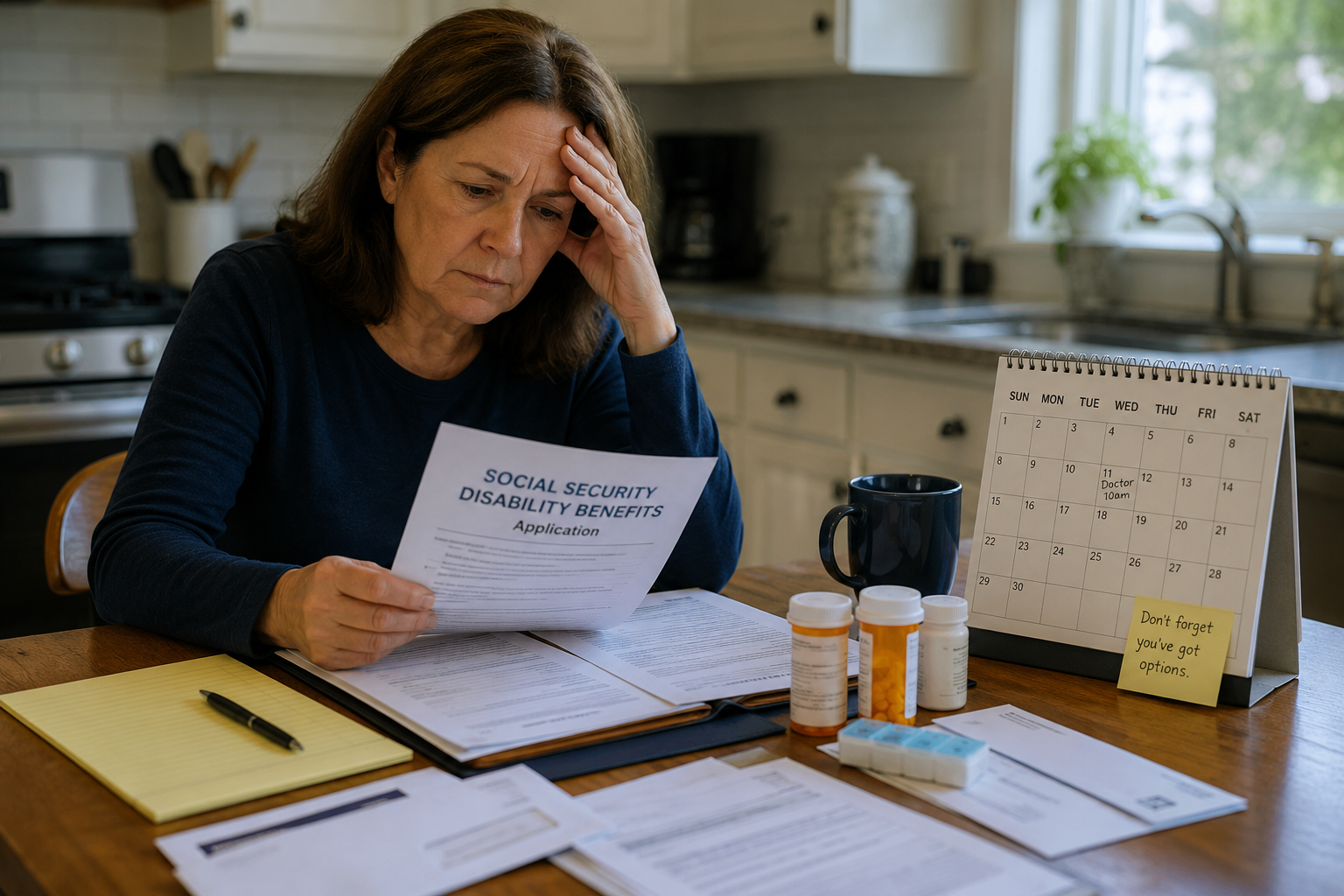
If your denial letter is sitting on your kitchen table right now, do not wait until the deadline is almost here. Every week that passes is a week you could have spent building the evidence that may decide your claim.
The Law Offices of Eric A. Shore helps disabled people across the United States with SSDI and SSI claims. Call 1-800-CANT-WORK for a free consultation. You do not have to guess your way through a process that can affect your income, your stability, and your ability to move forward.
Eric A. Shore
Law Offices of Eric A. Shore
1-800-CANT-WORK | 1800cantwork.com
Philadelphia, PA | Drexel Hill, PA | Cherry Hill, NJ | Atlantic City, NJ | Fort Lauderdale, FL
Free consultation. No fee unless we win.
Eric A. Shore has been licensed to practice law since 1994. He founded the Law Offices of Eric A. Shore in 1999. The firm handles personal injury, SSDI and SSI, and long-term disability under ERISA. It also handles workers’ compensation and employment law. Offices are located in Philadelphia, Drexel Hill, Cherry Hill, Atlantic City, and Fort Lauderdale. Call 1-800-CANT-WORK or visit 1800cantwork.com.

