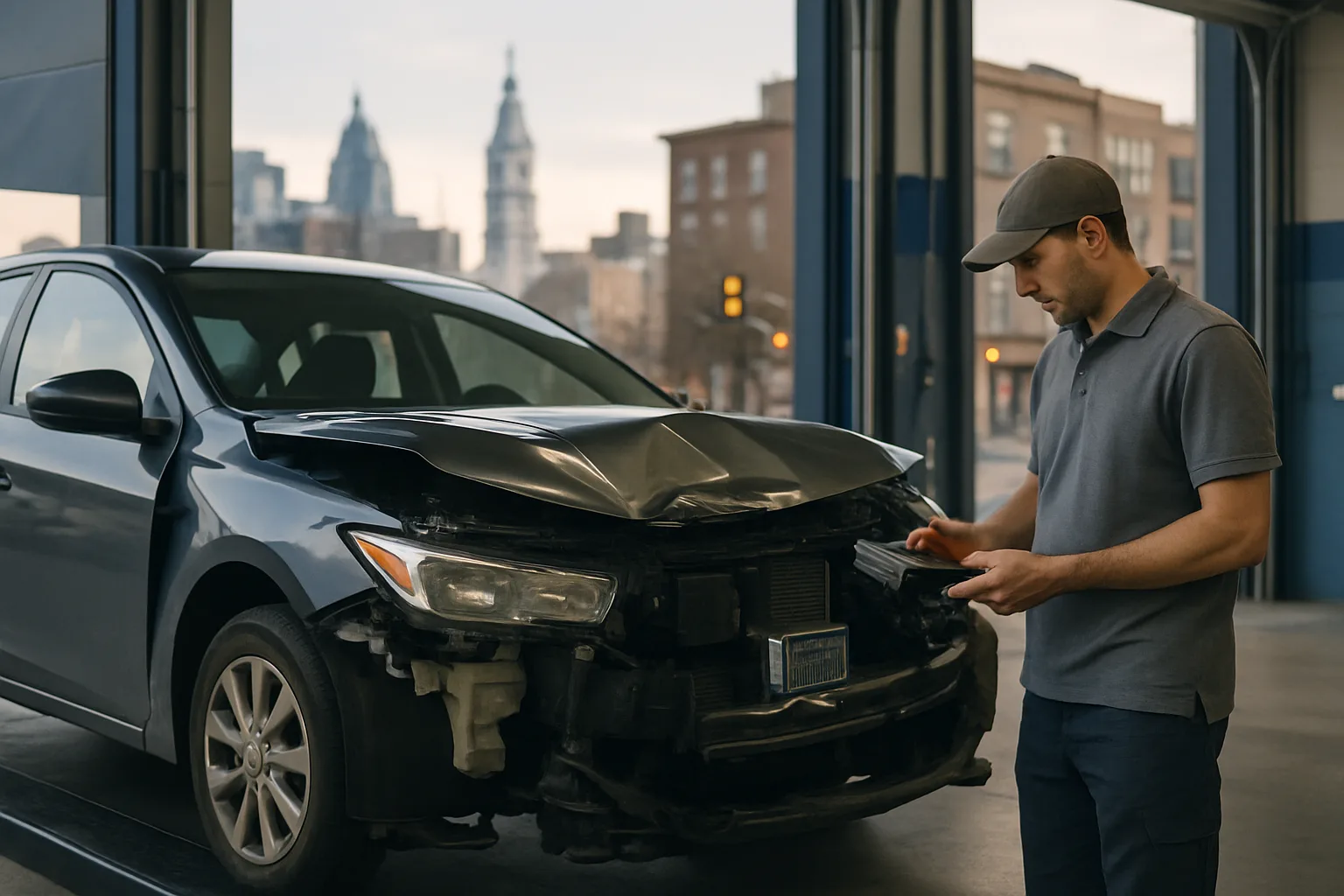
A crash can leave more than visible damage behind. In some passenger vehicles, an event data recorder (EDR) may preserve a short snapshot of what happened immediately before and during a qualifying collision. That information can make a Philadelphia event data recorder accident claim easier to investigate, but it is not a complete reconstruction of every moment on the road.
If a damaged vehicle is repaired, sold, salvaged, or dismantled before preservation is discussed, potentially useful evidence may become harder or impossible to retrieve. Philadelphia car accident lawyers can help an injured person understand preservation concerns before authorizing work or surrendering control of the vehicle. Eric A. Shore approaches this issue as part of the larger evidence picture, not as a substitute for witness testimony, photographs, medical records, or roadway investigation.
This article explains what an EDR may record, how technicians may retrieve and interpret the information, what the data cannot establish by itself, and why timing matters after a Philadelphia, PA collision.
How Can a Philadelphia Event Data Recorder Accident Claim Use EDR Information?
An EDR is a vehicle component that may record limited technical information when a crash or near-crash event meets the system’s recording conditions. It is often informally called a vehicle “black box,” although it is not the same as an aircraft flight recorder and does not continuously document everything a driver does.
What passenger-vehicle EDRs may record
Depending on the vehicle’s make, model, year, equipment, and event, the data may include:
- Vehicle speed immediately before the recorded event
- Accelerator or throttle position
- Service-brake application
- Changes in speed, sometimes described as delta-V
- Seat-belt status for certain seating positions
- Airbag or restraint-system deployment information
- Whether particular crash-safety systems activated
The available fields vary. An EDR may record data for a brief period, and the event may not be stored if the collision does not satisfy the module’s trigger conditions. A record also may reflect the vehicle’s sensors and programming rather than a complete account of traffic, visibility, road surface, or driver perception.
In Philadelphia, PA, this information might help investigators assess whether braking occurred, estimate the vehicle’s movement before impact, or compare restraint and deployment data with the physical damage. It generally works best as one piece of Philadelphia car accident evidence rather than a stand-alone answer to fault.
How Is EDR Evidence Retrieved and Preserved After a Pennsylvania Crash?
Preservation should be considered before decisions are made about towing, repairs, salvage, or disposal. A vehicle owner may have practical reasons to repair a car quickly, but removing damaged components or allowing a vehicle to be destroyed can affect later access to the sensing and recording module. Depending on the circumstances, the relevant data may be in an airbag control module or another vehicle system, and the module itself may be damaged.
Common retrieval methods
A qualified technician may use manufacturer-specific equipment or a compatible crash-data interface to download information. In other cases, the module may need to be removed and examined in a controlled setting. The retrieval process can depend on the vehicle, the nature of the impact, battery condition, module damage, and whether the recorded event remains available.
Before attempting to download car crash data, an attorney or qualified investigator may consider:
- Identifying the vehicle and its ownership or control.
- Photographing the vehicle, damage, interior, restraints, and relevant components.
- Documenting where the vehicle is stored and who has access to it.
- Determining whether a preservation request or other process is appropriate.
- Using a qualified method that does not unnecessarily alter the module or vehicle.
EDR access is not automatically available to every person who asks for it. Ownership, consent, insurer involvement, repair-shop possession, law-enforcement custody, litigation procedures, and the condition of the vehicle can all affect retrieval. Pennsylvania rules and procedures may vary depending on the claim and the parties involved, and laws may change after publication. A Philadelphia attorney can help evaluate these issues without assuming that a download alone resolves the dispute.
What Are the Limits of Vehicle Black Box Evidence in a Philadelphia Collision?
EDR information can be useful, but interpretation requires caution. A speed value may describe a recorded point shortly before impact, not the driver’s speed throughout the trip. A seat-belt entry may describe buckle status detected by the system, but it does not by itself explain how a restraint functioned or what injuries resulted. Deployment data may show that a system activated, but not necessarily why a particular person was injured.
Comparing EDR data with other evidence
A sound investigation may compare the module’s information with:
- Vehicle photographs, crush patterns, and repair or salvage records
- Police reports, roadway measurements, traffic-signal information, and nearby video
- Eyewitness observations, including accurately preserved witness accounts from a Philadelphia crash
- Statements from occupants, drivers, passengers, and first responders
- Weather, lighting, roadway, and traffic conditions
- Emergency records, imaging, treatment notes, and medical evidence connecting injuries to a Philadelphia crash
This broader approach matters because an EDR typically does not identify who had the right of way, what a driver could see, whether a traffic signal was green, or whether a roadway condition contributed to the collision. It also generally does not prove the nature, severity, or medical cause of an injury. Readers may benefit from reviewing the broader evidence that can support a Philadelphia injury claim rather than treating electronic data as the entire case.
Common preservation mistakes
Potential problems can arise when someone:
- Authorizes repairs before the vehicle and module are documented
- Sells or surrenders the vehicle without discussing evidence preservation
- Assumes an insurer’s inspection preserves every relevant component
- Tries to interpret a data report without knowing its field definitions or limitations
- Deletes photographs, messages, dash-camera files, or witness contact information
These concerns do not mean every damaged vehicle must remain untouched indefinitely. They mean that preservation and access should be considered early, particularly when fault, speed, braking, restraint use, or injury causation may be disputed.
Frequently Asked Questions
Does every car involved in a Philadelphia crash have an event data recorder?
No. EDR availability and recording capabilities depend on the vehicle’s equipment, design, model year, and the event itself. Some vehicles may not record a qualifying event, and a collision may not produce usable information if the module is damaged or the trigger conditions are not met. A qualified professional generally needs to identify the vehicle and assess whether retrieval is possible.
Can EDR data prove who caused a Pennsylvania car accident?
Usually, EDR data alone does not establish legal fault. It may provide information about speed, braking, restraint status, or deployment, but it may not show traffic signals, visibility, roadway conditions, or a driver’s full conduct. In Pennsylvania, investigators may compare the data with physical evidence, witness accounts, reports, and other proof before evaluating responsibility.
Who owns the information from a vehicle’s event data recorder?
Ownership and access can depend on the vehicle, the owner’s consent, the module’s location, insurer or repair-shop possession, law-enforcement involvement, and applicable legal procedures. A person should not assume that any party can freely obtain or alter the data. An attorney may help clarify access and preservation issues for the particular Philadelphia collision.
Can an EDR report show why someone was injured?
An EDR report generally describes vehicle or restraint-system information, not a medical diagnosis. It may help explain collision mechanics, but medical providers and qualified experts may be needed to evaluate the nature and cause of claimed injuries. Treatment records, imaging, examinations, and the timing of symptoms can address questions the vehicle module cannot answer.
How Eric A. Shore Can Help
Eric A. Shore is dedicated to helping injured people understand the evidence that may affect a Philadelphia car accident claim. The firm can evaluate questions about vehicle preservation, possible EDR retrieval, photographs, witness information, collision circumstances, and the separate medical proof needed to connect injuries to a crash.
A careful review may also consider who controls the vehicle, whether repairs have begun, what records are available, and how electronic information fits with Pennsylvania claim procedures. Eric A. Shore is committed to fighting for clients’ rights while recognizing that every collision presents different facts and legal issues.
If you have questions about a damaged vehicle or potential EDR evidence, contact Eric A. Shore for a free consultation or case evaluation.
The information in this article is for educational purposes only and does not constitute legal advice. Contact a qualified attorney licensed in Philadelphia, PA for advice specific to your situation.