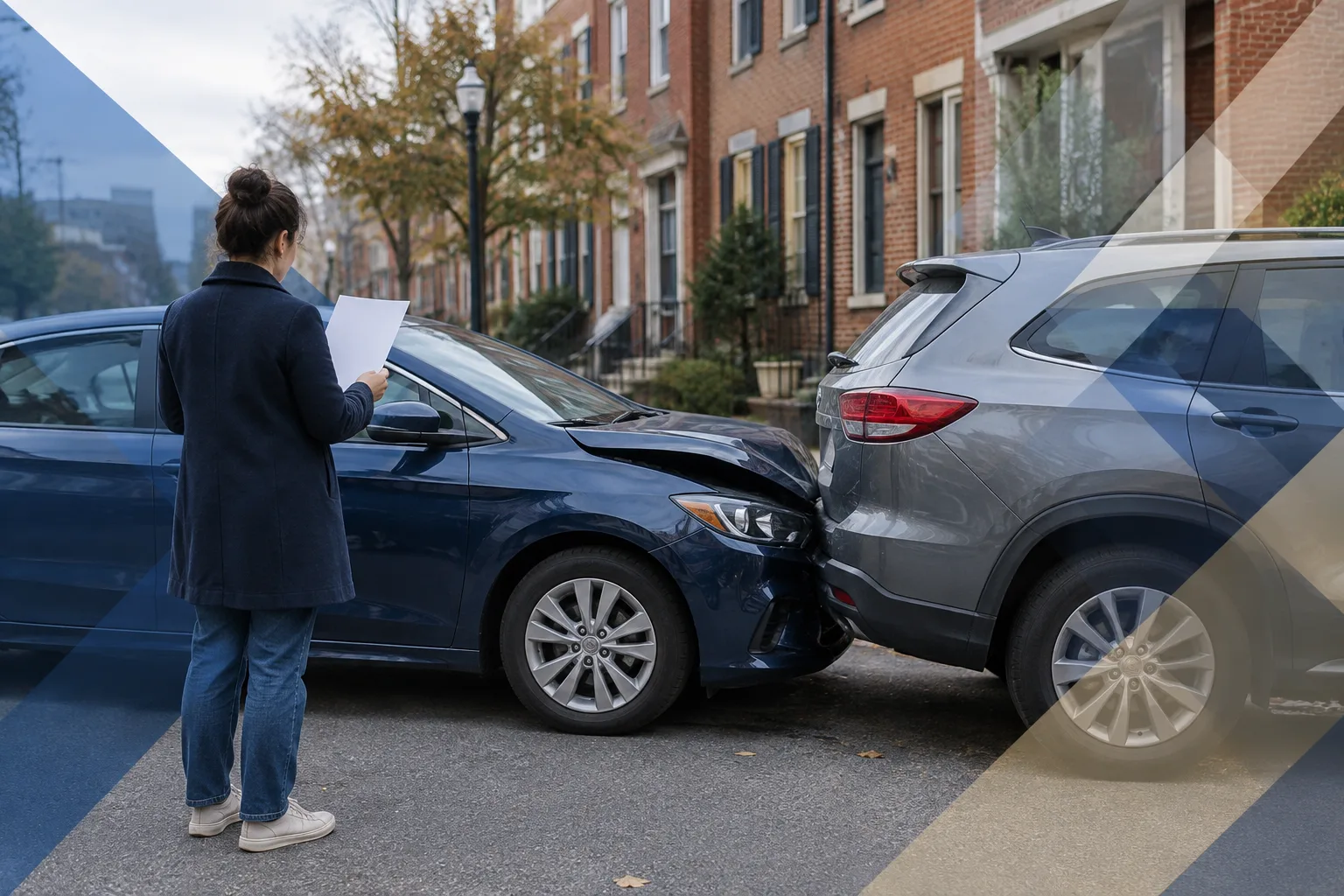
A crash can leave you facing a question that is not obvious from the damage or the police report: if the other driver has no insurance—or not enough insurance—could more than one policy help cover your injury claim? Pennsylvania UM/UIM stacking may allow certain uninsured or underinsured motorist limits to be combined, but eligibility depends on the policies, the people covered, and whether stacking was waived. In Philadelphia, PA, checking the right insurance documents can help clarify what coverage may be available.
Eric A. Shore and his team can help people understand the questions that arise when reviewing crash-related insurance. This guide explains what stacking generally means, gives a simple example, and points out where to look in policy documents for limits, endorsements, and waiver information. It also explains how stacking differs from medical-bill coverage and Pennsylvania’s limited-tort election. No example can determine coverage under a particular policy; the actual terms and facts matter.
What Does Pennsylvania UM/UIM Stacking Mean?
Uninsured motorist (UM) coverage may apply when an at-fault driver has no applicable liability insurance. Underinsured motorist (UIM) coverage may apply when the at-fault driver has insurance, but its limits may be inadequate for a covered injury claim. Stacking generally means combining eligible UM or UIM limits across covered vehicles or policies, subject to Pennsylvania law and the policy terms.
Intra-policy and inter-policy stacking
Intra-policy stacking involves coverage for more than one vehicle insured under a single policy. Inter-policy stacking involves potentially combining coverage from more than one policy. Whether either form applies can depend on who qualifies as an insured, which vehicles and policies are involved, the policy language, and any valid written waiver. The terms “stacking” and “multiple policies” do not by themselves establish that a particular person can access every listed limit.
A simple example—not a coverage promise
Suppose a policy lists two covered vehicles, each with a $100,000 per-person UIM limit. If stacking applies, the combined limit might be $200,000 for an eligible injured person. That is a hypothetical coverage limit, not a promised payment. The amount payable, if any, can depend on the injury claim, applicable per-accident limits, other coverage, policy terms, and the facts. Philadelphia drivers should treat the declarations page as a starting point, not a final coverage decision.
Which Policy Documents Can Affect Stacking?
Start with the declarations page, which usually summarizes the insured people, vehicles, and selected coverage limits. Then look for the policy’s UM/UIM coverage section, endorsements, renewal documents, and signed selection or waiver forms. A declarations page may list limits without explaining every condition, so read it alongside the full policy and related forms.
Pay particular attention to:
- Whether UM coverage, UIM coverage, or both appear in the policy.
- The limits shown for each covered vehicle and whether limits are stated per person or per accident.
- Language addressing stacking, coverage exclusions, insured status, and other applicable policies.
- Any signed form that rejects or waives stacking, and the vehicles or policies it appears to cover.
A passenger may need to consider the at-fault driver’s insurance as well as potentially applicable coverage under the passenger’s own policy or a household policy. Eligibility and policy terms matter; a useful overview is how insurance may apply when you are a passenger in a car accident.
Stacking concerns the potential amount of UM/UIM coverage; it does not automatically pay medical expenses. Personal injury protection (PIP) and health insurance may play separate roles in medical bills. For more on that distinction, see how PIP and health insurance can affect crash-related medical bills.
What Issues Can Change Whether Stacking Is Available?
Pennsylvania policies commonly address whether an insured has chosen to waive stacking. A signed waiver may affect whether limits can be combined, but the effect depends on the form, policy, and circumstances. Do not assume that a form applies to every policy or person simply because it appears in a packet; identify what policy and coverage it concerns and review the surrounding terms.
Other details can also matter: who owned or occupied the vehicle, whether the injured person qualifies as an insured under a policy, how many vehicles are covered, and whether another policy may apply. UM and UIM are distinct coverages, and the relevant policy limits and conditions may differ. The fact that more than one vehicle is listed does not necessarily mean every limit is available to every claimant.
Stacking is also separate from Pennsylvania limited tort. Limited tort concerns restrictions on pursuing certain injury damages, while stacking addresses the potential amount of UM/UIM coverage. These issues can interact in a broader claim, but one does not answer the other. For background, review Pennsylvania limited tort rules and injury rights.
When declarations pages, endorsements, waiver forms, or multiple potentially relevant policies leave questions, a policy-specific review may help identify what needs clarification. Philadelphia car accident lawyers who handle crash claims can explain the coverage issues to consider and how a claim may proceed. More information is available about Philadelphia car accident lawyers who handle crash claims.
Frequently Asked Questions
Does stacking apply automatically to every Pennsylvania auto policy?
No. Pennsylvania law generally permits stacking unless it has been waived in the manner applicable to the policy, but an individual claim still depends on policy language and eligibility. Check for UM/UIM limits and any signed stacking waiver or selection form. The number of vehicles shown on a declarations page alone does not establish that a claimant can combine their limits.
Can I stack coverage from a family member’s policy after a Philadelphia crash?
Possibly, but living in the same household or being related to the policyholder does not by itself resolve coverage. The policy’s definition of an insured, the injured person’s relationship to the covered vehicle, the waiver documents, and Pennsylvania law may all matter. A review of the actual policy and the circumstances is needed to assess whether another household policy may apply.
Is stacking available when the other driver has no insurance?
UM coverage may be relevant when an at-fault driver has no applicable liability insurance. Whether UM limits can be stacked is a separate question that depends on the applicable policies, insured status, and any valid waiver. The facts surrounding the crash and available coverage also matter. A claim involving an uninsured driver does not automatically make multiple policy limits available.
Does choosing limited tort prevent me from stacking UM/UIM limits?
Limited tort and stacking address different questions. Limited tort concerns the ability to pursue certain injury damages, while stacking concerns whether eligible UM/UIM limits may be combined. A limited-tort selection does not, by itself, answer whether a stacking waiver applies. The effect of both choices depends on the policy and claim circumstances, so review them separately.
How Eric A. Shore Can Help
Eric A. Shore is dedicated to helping injured people understand the insurance questions that can follow a Philadelphia crash. A review may involve identifying potentially applicable policies, reading declarations pages and endorsements, and checking for waiver forms that could affect stacking. The firm is committed to fighting for clients’ rights while evaluating each matter based on its own facts; no coverage result can be promised in advance. If you have questions about UM/UIM limits after a crash, contact Eric A. Shore for a free consultation or case evaluation.
The information in this article is for educational purposes only and does not constitute legal advice. Laws vary by location and may change; contact a qualified attorney licensed to practice in Pennsylvania for advice specific to your situation.