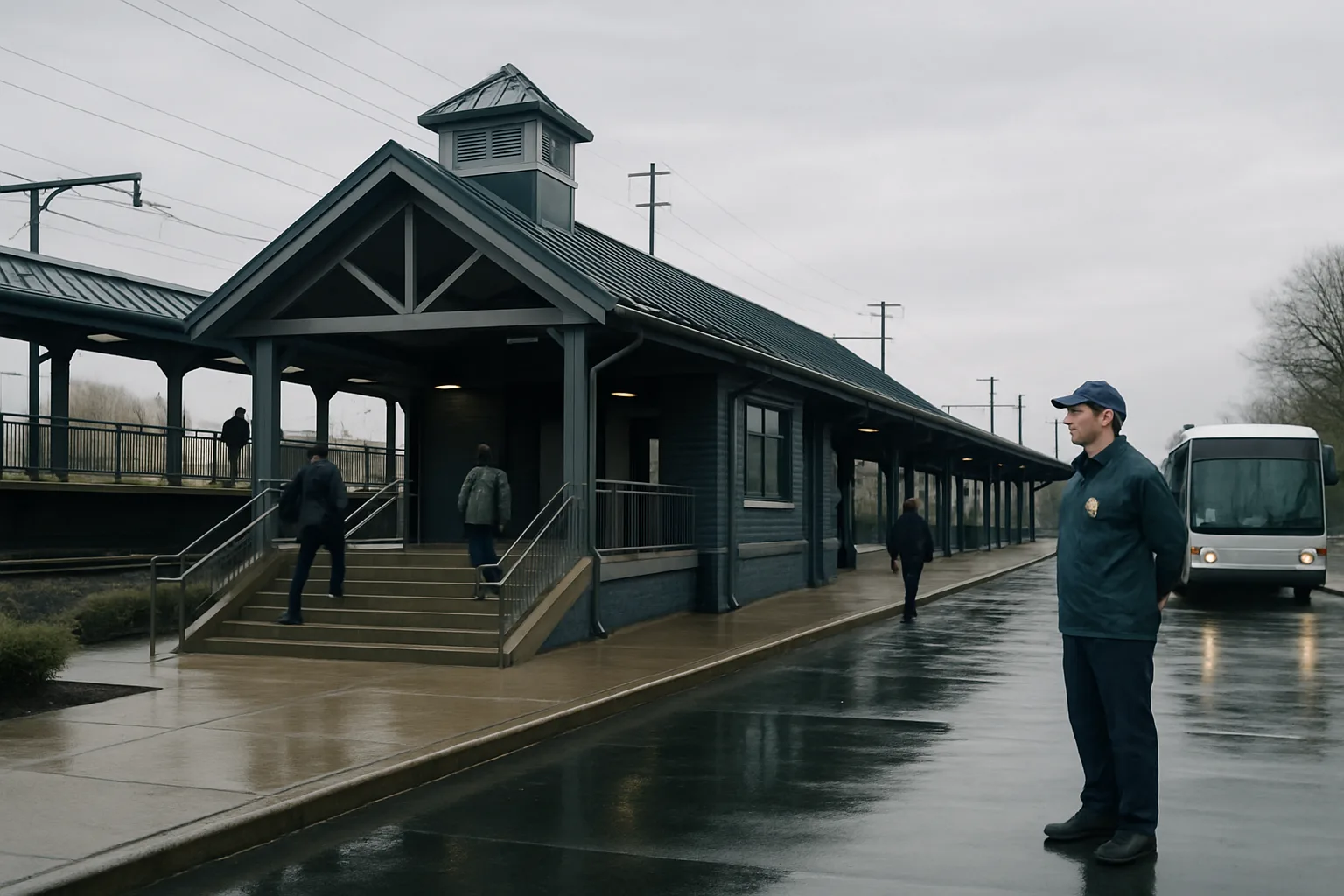
An injury at a train station can happen in seconds: a passenger slips on a wet platform, trips on a damaged stair, is struck in a crowded entrance, or falls while using a ramp. After an NJ Transit station pedestrian injury, many people understandably ask whether the railroad, station owner, property manager, contractor, or another party is responsible. The answer depends on where the incident occurred, who controlled the condition, and what evidence shows about notice and reasonable care. Eric A. Shore helps injured people understand the issues involved, including the steps to take after a New Jersey pedestrian accident.
This article explains how responsibility may be divided at New Jersey train stations, bus terminals, platforms, ramps, and station approaches. It also covers what to record immediately, how public-entity rules may affect a claim, and why prompt medical documentation can matter. These are general principles; the facts of each incident require individual review.
Why Responsibility at a NJ Transit Station Can Be Complicated
A station is often more than one person’s or entity’s property. NJ Transit may operate transportation services, while a separate public agency, municipality, landlord, or private owner controls the building, sidewalk, parking area, or approach. A maintenance company may handle cleaning, snow removal, lighting, escalators, elevators, or repairs. The entity that owns an area is not always the entity that maintains or controls it.
For context about how congestion, platforms, ramps, entrances, and other areas may create different safety concerns, see this overview of injury risks across New Jersey’s transit system. That distinction can be important in a station claim because the relevant question may be who created the hazard, who knew or should have known about it, and who had a duty to address it.
Potentially responsible parties
Depending on the location and circumstances, an investigation may examine:
- NJ Transit or another public transportation entity;
- A station owner, landlord, or property management company;
- A municipality or other public entity responsible for a sidewalk or roadway;
- A contractor responsible for cleaning, repairs, snow removal, security, or crowd management; and
- A separate person or business whose conduct contributed to the incident.
An injured pedestrian does not need to decide immediately which entity is legally responsible. Identifying the exact area and preserving information can help an attorney determine which parties should be investigated.
Station injuries are not limited to vehicle strikes
A passenger may have a personal injury claim beyond a car accident after a fall, unsafe surface, defective access route, inadequate lighting, or crowd-related event. The legal theory may involve premises liability, negligence, or rules applicable to a public entity. The facts—not the label placed on the incident—usually guide the analysis.

What to Record Immediately After a Station Injury
Good documentation can become difficult later. The platform may be cleaned, a temporary condition may disappear, surveillance footage may not be retained indefinitely, and witnesses may leave before their information is collected. If the injury permits, an injured person or companion should consider recording details without interfering with emergency care or station operations.
Identify exactly where and when it happened
Write down the station name, town or county, direction of travel, platform number, track area, entrance, stairway, elevator, ramp, crosswalk, sidewalk, or terminal zone involved. Note the approximate time and what happened immediately before the injury. A description such as “near the station” may be less useful than a precise account of the platform edge, entrance door, or ramp landing.
Ticketing and travel information may also help establish presence and timing. Preserve the ticket, electronic ticket, pass, payment record, itinerary, train or bus number, and relevant arrival or departure information. Do not alter or discard digital records that may later help establish where and when you traveled.
Photograph the condition and gather witnesses
When reasonably safe, take photographs or video of the surface, stairs, ramp, lighting, obstruction, crowd conditions, warning signs, and the surrounding area. Capture both close views and wider views showing the station layout. Avoid putting yourself or anyone else at additional risk to obtain a photograph.
Ask witnesses for their names and contact information if they are willing to provide it. Record what each person personally observed rather than relying on assumptions. A companion’s account, a nearby business’s exterior camera, or a transit employee’s identity may also help an attorney evaluate available evidence.
Report the incident and obtain care
Report the incident to station personnel, transit police, emergency responders, or another appropriate official when circumstances allow. Request information about any incident report, but understand that an internal report may not contain every detail and is not a substitute for medical records or independent evidence. Keep copies or notes about whom you notified and when.
Prompt medical attention is important for health and can also document the timing, symptoms, and reported mechanism of injury. Symptoms can change after a fall or impact, so a person should communicate accurately with a healthcare professional and follow medical guidance. The steps to take after a New Jersey pedestrian accident provide additional general guidance on preserving evidence, reporting an incident, and obtaining care.
How Evidence Can Affect a NJ Transit Premises Liability Claim
A New Jersey claim involving a station injury may require proof of more than an injury. Generally, the evidence must help connect a dangerous condition or negligent act to the incident and show why a particular defendant may be responsible. The analysis can include whether the condition was visible, how long it existed, whether complaints or work orders were made, and whether reasonable warnings or repairs were provided.
Records that may be relevant include:
- Photographs, videos, weather information, and descriptions of lighting or crowd conditions;
- Tickets, passes, payment records, schedules, and travel confirmations;
- Names and contact information for witnesses, employees, and responding personnel;
- Incident reports, maintenance logs, inspection records, complaints, and repair history;
- Medical records, bills, work-loss documentation, and information about changes in daily activities; and
- Surveillance footage or other electronic information that may identify the condition or sequence of events.
A lawyer may investigate ownership and control through public records, contracts, site inspections, photographs, and communications with relevant entities. In some situations, more than one party may share responsibility. In others, the evidence may show that a condition was outside a defendant’s control or that another explanation must be considered.
The pedestrian accident settlement factors page discusses how injury severity, fault, insurance coverage, wage loss, and other damages may affect the handling of a claim. It is also important to recognize that claims against New Jersey public entities can involve special notice and procedural requirements. Those requirements can differ from claims involving private property, and deadlines may be shorter or otherwise affected by the facts. Laws and procedures vary by location and may change, so a New Jersey attorney should review the circumstances promptly.
Common Mistakes After a Train Station or Bus Terminal Injury
An injured passenger may assume that a ticket means the railroad automatically accepts responsibility, or that the property owner is always liable because the incident occurred on its premises. Neither assumption necessarily resolves the legal question. The responsible party may depend on control, notice, contractual duties, the condition involved, and applicable New Jersey law.
Common documentation problems include:
- Failing to record the exact location. Station names alone may not identify the platform, entrance, ramp, or sidewalk involved.
- Waiting too long to report or document the condition. Physical conditions and surveillance evidence may change or become unavailable.
- Discarding travel records. Tickets, passes, and digital confirmations may help establish timing and location.
- Not identifying witnesses. A witness may remember the event clearly immediately afterward but become difficult to locate later.
- Delaying medical evaluation. A delay can make it harder to connect later symptoms with the station incident, although every person’s medical circumstances are different.
- Giving an incomplete or speculative account. It is generally better to describe what was observed and experienced accurately than to guess about ownership or fault.
A consultation can help clarify what information may be relevant, whether a public entity is involved, and what preservation steps may be appropriate. Depending on the circumstances, an attorney may also evaluate notices, records, photographs, witness accounts, and medical documentation before determining how to proceed.
Frequently Asked Questions
Can I have a claim if I was injured while entering or leaving an NJ Transit station?
Possibly. Station approaches may include sidewalks, driveways, parking areas, crosswalks, ramps, stairs, and entrances controlled by different parties. Responsibility may depend on the precise location, ownership, maintenance duties, notice of the condition, and whether a public entity is involved. A person injured while entering or leaving a New Jersey station should preserve location details and other evidence so the responsible parties can be evaluated.
What if I did not report the station injury before leaving?
A missed report does not automatically answer whether a claim exists, but it may make the incident harder to investigate. Photographs, travel records, witness information, medical documentation, and a written account can still be relevant. Because public-entity claims may have special notice rules in New Jersey, an attorney may need to assess the timing and circumstances without assuming that the lack of an on-site report ends the matter.
Does an NJ Transit ticket prevent me from pursuing a claim?
A ticket generally establishes travel or access, but it does not by itself determine whether a railroad, property owner, contractor, or another party was negligent. The terms associated with travel, the location of the incident, and the facts surrounding the condition may all matter. Preserving the ticket or electronic record can help an attorney understand the trip and investigate responsibility.
Can a companion bring a claim for witnessing my station injury?
A person who witnessed an injury usually does not have the same claim as the person physically injured, although separate legal issues may arise in unusual circumstances. A companion’s account can still be valuable evidence about the condition, timing, warnings, and immediate symptoms. Each person’s potential rights depend on the facts and should be evaluated under applicable New Jersey law.
How Eric A. Shore Can Help
Eric A. Shore is dedicated to helping injured pedestrians and passengers examine what happened at train stations, bus terminals, platforms, ramps, and station approaches. The firm can review the precise location, ownership and maintenance issues, travel records, photographs, witnesses, incident reports, medical documentation, and potential public-entity requirements.
Because these cases may involve overlapping responsibilities, an attorney may need to investigate more than one organization before a claim can be evaluated fully. Eric A. Shore is committed to fighting for clients’ rights while providing straightforward information about available legal options. Contact the firm for a free consultation or case evaluation regarding your New Jersey station injury.
The information in this article is for educational purposes only and does not constitute legal advice. Contact a qualified attorney licensed in New Jersey for advice specific to your situation.