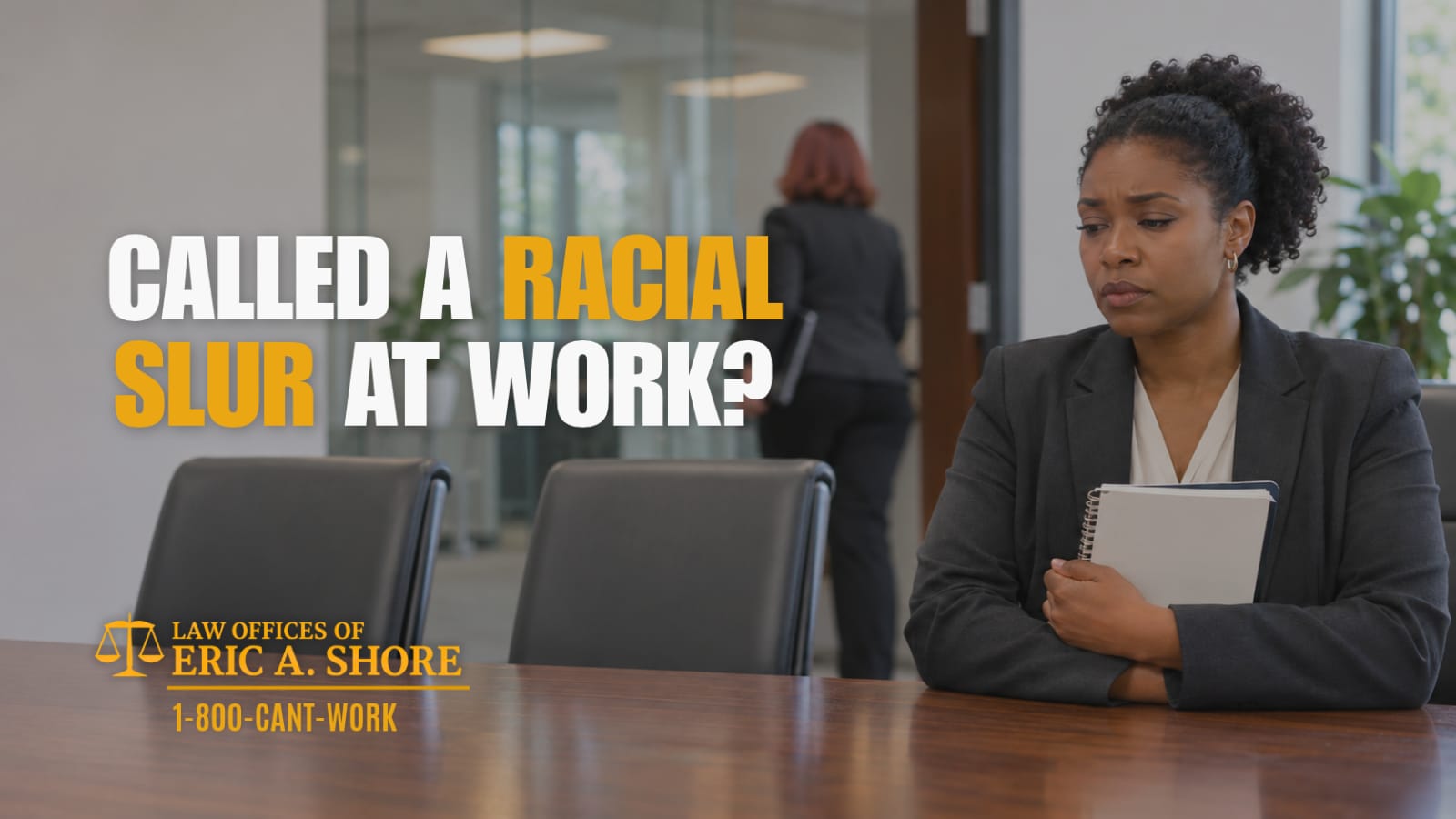
By Eric A. Shore, Founding Attorney
Last updated: November 2026
Yes, you may be able to sue, even if it only happened once. And if a lawyer turned you down, that doesn’t mean you have no case.
I’ve been an employment lawyer for more than 30 years. Some of the hardest calls I get are from people who were humiliated at work. Their boss called them the N-word, sometimes in front of coworkers. They finally worked up the courage to call a lawyer, only to be told they don’t have a case or that the lawyer can’t help them.
I understand why that would make someone angry. But just because a lawyer won’t take your case doesn’t mean what happened was right. And it certainly doesn’t mean you don’t deserve justice.
Can I Sue if Someone Called Me the N-Word Just Once?
Yes, sometimes you can. Racial harassment doesn’t always have to happen repeatedly before you can sue.
In Castleberry v. STI Group, a federal appeals court recognized that a single incident can be serious enough to support a racial harassment claim.
In that case, a supervisor used the N-word and threatened to fire employees. The workers also alleged other discriminatory treatment. The court allowed their claim to move forward.
That decision applies to federal cases in Pennsylvania and New Jersey.
Of course, the facts matter. Who said it? Was it your boss or a coworker? Was it directed at you? Did your employer do anything about it?
But I would never tell someone they don’t have a case simply because it happened once.
You can learn more about your rights on our Racial Discrimination page.
Why Won’t an Employment Lawyer Take My Case?
Here’s something most people don’t realize. Employment discrimination cases can be incredibly expensive.
A law firm may spend tens of thousands of dollars and years fighting a single case. We may have to review thousands of documents, question witnesses, hire experts, and fight companies with large legal teams.
At my firm, we generally handle employment cases on a contingency fee basis. That means we usually don’t collect attorney fees unless our client receives money.
When we accept a case, we’re putting our own time and resources on the line. We have to be selective because we can only handle so many cases properly.
But I’ve never believed a case has to be easy to be worth fighting.
Sometimes the people who need a lawyer the most have the hardest cases to prove. I don’t want our firm turning away a difficult case simply because there’s a chance we might lose.
When we decline a case, we’re not deciding whether you’re telling the truth or whether you deserve justice. We’re deciding whether we have the evidence, legal grounds, and resources to pursue your case properly.
I wish we could take every case where someone was treated unfairly. We can’t. But that doesn’t mean another lawyer won’t take yours.
What if I Was Fired for Complaining About the N-Word?
You may have a separate retaliation case.
If you complained about racial harassment and your employer fired you, demoted you, reduced your hours, or punished you because you spoke up, you may have another legal claim.
You may even have a retaliation case when the original harassment wasn’t enough to win a discrimination lawsuit, provided your complaint was legally protected.
I always want to know what happened after someone complained. Sometimes that’s the strongest part of the case.
Learn more about your rights on our Wrongful Termination page.
What Should I Do if Someone Calls Me the N-Word at Work?
Write down exactly what happened, including the words used, the date, and the names of anyone who heard it. Save any relevant messages or other evidence you’re legally permitted to keep.
Consider reporting the incident to HR or management in writing, and keep a lawful copy of your complaint.
Don’t quit your job or sign a severance agreement before speaking with a lawyer. And be careful about secretly recording conversations. Recording laws differ by state.
Most importantly, don’t wait too long.
In Pennsylvania, you generally have 180 days to file a state discrimination complaint with the Pennsylvania Human Relations Commission. In New Jersey, you generally have two years to bring a lawsuit under the New Jersey Law Against Discrimination, but only 180 days to file with the state’s Division on Civil Rights. Federal EEOC deadlines are generally 300 days in both states.
Other claims can have different deadlines. Speak with a lawyer as soon as possible.
What if the Law Offices of Eric A. Shore Won’t Take My Case?
I know how disappointing it can be to tell someone about something humiliating that happened to you, only to hear that the lawyer can’t represent you.
Please don’t assume that means we don’t believe you.
We can’t accept more cases than we can properly handle. Sometimes the evidence isn’t there. Sometimes the law doesn’t provide the remedy someone deserves. And sometimes we simply don’t have the resources to take on another major lawsuit.
We work with lawyers in many parts of the country. If we can’t help you ourselves, we may be able to point you toward someone who can.
And if another lawyer has already turned you down, consider getting another opinion before your deadline expires.
Why Do I Still Fight for Employees After More Than 30 Years?
Because the fight is still uneven.
A large company has lawyers, money, and resources. Most employees don’t have those advantages.
I don’t believe your chance at justice should depend on how much money you have, what you look like, where you were born, or how you pray.
You shouldn’t have to look like your lawyer, pray like your lawyer, or agree with your lawyer to deserve someone who will fight for you.
I can’t promise to win every case. No honest lawyer can. But when we agree to represent someone, they deserve careful preparation, hard work, and straight answers.
That’s why I still do this after more than 30 years.
If you’ve been called the N-word or experienced racial discrimination at work, call the Law Offices of Eric A. Shore at 1-800-CANT-WORK or visit our Employment Law page.
In most employment cases, you pay no attorney fees unless you receive money.