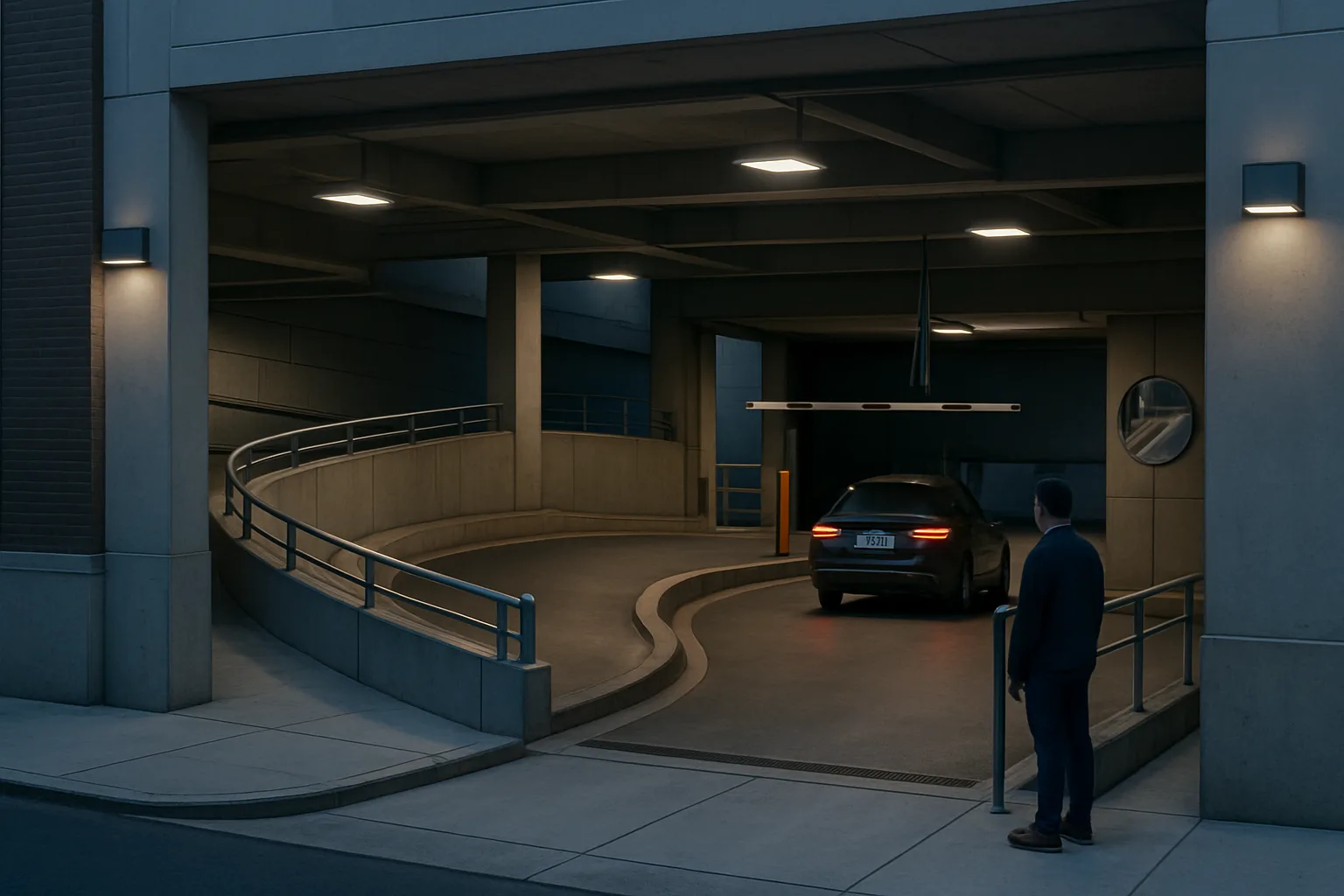
A parking garage exit can look routine until a driver turns across a pedestrian path, a gate rises unexpectedly, or a poorly lit ramp leaves people and vehicles sharing too little space. If someone is struck—or narrowly avoids being struck—the key question may be more complicated than who had the right of way. The garage’s layout, warnings, lighting, barriers, mirrors, and inspection practices may also matter.
For someone searching for a Philadelphia parking garage pedestrian accident lawyer, understanding what to document after a collision is an important starting point. Eric A. Shore can serve as a knowledgeable guide to the issues that may arise. This article explains when a parking garage may owe pedestrians a reasonably safe route, what to do after a crash or near-miss, how Pennsylvania premises liability principles may apply, and which evidence can help clarify responsibility.
When Does a Philadelphia Parking Garage Owe Pedestrians a Safe Exit Route?
A garage owner or operator generally has duties that depend on the property’s use, the risks it creates, and what a reasonable property controller should anticipate. Those duties do not mean every accident proves negligence. They do mean that a garage’s design and operating practices may be relevant when pedestrians are directed through areas also used by moving vehicles.
Shared spaces can create foreseeable risks
Potentially important locations include:
- Vehicle ramps that also function as pedestrian access routes
- Payment booths or pay stations where people walk into exit lanes
- Blind turns, tight corners, and areas without convex mirrors
- Crossings near gates, ticket machines, or garage entrances
- Loading areas or curbside exits with limited separation from traffic
In Philadelphia, PA, a claim may involve more than the driver’s conduct. Depending on the facts, an investigation may examine whether the garage provided adequate lighting, marked crossings, warning signs, guardrails, bollards, speed controls, or a reasonably visible path to a sidewalk. The condition of the property and the operator’s control over it may be central to a premises liability analysis.
A pedestrian does not necessarily lose the ability to pursue a claim because a driver was also involved. Multiple parties may have different roles, including a property owner, garage management company, maintenance contractor, or vehicle operator. Responsibility depends on the evidence and the specific circumstances.
What Should You Do After Being Hit in a Philadelphia Parking Garage?
After a collision, safety and medical needs come first. Even when an injury initially seems minor, a person may not immediately understand the full extent of what happened. Seeking appropriate medical attention can create a record of symptoms and help a healthcare professional evaluate the condition. This article does not provide medical advice; treatment decisions belong with a qualified healthcare provider.
When practical and safe, a pedestrian should also consider preserving information about the garage and the event. Depending on the circumstances, useful steps may include:
- Request an incident report. Ask the garage attendant or operator how the incident is documented and request information about obtaining a copy. Avoid guessing about fault or making statements that minimize an injury.
- Identify the operator. Record the garage’s name, address, entrance location, posted management information, and the names or roles of people who responded. The property owner and operating company may not be the same entity.
- Preserve payment and ticket records. Keep the parking ticket, receipt, mobile-payment confirmation, credit-card record, or other proof showing when and where the vehicle or pedestrian was present.
- Document the physical setting. If safe, note lighting, signs, barriers, traffic arrows, mirrors, gates, crossing markings, ramps, turn points, and the direction vehicles and pedestrians were expected to travel.
- Gather witness information. Names and contact details for people who saw the collision or the conditions may become important, even if no one can determine fault at the scene.
In Philadelphia, PA, surveillance footage may be held by the garage, a payment vendor, a security company, or another business. Promptly identifying the existence of cameras can be important because retention practices vary. An attorney may advise on appropriate evidence-preservation communications based on the circumstances.
How Are Garage Exit Pedestrian Injury Claims Evaluated?
A potential garage exit pedestrian injury claim usually requires a fact-specific review. Under general Pennsylvania negligence principles, an injured person may need to show that a responsible party owed a duty, failed to use reasonable care, and caused legally recognized harm. The analysis can also consider whether the person knew about a condition, whether the hazard was open and obvious, and whether the conduct of other people contributed to the event. Pennsylvania’s comparative negligence rules may affect recovery when more than one person is found partly responsible, but the result depends on the facts and applicable law.
An evaluation may look at:
- Whether pedestrians were directed into an active vehicle lane
- Whether sightlines at turns, ramps, or gates were blocked
- Whether lighting was working and sufficient for the area’s use
- Whether signs, signals, mirrors, or barriers were present and maintained
- Whether the operator had notice of a recurring hazard or prior complaints
- Whether inspection, maintenance, traffic-control, or incident records exist
- Whether the driver, garage, contractor, or another party controlled the relevant risk
Common mistakes can make evidence harder to assess. These may include discarding a ticket, failing to note the exact exit route, posting detailed statements about the incident online, or waiting to investigate until surveillance footage is no longer available. A person should not assume that a near-miss is legally irrelevant either. Although a near-miss without physical injury may not support the same damages claim as a collision, it may help reveal how traffic and pedestrian movement were organized.
Because Pennsylvania law and procedural requirements can change and may depend on the parties involved, a licensed attorney can explain how those rules may apply in a particular matter. Claims involving a public entity, for example, may raise additional issues that require jurisdiction-specific review.
Frequently Asked Questions
Who may be responsible if a driver hits me inside a Philadelphia parking garage?
Potential responsibility may involve the driver, garage owner, garage operator, or a contractor, depending on who controlled the relevant condition and what caused the collision. A driver’s actions do not automatically resolve whether the property’s traffic flow, lighting, barriers, or pedestrian route also contributed. A fact-specific investigation is generally needed to identify the parties and evaluate how Pennsylvania negligence principles may apply.
Can I have a claim if I was injured near a garage payment area?
Possibly. Payment areas often bring pedestrians into close contact with moving vehicles, gates, and turning traffic. The relevant questions may include whether the area had a reasonably visible pedestrian route, adequate warnings, functional lighting, and appropriate separation. The existence of an injury alone does not establish liability, but photographs, witness information, payment records, and surveillance may help clarify what happened.
What if the parking garage says it does not have my incident report?
A missing or unavailable report does not by itself prove fault or defeat a potential claim. You may still have other evidence, such as medical records, photographs, ticket or payment information, witness contacts, and communications with the operator. An attorney may help assess what records could exist and what preservation steps may be appropriate under the circumstances.
How long do I have to explore a garage pedestrian accident claim in Pennsylvania?
Time limits can depend on the legal theory, the identity of the responsible party, the date of the injury, and whether special rules apply. A claim involving a government-owned or government-controlled property may require additional analysis. Because missing a deadline can affect legal rights, a person considering a claim may wish to consult a Pennsylvania-licensed attorney promptly for advice specific to the situation.
How Eric A. Shore Can Help
Eric A. Shore is dedicated to helping injured people understand the evidence and legal issues that may arise after a pedestrian collision. The firm can evaluate questions involving garage ownership and control, traffic flow, lighting, signage, barriers, surveillance, incident reports, payment records, and medical documentation.
A careful review may help identify which parties should be considered and what information may be relevant under Pennsylvania law. Eric A. Shore is committed to fighting for clients’ rights while providing clear, realistic information about their legal options. Contact the firm for a free consultation or case evaluation regarding a Philadelphia parking garage pedestrian accident.
The information in this article is for educational purposes only and does not constitute legal advice. Contact a qualified attorney licensed in Philadelphia, PA for advice specific to your situation.