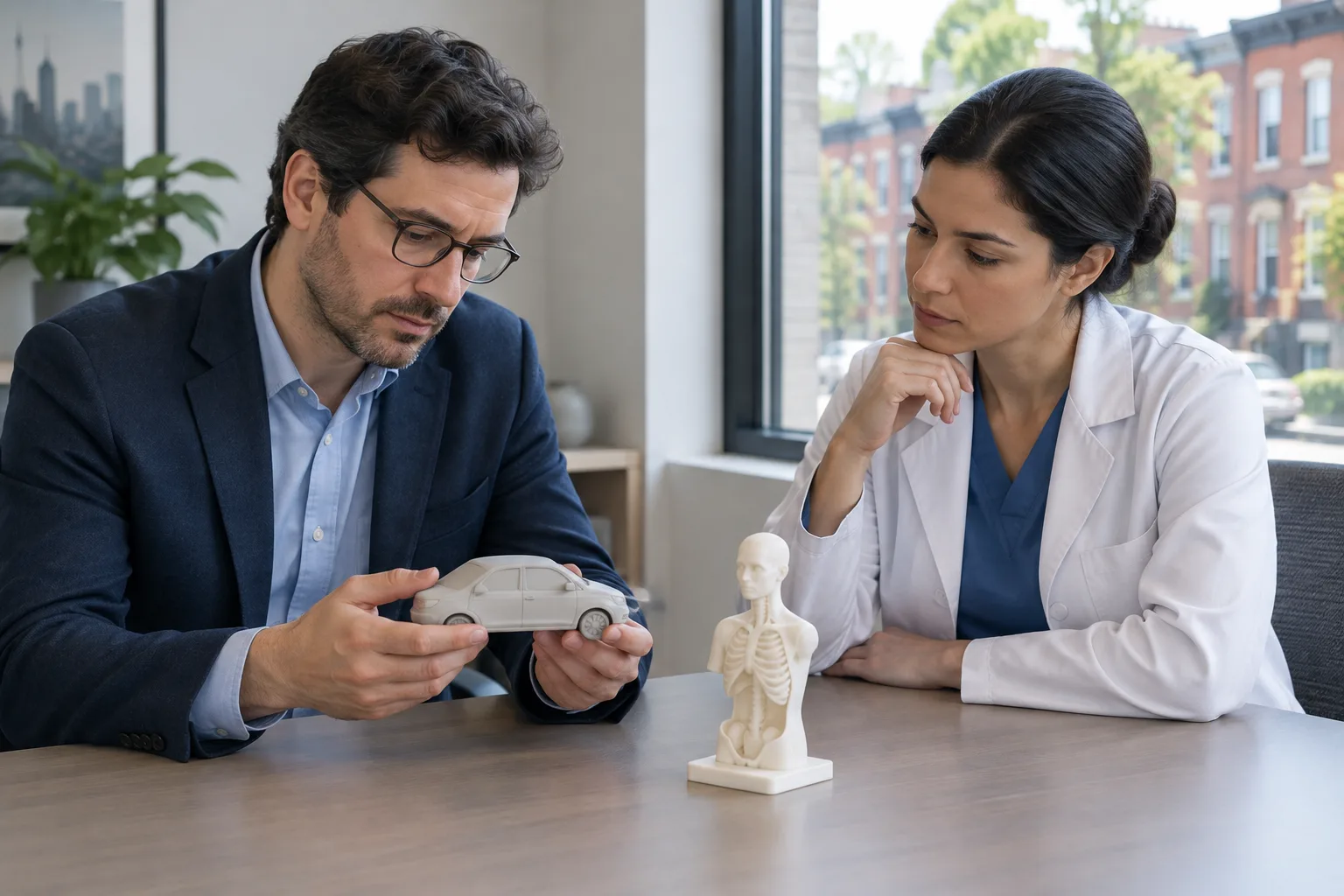
After a serious collision or fall, a person may have questions that photographs, records, and eyewitness accounts cannot answer on their own. An expert might explain how an injury relates to an accident or how a vehicle, product, or building condition contributed to an event. But expert witness admissibility in a Pennsylvania injury case is not automatic: the court considers whether the testimony is qualified, relevant, and sufficiently reliable to help the factfinder. Readers exploring medical evidence connecting an injury to a crash may find that clinical records are important, while an expert’s interpretation raises separate questions. Eric A. Shore helps people understand the legal issues that can arise in injury claims. This overview explains why experts may be used, how Pennsylvania courts assess their opinions, and why admissibility is different from whether a jury ultimately believes the testimony.
How Pennsylvania Courts Assess Injury Expert Admissibility
Pennsylvania Rule of Evidence 702 provides the general framework for expert testimony. In broad terms, a witness may qualify through relevant knowledge, skill, experience, training, or education. The proposed testimony must also be based on sufficient facts or data, use reliable principles and methods, and reflect a reliable application of those methods to the case. The judge considers whether the opinion can help the jury understand evidence or decide a disputed issue.
That assessment is specific to the proposed opinion. A person may have impressive credentials, but credentials alone do not establish that every conclusion is admissible. The court may examine what information the expert relied on, whether the method fits the question, and whether the reasoning connects the available facts to the conclusion. In Pennsylvania, the Frye standard may also apply when a party offers novel scientific evidence; the court considers whether the scientific method is generally accepted in the relevant field. Not every expert opinion presents a Frye issue.
Why an injury case may need a medical expert
Medical records document treatment and findings, but they may not resolve every dispute about causation, prognosis, or the meaning of clinical information. A medical expert may interpret a treatment history, imaging, or other records and explain whether the claimed injury is consistent with the accident. The opinion still needs a sound basis and must address a question relevant to the case. For more background on medical evidence connecting an injury to a crash, see how clinical evidence can support or complicate a causation analysis.
Engineering and reconstruction opinions
In some cases, an engineer or reconstruction specialist may analyze vehicle damage, measurements, physical conditions, or other technical information. Whether that analysis is useful depends on the disputed issue and the expert’s methods and assumptions. Philadelphia injury cases are heard in the Philadelphia County Court of Common Pleas, but Pennsylvania’s statewide evidence rules govern expert testimony there. Local procedures may affect how a case moves toward trial; they do not make an opinion admissible simply because an expert offers it.
What Makes an Expert Opinion Different from Other Evidence?
An expert does more than describe what they personally saw. A fact witness might report where a vehicle was, what the road looked like, or what happened just before a fall. An expert may interpret specialized information, such as measurements or medical findings, to offer an opinion on a technical issue. The roles can complement one another, but an expert’s analysis does not replace firsthand evidence. For a closer look at how witness accounts can support a Philadelphia accident claim, consider how observations can provide context for an expert’s work.
The judge generally decides whether proposed expert testimony may be presented under the applicable evidence rules. If admitted, the opinion is still evidence for the jury to evaluate—not a finding the jury must accept. Jurors may consider the expert’s qualifications, explanations, assumptions, supporting facts, and responses to questions. They may also compare the opinion with other testimony and records.
In practical terms, admissibility and weight answer different questions:
- Admissibility: May the expert offer this opinion in court under the governing rules?
- Weight: If the opinion is admitted, how persuasive is it when considered alongside the rest of the evidence?
An opinion can clear the admissibility threshold and still receive little weight. Conversely, a party may challenge an opinion before trial if there is a genuine issue with its relevance, basis, methodology, or fit with the facts. The court’s decision depends on the record and the particular testimony at issue.
How Expert Opinions May Be Tested Before Trial
An expert’s involvement does not settle the dispute. Before trial, attorneys may review the expert’s materials and question the expert about the facts considered, methods used, assumptions made, and limits of the conclusions. In some cases, a party may ask the court to limit or exclude an opinion. The judge decides whether the challenge warrants a ruling, and the outcome depends on the evidence and the governing rules.
A deposition can provide an opportunity to examine how an expert reached a conclusion, but it is not itself the court’s admissibility decision. To understand what happens during a Philadelphia personal injury deposition, it helps to distinguish questioning under oath from the judge’s later decision about whether particular testimony may be presented.
When assessing an expert opinion, useful questions may include:
- What specific issue is the expert being asked to address?
- What records, measurements, or observations support the opinion?
- Does the expert explain how the method was applied to the facts?
- Are important assumptions or gaps acknowledged?
- Does other evidence support or conflict with the conclusion?
These are general considerations, not a formula for predicting a ruling. In Philadelphia, as elsewhere in Pennsylvania, the parties may dispute both whether an opinion should be admitted and how much it should matter if admitted. A qualified attorney can assess how those issues relate to the evidence in a particular claim.
Frequently Asked Questions
Are expert witnesses required in every Pennsylvania injury case?
No. Whether expert testimony is useful or necessary depends on what is disputed and what the available evidence can establish. Some cases may turn on straightforward facts, while others involve medical causation or technical questions that benefit from specialized explanation. A lawyer can assess the issues and evidence in a particular claim; the fact that an injury occurred does not, by itself, mean an expert is required.
Can my treating doctor offer expert testimony?
A treating doctor may have relevant knowledge about a patient’s care, but whether the doctor can offer a particular opinion depends on the proposed testimony, its basis, and the applicable court rules. Treating a patient does not automatically make every opinion admissible. The court may consider the doctor’s qualifications and whether the opinion is supported by sufficient information and reliable reasoning.
Can both sides use experts who disagree?
They may present different expert opinions when the disputed issues and applicable rules support doing so. Competing opinions do not mean that the court will automatically exclude either one. A judge may assess admissibility, while the jury may evaluate the experts’ reasoning, factual support, and credibility if the testimony is allowed. The evidence and procedural circumstances matter in each case.
Does an expert’s opinion determine who is responsible?
Not by itself. An expert may explain a technical issue, but responsibility is determined by considering the evidence and the legal standards that apply. The jury may weigh an admitted opinion against witness accounts, records, and other proof. A judge may also exclude or limit testimony that does not meet the applicable requirements, so an expert’s participation is not a promised outcome.
How Eric A. Shore Can Help
Questions about expert testimony can affect how an injury claim is investigated and presented. Eric A. Shore is committed to helping injured people understand the evidence and legal issues that may shape a Pennsylvania personal injury case. Depending on the circumstances, an attorney may review whether specialized testimony could help explain a disputed issue and how an opposing opinion might be examined. No particular expert ruling or case result can be promised. If you have questions about an injury claim in Philadelphia, contact the firm to request a free consultation or case evaluation.
The information in this article is for educational purposes only and does not constitute legal advice. Contact a qualified attorney licensed to practice in Pennsylvania for advice specific to your situation. Laws vary by location and may change after publication.