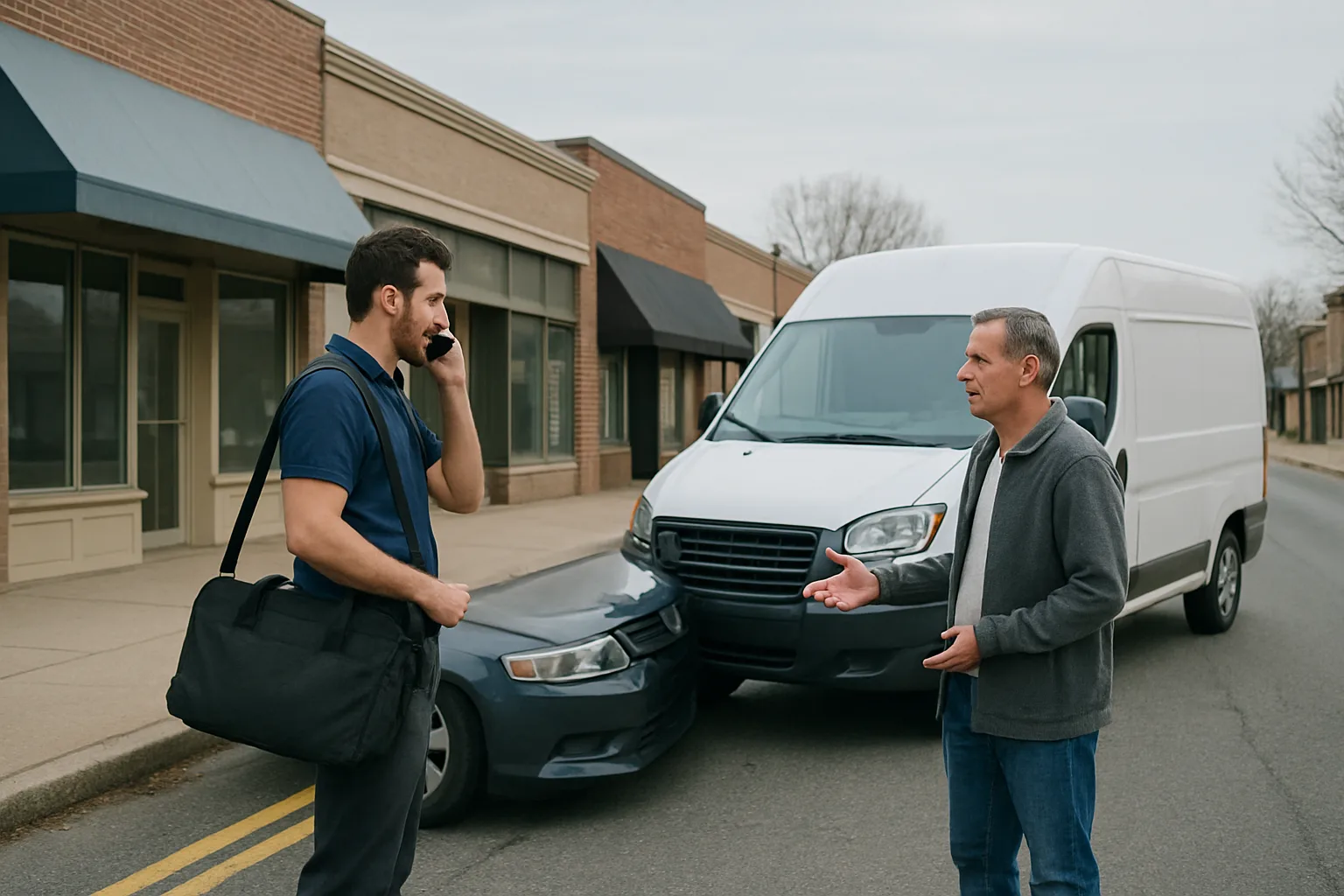
An employee sent to make a delivery, visit a customer, pick up supplies, or travel between job sites may reasonably assume that a traffic collision is simply a car accident. But when a vehicle strikes that employee during the assignment, the facts may raise a second set of questions: Was the person acting within the scope of employment? What instructions did the employer provide? Which records show where the employee was going and why?
New Jersey workers compensation car accident during work claims often turn on practical details rather than a single document. The employee’s assignment, route, timing, communications, witnesses, and medical records can all help explain what happened. Eric A. Shore provides a knowledgeable resource for understanding how these facts may affect a potential claim.
This guide focuses on employees who were hit while traveling between job sites, visiting customers, making deliveries for a traditional employer, or completing a special work assignment. It explains what to document, how workers’ compensation may relate to a claim against the driver, and what may happen if the employer or insurer disputes the work connection. For immediate steps after a New Jersey pedestrian accident, a separate guide can help organize the first practical concerns after a collision.
New Jersey Workers’ Comp for Employees Hit by a Car on a Work Errand
The first decision-making question is not only who caused the crash. It is whether the employee was performing a work duty when the collision occurred. New Jersey workers’ compensation may cover injuries arising out of and in the course of employment, but whether a particular trip qualifies depends on the circumstances.
Was the trip actually work-related?
A trip may have a stronger work connection when the employee was:
- Traveling from one job site to another;
- Visiting a customer, client, vendor, or project location;
- Making a delivery or pickup for the employer;
- Obtaining materials or equipment at the employer’s direction; or
- Performing a special errand that was outside the employee’s normal routine.
The analysis can be different when the employee was simply traveling from home to a regular workplace or returning home after the shift. That ordinary commute is often treated differently from travel required by the employer during the workday. However, small factual differences can matter, such as whether the employee had already begun a work assignment, was carrying out a special instruction, or was traveling between assigned locations.
For more background on workers’ compensation issues after a car accident while working, consider how employer control, the purpose of the trip, and the employee’s work status may fit together. In New Jersey, the exact facts should be reviewed rather than assumed from the job title alone.
Document the assignment, route, and timing
As soon as reasonably possible, write down the assignment in the employee’s own words. Include who gave the instruction, the destination, the purpose of the trip, the expected schedule, and whether the employee had permission to take a particular route or make a stop. Preserve texts, emails, dispatch records, calendar entries, delivery information, GPS history, and time records when available.

What Evidence Can Support a Work-Related Travel Injury?
A person struck while working may be dealing with pain, medical appointments, missed work, and insurance communications at the same time. A focused evidence file can make the timeline easier to understand. It may also help separate reliable facts from later guesses about the route or assignment.
Build a simple incident timeline
Create a timeline beginning with the employer’s instruction and ending with the medical evaluation. It can include:
- The time and method by which the assignment was given.
- When the employee left the prior location or workplace.
- The intended destination and route.
- The time and place of the collision.
- Names and contact information for witnesses, if available.
- Reports to a supervisor, human resources representative, or safety contact.
- Ambulance transportation, emergency care, follow-up visits, and work restrictions documented by medical providers.
The employee should generally preserve the police report or incident number, photographs of the scene and surrounding conditions if safely obtained, driver and insurance information, and photographs of visible injuries or damaged personal property. A medical record should accurately describe the event and symptoms as understood by the patient. Medical decisions belong to the patient and treating professionals; the legal importance is that the records consistently document the reported work incident and its effects.
Identify employer instructions and witnesses
Employer communications can be especially important when the trip was unusual. A supervisor’s text directing an employee to visit a customer, a dispatch record showing a delivery, or a schedule listing multiple job sites may help establish why the employee was on the road or walking near traffic. Coworkers, customers, security personnel, delivery recipients, and bystanders may also have relevant information.
Avoid relying only on memory if a record exists. Keep copies of messages and note when each report was made. Do not alter or delete communications, even if they seem incomplete. In New Jersey, the Division of Workers’ Compensation may evaluate disputed claims through the state’s workers’ compensation process, where the details of the employment relationship and injury are important.
Workers’ Compensation, the Driver’s Claim, and Disputed Facts
An NJ employee hit by a car while working may be considering more than one legal avenue. Workers’ compensation and a potential claim against the driver are separate issues, with different proof requirements and different parties involved. The availability and value of either claim depend on the facts, insurance coverage, and applicable New Jersey law.
Preserve evidence for both potential claims
Workers’ compensation generally focuses on whether the injury was connected to employment and on benefits available under that system. A claim against the driver may focus on fault, insurance, the nature of the injuries, and other personal-injury issues. A person should avoid assuming that one claim automatically replaces the other.
Records that may be relevant to both avenues include:
- The police report and crash location;
- Driver, vehicle, and insurance details;
- Photographs or video from the scene;
- Witness names and contact information;
- Employer instructions, route information, and time records;
- Medical records, bills, referrals, and work-status documentation; and
- Wage information relevant to any claimed period away from work.
A separate resource explains how to evaluate a New Jersey car accident claim against the driver. Because insurance communications and workers’ compensation procedures can overlap, legal guidance may help an employee understand how statements, releases, or settlements could affect related rights.
If the employer or insurer disputes the work connection
A dispute may involve the destination, route, timing, purpose of the trip, or whether the employee had deviated from the assignment. The employee may also encounter disagreement about notice, medical causation, or the extent of work restrictions. These disputes do not necessarily resolve the underlying facts, but they make organized documentation more important.
Preserve assignment messages, schedules, route data, time records, witness information, incident reports, and consistent medical documentation. Keep a dated log of communications with the employer and insurer. If benefits are denied or the claim is challenged, review what to do after a workers’ compensation claim is denied and consider speaking with a New Jersey workers’ compensation attorney about the available process.
Frequently Asked Questions
Does workers’ compensation cover an employee hit while walking between job sites?
It may, depending on the facts. Travel between assigned job sites is generally different from an ordinary commute because the movement may be part of the employee’s job duties. The employer’s instructions, the locations involved, the timing, and any personal deviation can matter. A New Jersey attorney can review the assignment and surrounding evidence to assess whether the injury may fall within workers’ compensation coverage.
What if I was making a delivery in my own vehicle when I was struck?
Using a personal vehicle does not by itself answer whether an injury was work-related. The purpose of the trip, employer instructions, reimbursement arrangements, route, and timing may all be relevant. There may also be separate automobile insurance questions. Employees should preserve delivery records, messages, time entries, and medical documentation and discuss the circumstances with a licensed New Jersey attorney.
Can I receive workers’ compensation if the driver was uninsured?
Workers’ compensation and the driver’s automobile insurance are separate matters. If the driver lacks insurance, that may affect a potential claim against the driver, but it does not automatically determine whether the employee’s injury was connected to work. Other insurance issues may also arise. The specific facts, available coverage, and New Jersey procedures should be reviewed with qualified counsel.
What if my employer says I was commuting rather than working?
The distinction may depend on where the employee was traveling, why the trip occurred, whether the workday had begun, and what the employer instructed. A trip to a regular workplace can be treated differently from a special assignment or travel between job sites. Preserving route information, schedules, communications, and witness details can help clarify the issue for an attorney or the workers’ compensation process.
How Eric A. Shore Can Help
Eric A. Shore is dedicated to helping injured employees understand the work-related facts that may shape a New Jersey workers’ compensation claim. The firm can evaluate the assignment, route, timing, employer communications, witnesses, police information, and medical records as part of a careful review. When a collision also raises questions about the driver’s insurance or a disputed work connection, the firm is committed to fighting for the client’s rights while explaining the available legal options.
If you were hit by a car while making a delivery, visiting a customer, traveling between job sites, or completing another employer-directed errand, contact Eric A. Shore for a free consultation or case evaluation.
The information in this article is for educational purposes only and does not constitute legal advice. Contact a qualified attorney licensed in New Jersey for advice specific to your situation.