
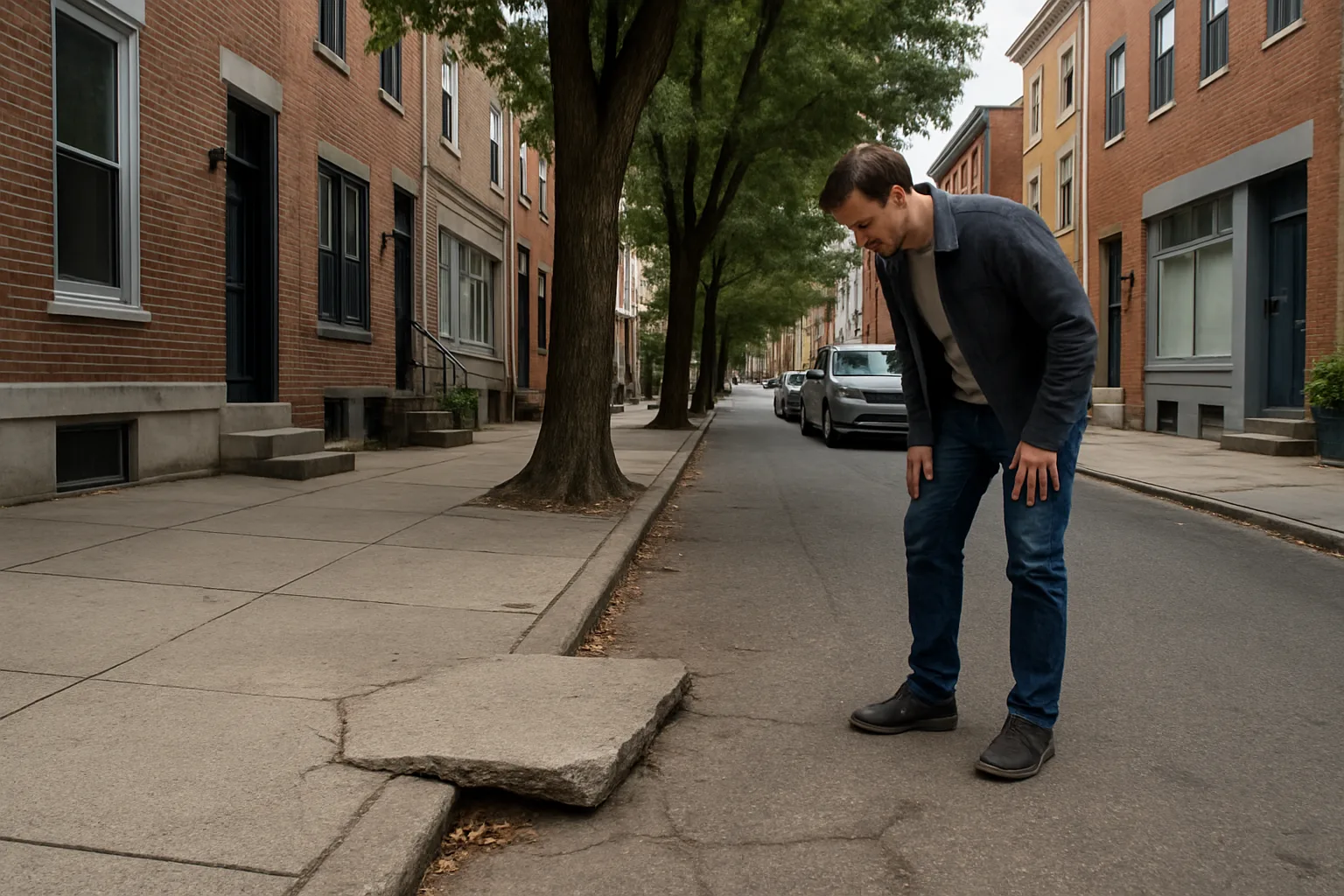
A cracked slab, raised tree root, missing section, or uneven transition can turn an ordinary walk through Philadelphia into a serious fall. If you were hurt, you may be asking: Philadelphia Sidewalk Accident: Is the City or Property Owner Responsible? The answer often depends on who owned, controlled, or maintained the location, whether someone had notice of the hazard, and whether the condition was on private property or a public right-of-way. For additional context on this issue, see I Was Hurt in an Elevator in Philadelphia. Who Is Responsible?.
Before deciding what happened legally, preserve what happened factually. Philadelphia personal injury lawyer help after a sidewalk accident may be useful when the responsible party is unclear or injuries affect work and daily activities. Eric A. Shore can help readers understand the questions that commonly matter, without assuming that a particular person or entity is automatically liable. This guide explains who may be involved, what evidence can help, what to report, and when a consultation may be appropriate.
Philadelphia Sidewalk Accident Lawyer: Who May Be Responsible?
A sidewalk is not always the sole responsibility of the property next to it. Responsibility can depend on the sidewalk’s legal status, the condition that caused the fall, and the duties assigned to an owner, tenant, contractor, or public entity under Pennsylvania law. Laws and procedures can vary by location and may change over time, so a Philadelphia, PA claim requires a location-specific review.
Sidewalk next to a residence or business
A private residence, apartment building, storefront, or other business may have obligations involving the sidewalk next to the property. A landlord, tenant, property manager, or maintenance company could also be relevant, depending on who had possession, control, or responsibility for repairs. The nearest building owner is not necessarily the only potentially responsible party.
For example, a business may arrange sidewalk repairs while a property manager handles routine inspections. A contractor may have performed work that left an unsafe surface. These facts can affect which parties should be identified and what records may exist.
Public right-of-way or City-owned property
Some hazards are located in a public right-of-way or near property owned or maintained by the City of Philadelphia. A municipal claim may involve additional procedural requirements, governmental-immunity issues, and questions about notice. A City agency may not be responsible for every defect near a public street, and a private party may still have duties in some circumstances.
The key question is not simply, “Who owns the building?” It is often, “Who had the legal duty and practical ability to discover, repair, or warn about this particular condition?”
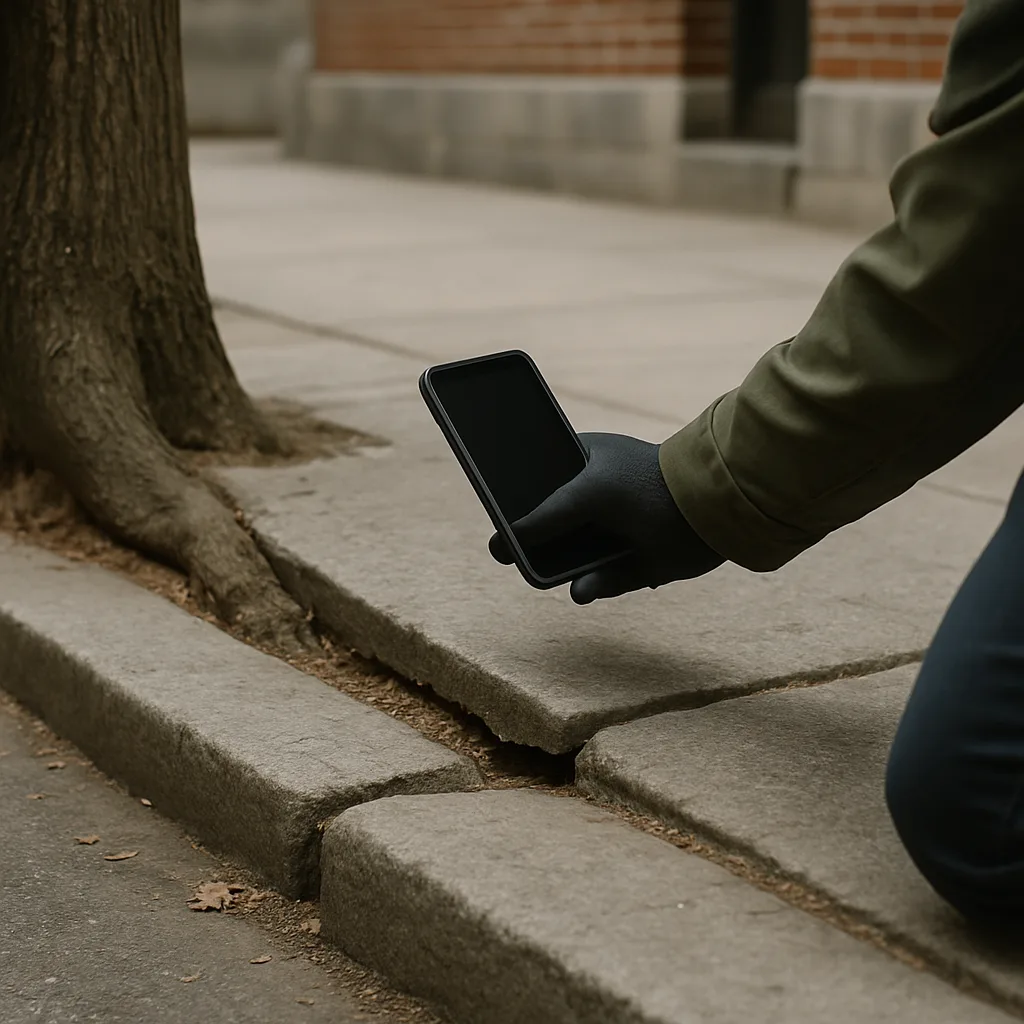
How Evidence Helps Identify the Responsible Party
After a Philadelphia sidewalk injury, evidence can help distinguish a temporary condition from a defect that may have existed long enough for a responsible party to discover it. Photographs should show both the precise hazard and the surrounding setting. Take wide views that identify the block, building frontage, curb, intersection, or nearby fixed features, as well as closer images showing the uneven surface.
Record the exact location in writing. Note the street names, approximate address, side of the street, direction of travel, nearby business or residence, and whether the sidewalk was next to a park, school, construction area, or City facility. Conditions can change after a repair, cleanup, weather event, or construction project, so details gathered promptly may be important.
Witness information may also help. If someone saw the fall or noticed the defect beforehand, ask for their name and reliable contact information if they are willing to provide it. Avoid pressuring witnesses to characterize fault; simply preserve what they observed.
Depending on the facts, useful records may include:
- Reports made to a property owner, manager, business, or City agency
- Prior complaints, inspection records, or repair requests
- Maintenance, snow-removal, landscaping, or construction records
- Photographs or video from nearby businesses or residences
- Medical records documenting evaluation and treatment
- Pay records or employer information related to missed work, when relevant
Evidence about how long the defect existed can be significant. Questions about notice, prior complaints, weather, and maintenance may arise in many premises-liability claims. These Philadelphia premises-liability questions after a dangerous sidewalk condition can overlap with issues raised by ice, snow, or other changing hazards.
What to Do After a Trip and Fall on a Philadelphia Sidewalk
The first priority after a fall is personal safety and appropriate medical attention. Depending on the circumstances, a person may need emergency help or an evaluation by a qualified medical professional. Do not ignore symptoms simply because the injury is not immediately obvious; a healthcare provider is the appropriate person to assess a medical condition.
When reasonably possible, consider these practical fact-gathering steps:
- Document the scene. Photograph the sidewalk before it is repaired or altered, and write down weather, lighting, surface conditions, and the time of the incident.
- Report the hazard. Notify the property owner, business, manager, or appropriate public agency, and keep a record of when and how the report was made. A report is not proof of liability, but it may create a useful record of the condition.
- Preserve communications. Save emails, messages, incident-report information, photographs, and notes about conversations. Do not delete posts or materials that relate to the accident.
- Track the effects of the injury. Keep records of appointments, restrictions provided by healthcare professionals, transportation, missed work, and other documented impacts.
- Avoid guessing about fault. Early statements made without knowing who controlled the sidewalk or how long the condition existed can create confusion later.
These immediate steps to take after a Philadelphia pedestrian injury also provide a useful framework for prompt medical care, reporting, and preservation of information, even though pedestrian-vehicle crashes involve different facts.
A common mistake is assuming that a photograph alone proves who is liable. It generally does not. A legal review may need to examine deeds or property records, leases, maintenance agreements, construction activity, complaints, municipal procedures, and the nature of the defect. Pennsylvania law may also impose deadlines and special requirements, particularly when a public entity could be involved. Because these rules vary by jurisdiction and may change, prompt legal guidance can help clarify the issues without making assumptions.
Frequently Asked Questions
Who is responsible for a broken sidewalk in Philadelphia?
Responsibility may fall on a private property owner, tenant, manager, contractor, City agency, or another party, depending on ownership, control, notice, and the source of the defect. The property closest to the sidewalk is not automatically liable. A review may consider whether the condition was part of a public right-of-way, who had repair duties, and whether the responsible party knew or reasonably should have known about the hazard.
Can I pursue a claim if I do not know who owned the property?
Possibly. Exact location details, photographs, business information, witness accounts, property records, and municipal records may help identify potentially responsible parties. A person does not need to determine every ownership issue alone before seeking general legal information. Because identifying the correct parties can affect notice requirements and filing deadlines in Pennsylvania, a Philadelphia attorney may evaluate the available facts and explain possible options.
What if the sidewalk was repaired after my fall?
A repair does not necessarily resolve every factual question, but it can make original evidence harder to obtain. Photographs, witness information, incident reports, dated messages, and notes about the condition may help document what existed before the repair. If nearby cameras may have captured the event, footage can be overwritten quickly. The availability and preservation of any recording will depend on the owner, system, and timing.
Does a warning sign eliminate responsibility for a sidewalk hazard?
Not automatically. A warning may be one fact among many, including the size and location of the defect, whether the warning was visible, whether a safer route existed, and whether the party had a duty to repair or control the condition. The effect of a warning depends on the circumstances and applicable Pennsylvania law. A consultation can help place that fact in context.
How Eric A. Shore Can Help
Eric A. Shore is dedicated to helping injured people understand the practical and legal questions that may follow a sidewalk fall. The firm can evaluate available photographs, location details, witness information, medical documentation, reports, and work-related impacts. It may also help examine whether a residence, business, landlord, contractor, or City-related entity had a connection to the sidewalk condition.
The firm is committed to fighting for clients’ rights while recognizing that every premises-liability matter depends on its own evidence and applicable law. If you were injured in Philadelphia, contact Eric A. Shore for a free consultation or case evaluation to discuss your situation and explore your legal options.
The information in this article is for educational purposes only and does not constitute legal advice. Contact a qualified attorney licensed in Philadelphia, PA for advice specific to your situation.



