A fall on a public sidewalk, an injury at a transit station, or a collision on government-maintained property can leave more questions than answers. A New Jersey public entity injury claim may depend on evidence that identifies who controlled the location, what condition caused the incident, and whether the right records were preserved. Public-entity claims can also have notice rules that differ from the deadlines people may expect in other injury matters.
Eric A. Shore helps injured people understand the issues that can arise in personal injury claims. This guide explains how to document the location, identify a potentially responsible entity, preserve relevant records, and understand why prompt review of New Jersey notice requirements matters. It offers general information; the rules and facts that apply to a particular claim can differ.
New Jersey Public-Entity Injury Claim Evidence Starts with the Location
A property’s appearance does not always reveal who owned, maintained, or controlled it. A public sidewalk might border a municipal street but be affected by maintenance duties involving another entity or property owner. A station, platform, ramp, park, school area, or government building may also involve more than one organization. The responsible party can depend on the location, the condition involved, and who had the relevant duty or control.
Identify who may have responsibility
Record the exact address or nearest intersection, the part of the property where the incident happened, and any nearby landmarks. Note whether the area was a sidewalk, roadway, entrance, platform, stairway, or another feature. If you know the name of an agency, municipality, county, transit provider, or school district connected to the site, record it, but avoid assuming that it is the only potentially responsible party.
An incident at a station, platform, ramp, or terminal may raise questions about which organization controlled different parts of the property and which records it keeps. For context on evidence to preserve after an injury at an NJ Transit station, see this overview of station-injury evidence. Responsibility can also be less straightforward in school transportation incidents; how responsibility may be divided in a New Jersey school bus crash illustrates why the facts and parties involved matter.
Document the Condition and Preserve New Jersey Records
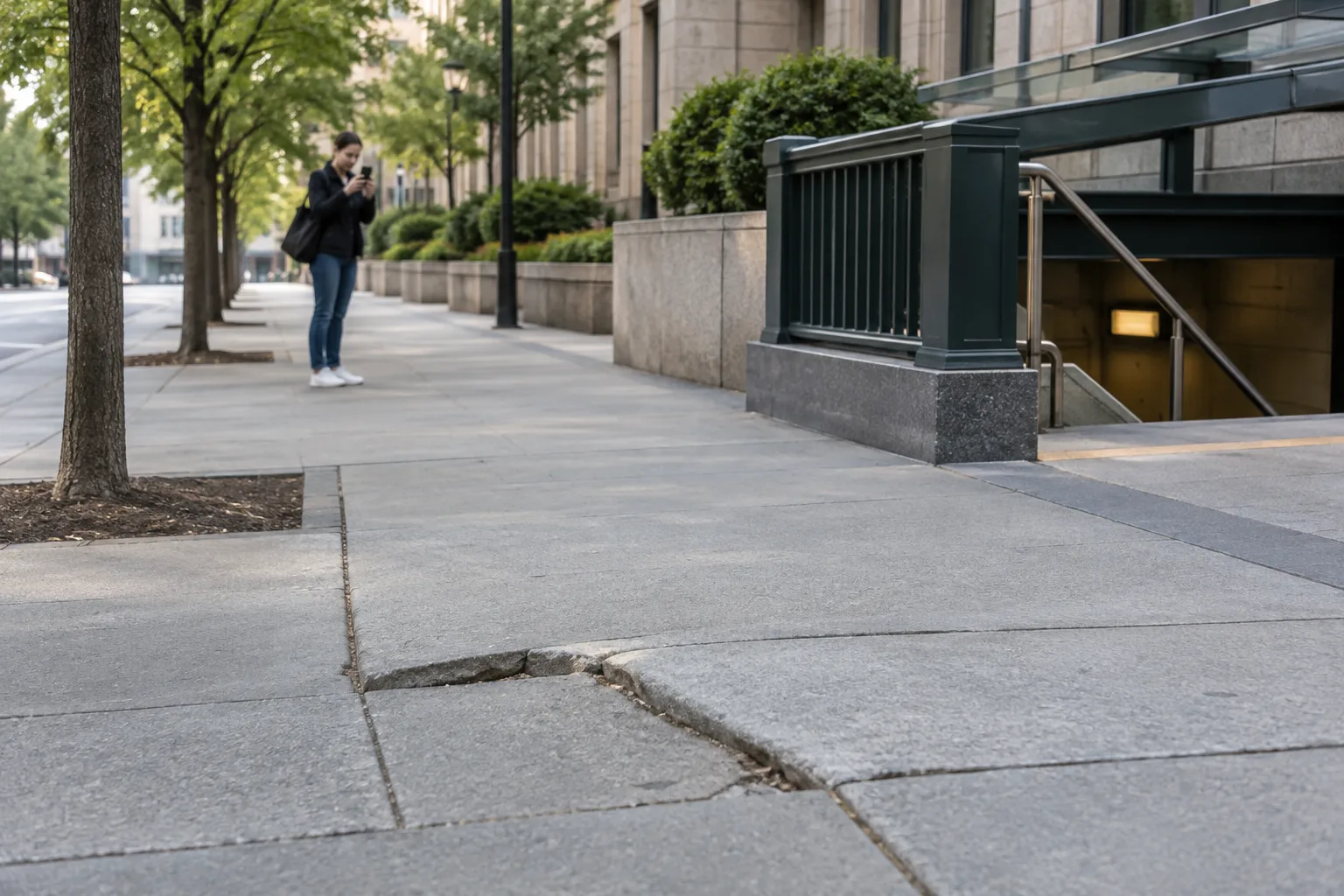
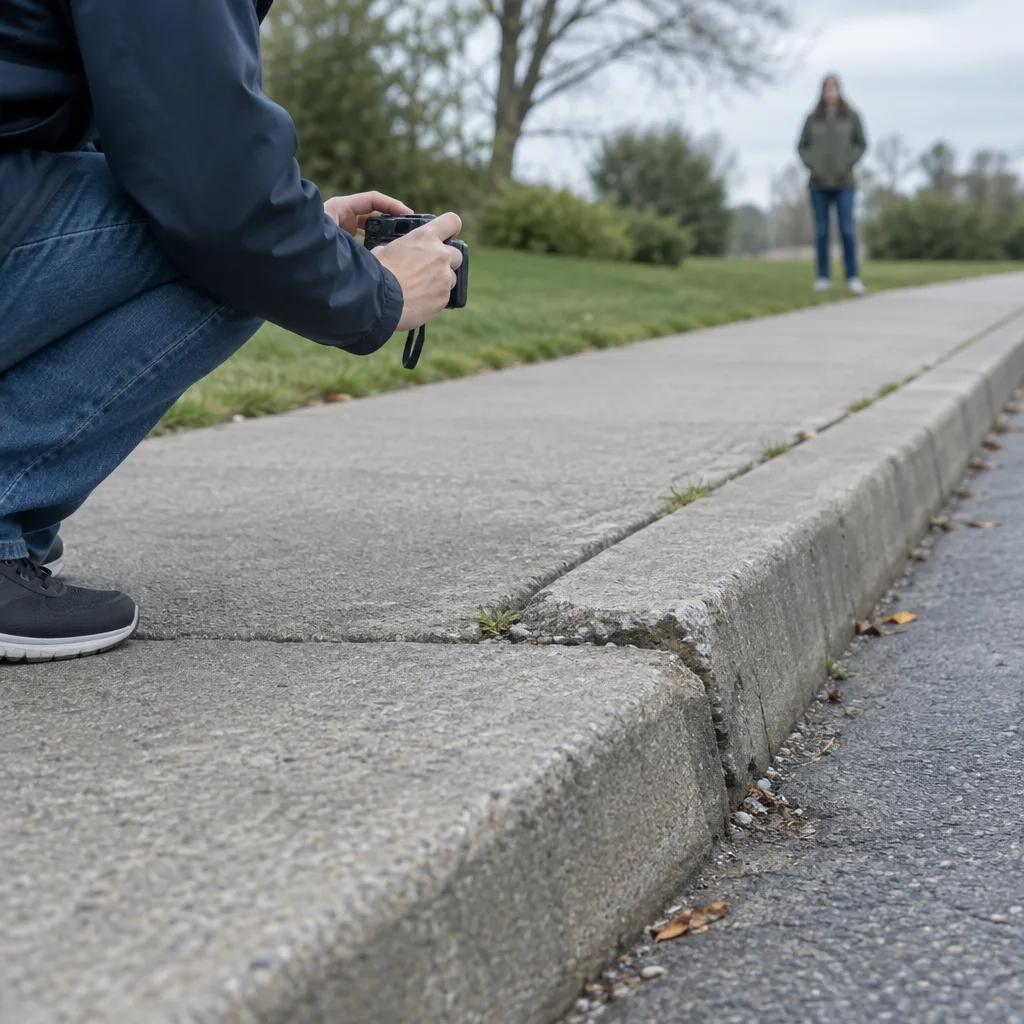
Evidence can change quickly. A surface may be repaired, a temporary obstruction removed, or weather conditions may alter what the location looks like. If it is safe and practical, take clear photographs of the scene from several angles. Include both close views of the condition and wider views that show where it was in relation to an entrance, curb, stairs, or other landmarks. Record the date and approximate time, and keep the original image files when possible.
Photograph visible injuries only when appropriate and without delaying care. Conditions and injuries may change, so additional dated images can help preserve a record over time. For more on saving original injury photographs for a New Jersey claim, see the related guide. Do not enter a hazardous area or put yourself at risk to obtain evidence.
Look for records and witness information
Potentially useful evidence may include maintenance or inspection records, prior complaints, work orders, incident reports, and video from cameras at or near the location. The relevant entity or private property owner may not be obvious, and recording systems may retain footage for limited periods. A useful starting point is understanding why New Jersey accident surveillance footage should be preserved early.
If witnesses are present, note their names and contact details if it is safe and appropriate. A brief description of what they saw and where they were standing may also help an investigation. Avoid coaching anyone or delaying medical attention to collect information. More practical suggestions appear in this guide to finding and documenting witnesses after a New Jersey accident.
Notice Deadlines and Common Investigation Mistakes
Claims involving New Jersey public entities may be governed by the New Jersey Tort Claims Act. In many cases, a written notice of claim generally must be presented within 90 days after the claim accrues. The notice process is separate from simply filing a lawsuit, and the rules can depend on the public entity and the circumstances. The Act also sets additional requirements and limits. A court may permit late notice in limited circumstances, but readers should not assume an extension will be available.
These deadlines make early identification and review important. The relevant notice may need to go to a particular public entity, and an incomplete or misdirected submission can raise issues. Other time limits may also apply to a lawsuit. Because deadlines and exceptions are fact-specific, a New Jersey attorney can assess which rules may apply; this article is not a substitute for that review.
Common evidence problems include relying on memory instead of recording the exact location, keeping only edited or compressed images, overlooking nearby cameras, and assuming that a public agency automatically knows about an incident. A careful record can include:
- The date, approximate time, precise location, and conditions at the scene.
- Photographs or video that show the condition and its surroundings.
- Names and contact details for witnesses, if available.
- The names of any responding agencies and any reference or incident information provided.
- Notes about nearby cameras, signs, barriers, repairs, or changes to the location.
Keep original files and copies of correspondence, and avoid publicly sharing sensitive evidence without considering privacy. A prompt legal review may help clarify which entity should receive notice, what records may be relevant, and how applicable time limits affect a potential claim.
Frequently Asked Questions
Does every injury on public property involve a New Jersey public entity?
No. A location that appears public may be owned, managed, or maintained by a private party, a public entity, or more than one organization. The relevant responsibilities depend on the specific property and the condition involved. Identifying who controlled the area can take investigation, so the appearance of a sidewalk, station, or park alone does not settle who may be responsible.
Is an incident report the same as a notice of claim?
Not necessarily. An incident report may document that an event occurred, but it may not satisfy the formal notice requirements that apply to a claim under the New Jersey Tort Claims Act. The contents, recipient, and timing of a notice can matter. A person should not assume that reporting an incident to an employee or agency preserves every legal right.
What if the dangerous condition was repaired after the accident?
A repair may change what the scene looks like, which is one reason photographs and other timely records can matter. Available evidence could include earlier images, witness accounts, maintenance records, or video, depending on the location and circumstances. A repair alone does not establish who was legally responsible. An attorney can evaluate the available facts and applicable rules.
Can a public entity be responsible if another party also contributed?
Possibly, but the answer depends on the facts, applicable duties, and legal defenses. A public entity, contractor, property owner, or another party may have had a role in maintaining or controlling the area. The existence of multiple possible parties does not automatically establish liability for any of them. Investigation can help determine what evidence exists and which legal standards may apply.
How Eric A. Shore Can Help
Eric A. Shore is dedicated to helping injured people understand the questions that can arise after an accident on New Jersey public property. A review may consider where the incident occurred, which public or private entities may have been involved, what evidence could help explain the condition, and whether a notice deadline may apply. The relevant facts and legal requirements vary, so an individual assessment matters.
If you are considering a New Jersey public entity injury claim, contact the firm to discuss your situation and request a free consultation or case evaluation. The team is ready to evaluate the available information and explain potential next steps without promising a particular result.
The information in this article is for educational purposes only and does not constitute legal advice. Contact a qualified attorney licensed in New Jersey for advice specific to your situation.