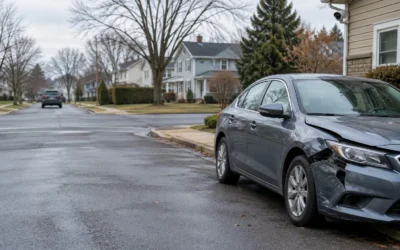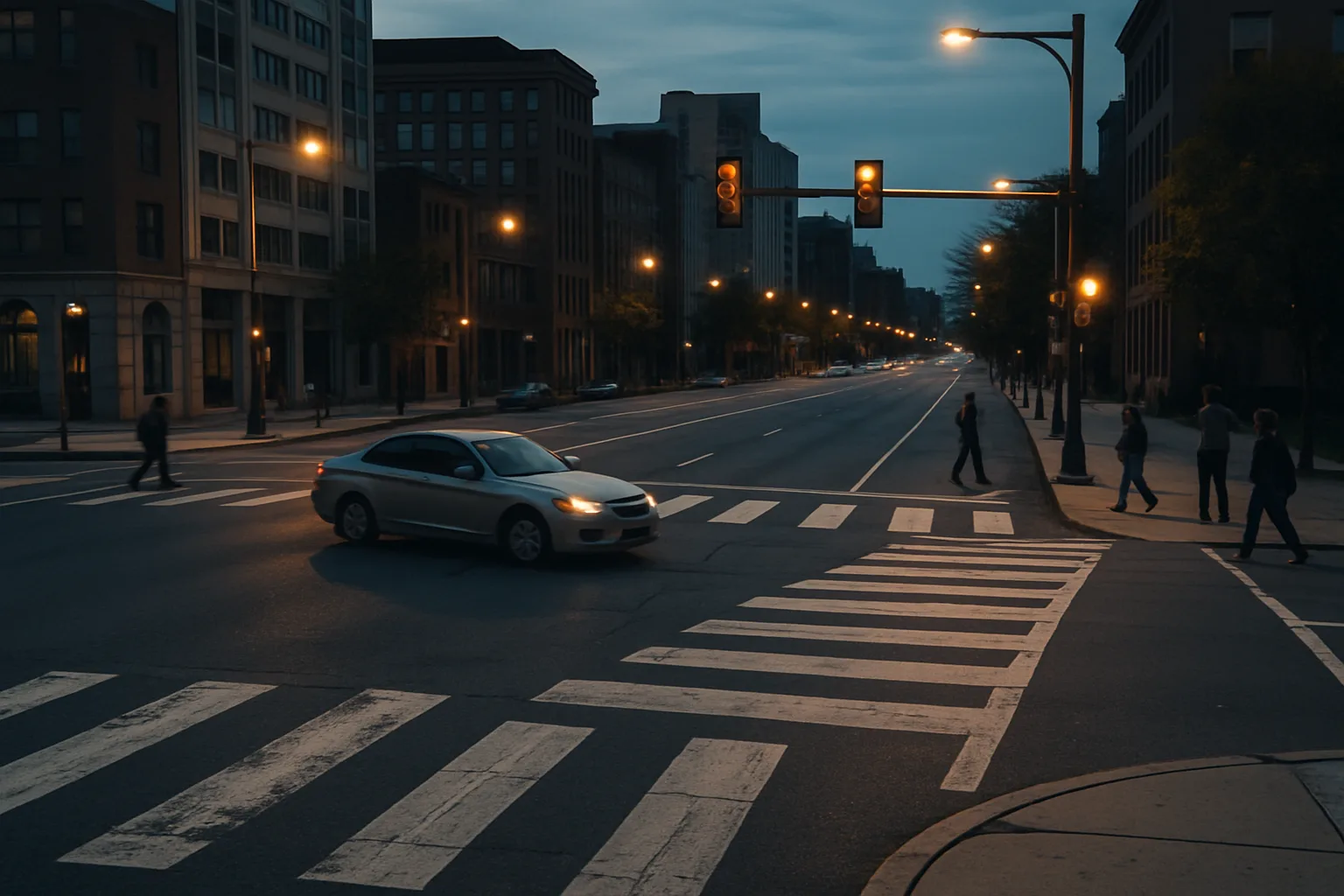
A driver turns across a crosswalk while a pedestrian is legally crossing. The markings are difficult to see, parked vehicles block the approach, and the traffic signal changes before the pedestrian reaches the other side. Who may be responsible when the layout itself makes the crossing harder to see or understand? That is the concern behind asking when a Philadelphia crosswalk pedestrian accident lawyer may need to examine the design, maintenance, and operation of an intersection.
In Philadelphia, a collision may involve more than the actions of the driver and pedestrian. Faded striping, limited sightlines, confusing lane assignments, poor lighting, or a crosswalk placed where turning vehicles routinely enter may be relevant evidence. Eric A. Shore can help injured people and families understand which facts may matter and how to organize them. This article discusses potential design-related issues, local investigation considerations, and the photographs, signal observations, witness information, and medical records that should be preserved after a crash.
How a Philadelphia Crosswalk Pedestrian Accident Lawyer Reviews Design Risks
A crosswalk is part of a larger traffic environment. Its safety may depend on whether drivers can see pedestrians, whether pedestrians can interpret the signals, and whether turning movements are separated or clearly controlled. A dangerous crosswalk in Philadelphia is not established merely because a collision occurred. The surrounding facts must be examined carefully.
Conditions that may affect visibility and predictability
Potentially relevant conditions can include:
- Faded, worn, or partially obscured crosswalk markings
- Parked vehicles, delivery activity, vegetation, construction equipment, or other objects that limit sightlines
- Poor lighting during nighttime or low-visibility conditions
- Multiple travel lanes or turning lanes that create uncertainty about where vehicles will proceed
- A crosswalk located close to a turning path, driveway, or other point where vehicles enter the pedestrian route
- The absence of a median or refuge area at a wide crossing
- Signals or signal phases that leave pedestrians and turning vehicles moving at the same time
These features do not automatically prove that a property owner, municipality, or driver is legally responsible. They may, however, help an investigator understand whether the intersection gave drivers and pedestrians adequate visual information. In Philadelphia, responsibility may depend on control of the roadway, notice of a condition, maintenance duties, the driver’s conduct, and other facts governed by Pennsylvania law.
What Evidence Should Be Preserved After a Philadelphia Crosswalk Crash?
Conditions can change quickly. A crosswalk may be repainted, a traffic signal may be retimed, construction may end, parked cars may move, and weather may improve. For that reason, photographs and notes taken soon after a collision can be important. A person who is injured may need help from family members or another trusted person to document the scene without interfering with medical care or safety.
Photograph the intersection from more than one approach
Useful scene documentation may show the view available to a driver approaching the crossing, the view available to a pedestrian, and the perspective of a turning vehicle. Photos should capture the full intersection as well as close views of markings, curbs, signal heads, lane arrows, obstructions, lighting fixtures, and nearby entrances. If possible, note the approximate time and direction from which each photograph was taken.
The goal is not to create a legal conclusion in a photograph. It is to preserve the physical context so that an attorney, engineer, investigator, or other qualified professional can evaluate it later. Avoid altering the scene or confronting other people while collecting information.
Record signals, weather, lighting, and witness details
If it can be done safely, observations should address:
- Which signal phase appeared when the pedestrian entered the crosswalk.
- Whether the signal changed while the pedestrian was crossing.
- Whether a vehicle had a green signal, turn arrow, yield indication, or other movement permission.
- Weather, road surface, daylight, darkness, glare, and visibility conditions.
- Names and contact information for witnesses, along with a short description of what each person observed.
A witness’s account may become harder to locate as time passes. Families should preserve photographs, videos, dispatch information, rideshare or vehicle-camera footage, and messages that identify potential witnesses. Depending on the roadway, records may involve the City of Philadelphia, the Philadelphia Streets Department, PennDOT, a property owner, or another entity with control over part of the crossing. The applicable process and time limits can vary, particularly when a government entity may be involved.
Organize medical records and injury information
Medical records help document the connection between the collision, reported symptoms, examinations, treatment, restrictions, and ongoing effects. Keep discharge paperwork, bills, prescription information, therapy records, work-related documentation, and notes about appointments or changes in daily activities. Records should be complete and accurate; they should not be changed to fit a legal theory.
How Is Crosswalk Design Liability in Philadelphia Evaluated?
A pedestrian injury claim may require analysis of several different relationships. The driver may be accused of failing to yield, failing to keep a proper lookout, or making an unsafe turn. A public entity or other responsible party may be examined regarding roadway design, maintenance, lighting, signals, or notice of a hazardous condition. In some cases, more than one factor may have contributed to the event.
A Philadelphia investigation may consider:
- Who owned, controlled, designed, maintained, or approved the relevant portion of the roadway
- Whether the condition was reported or otherwise known before the crash
- Whether records show prior complaints, inspections, repairs, signal work, or traffic studies
- Whether the crosswalk and signals were visible under the actual conditions at the time
- Whether Pennsylvania rules concerning pedestrian movement and driver duties apply to the facts
- Whether the injured person’s own conduct is alleged to have contributed to the collision
Pennsylvania’s comparative-fault principles may affect how responsibility is assessed, but the outcome depends on the evidence and legal issues in a particular case. Claims involving public property can also involve special rules and procedural requirements. A person should not assume that a design problem alone establishes liability or that an injured pedestrian has no claim because a driver disputes what happened.
Common evidence-preservation mistakes
People sometimes wait to photograph the scene, discard damaged clothing or personal items, post detailed accounts on social media, or rely on memory instead of writing down what they observed. They may also overlook medical follow-up or fail to identify witnesses who stopped briefly. These choices do not automatically determine a claim, but they can make later investigation more difficult.
A Philadelphia, PA pedestrian accident attorney may review available photographs, video, medical documentation, witness accounts, roadway records, and insurance information. Depending on the circumstances, counsel may also consult professionals who can analyze visibility, traffic movement, signal timing, or roadway design. The purpose of that review is to assess legal options, not to assume that any particular party is responsible before the facts are established.
Frequently Asked Questions
Can faded crosswalk paint support a pedestrian injury claim in Pennsylvania?
Faded markings may be relevant if they affected visibility or contributed to confusion at the crossing. They do not, by themselves, establish liability. An evaluation may consider who controlled the roadway, whether the condition was known or should have been discovered, the driver’s conduct, signal operation, lighting, and the pedestrian’s actions. Pennsylvania law applies to the claim, while specific duties can depend on the responsible entity and location.
What if the crosswalk looked safe during the day but the crash happened at night?
Nighttime evidence may be especially important because visibility can change with street lighting, glare, weather, shadows, and vehicle headlights. Photographs taken at a similar time and from the relevant approaches may help preserve those conditions. Investigators may also consider lighting maintenance and whether objects blocked illumination. Photos should be taken safely, and they cannot replace a fact-specific legal review.
Who should preserve traffic signal or roadway records after a crash?
The appropriate record custodian depends on the roadway and the agency or entity responsible for the signal, markings, or property. In Philadelphia, potentially relevant records may be held by the City of Philadelphia or PennDOT, among others. Requests and legal deadlines can vary, particularly when a government entity may be involved. A lawyer can explain possible preservation and request procedures based on the circumstances.
Can a pedestrian still have a claim if a driver says the pedestrian was partly at fault?
A driver’s allegation does not decide the issue. Evidence may include signal phases, crossing location, visibility, vehicle speed, turning movement, witness accounts, video, and the pedestrian’s conduct. Pennsylvania comparative-fault rules may affect recovery when multiple causes are disputed, but the result depends on the facts and applicable law. Prompt preservation of evidence can help clarify what occurred.
How Eric A. Shore Can Help
Eric A. Shore is dedicated to helping injured pedestrians and families examine the facts surrounding a collision. The firm can review photographs from multiple approaches, signal and visibility conditions, witness information, medical records, roadway responsibility, and other available evidence. When appropriate, counsel may evaluate whether records from the City of Philadelphia, PennDOT, a property owner, or another entity could be relevant.
The firm is committed to fighting for clients’ rights while providing a realistic explanation of potential legal options. If you or a family member was injured at a Philadelphia crosswalk, contact Eric A. Shore for a free consultation or case evaluation.
The information in this article is for educational purposes only and does not constitute legal advice. Contact a qualified attorney licensed in Philadelphia, PA for advice specific to your situation.