
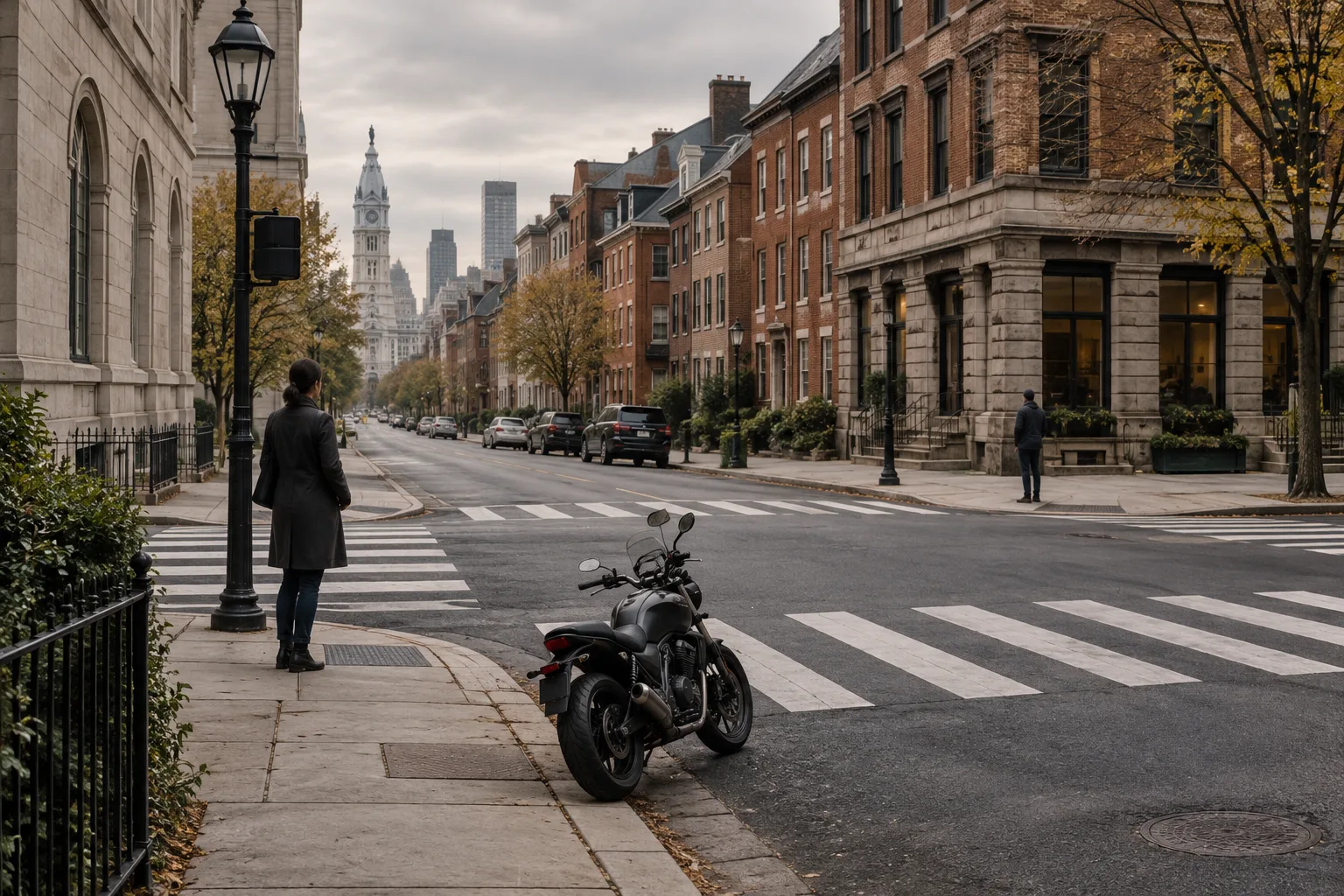
A motorcycle-pedestrian collision can leave an injured person or family trying to make sense of conflicting accounts: Where was the pedestrian crossing? How quickly was the motorcycle traveling? Could either person see the other in time? When a motorcycle hits a pedestrian in Pennsylvania, liability may depend on the answers to these questions, along with the roadway and available evidence. In Philadelphia, busy intersections, parked vehicles, transit stops, and changing traffic conditions can make the details especially important.
Pennsylvania motorcycle pedestrian accident liability is not decided simply by identifying who was struck. Eric A. Shore helps readers understand the questions that may arise in an injury or fatal-crash claim. This article explains how the motorcyclist’s and pedestrian’s actions may be assessed, how road conditions and witnesses can help clarify events, and what records may matter if injuries are serious or fatal. The facts of each collision are different, and an early account may not include everything that later evidence reveals.
Who may be liable when a motorcycle hits a pedestrian in Pennsylvania?
Responsibility may rest with a motorcyclist if evidence indicates that careless operation contributed to the collision. Investigators may consider speed in context, attention, visibility, braking, positioning, and whether the rider responded reasonably to conditions. No single factor automatically establishes fault; the full sequence of events matters.
The pedestrian’s conduct may also be examined. Crossing location, traffic signals, visibility, and whether the pedestrian entered the roadway unexpectedly can be relevant. That does not mean a pedestrian is automatically responsible for being struck. Pennsylvania generally follows a comparative-negligence approach: a person’s share of fault may affect damages, and recovery may be barred if that person’s fault is greater than the combined fault of others. How the rule applies depends on the evidence and the claim. For more on that issue, see Pennsylvania pedestrian claims involving shared fault.
Other parties may warrant consideration when there is evidence their own conduct contributed. For example, questions could arise about an employer’s role if a rider was working at the time, or about a vehicle owner’s actions in a particular situation. A road or property condition might also be relevant, but that does not automatically make a public agency or property owner liable. Each potential party’s connection to the crash must be supported by facts.
How can the pedestrian’s conduct affect liability?
A claim may involve competing accounts of where each person was and what they could see. Pennsylvania law can allow fault to be shared rather than treating every collision as an all-or-nothing decision. The evidence—not assumptions about pedestrians or riders—helps determine how responsibility may be allocated.
What evidence can clarify a Philadelphia motorcycle-pedestrian crash?
A clear account often comes from comparing different kinds of evidence rather than relying on one person’s memory. Depending on what exists, relevant material may include:
- Photographs or video showing the scene, vehicle positions, lighting, weather, and sightlines.
- Witness descriptions of the motorcycle’s approach, the pedestrian’s movements, traffic signals, and events after impact.
- Crash reports and available medical or insurance records, which may document different parts of the event and its consequences.
- Physical details such as roadway marks or damage, if documented and interpreted appropriately.
In Philadelphia, the location may affect what evidence is available. A commercial property, transit vehicle, or nearby residence may have recorded video, but footage may not be kept indefinitely. Street layout, crosswalk markings, signal timing, parked vehicles, and lighting can also help explain what each person could see. Learn more about Philadelphia crosswalk design and sightline evidence.
Preserving accurate scene information can be useful because conditions may change. Photographs, the precise crash location, and details about potential cameras may help identify leads for further investigation. See guidance on preserving evidence after a Philadelphia pedestrian crash. Witnesses can add independent observations, although their accounts may differ or be incomplete. Recording contact details and preserving witness accounts after a Philadelphia crash can help keep those observations available without coaching anyone or asking them to speculate. For additional context on this issue, see preserving witness accounts after a Philadelphia crash.
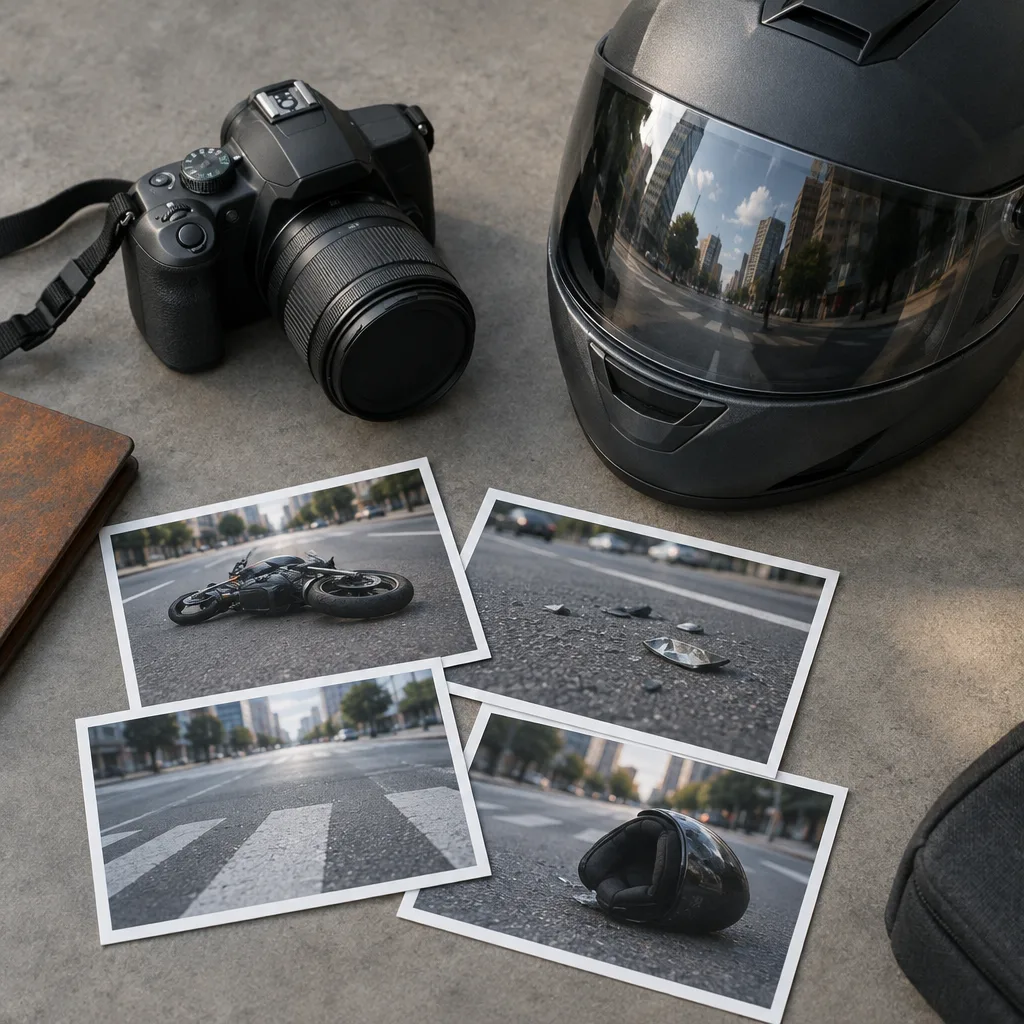
Could roadway conditions have contributed?
A collision may involve more than the actions of the rider and pedestrian. Obstructed sightlines, confusing markings, signal operation, lighting, or a roadway defect may be worth examining. Whether a condition contributed—and whether another party may be legally responsible—depends on evidence and applicable rules, including special requirements that can apply to claims involving public entities.
What happens after a motorcycle-pedestrian crash?
A potential claim may require evidence gathering, evaluation of fault, identification of relevant insurance coverage, and attention to applicable deadlines. Those steps can vary with the circumstances, including the type and severity of injury and whether a public entity may be involved. Pennsylvania procedures and deadlines are not interchangeable with those in other states. An overview of Pennsylvania motorcycle accident claim steps and deadlines may help explain the broader process without resolving an individual pedestrian’s claim.
If the collision happened in Philadelphia, a lawsuit may be handled in the Philadelphia County Court of Common Pleas if that court is the proper venue and the case proceeds there. A court filing is not the first or only way a claim may be addressed. The right venue and process depend on factors such as the parties and legal issues involved.
An injured pedestrian or family may find it helpful to keep records organized and separate confirmed facts from assumptions. Evidence should be preserved lawfully and accurately. Avoid altering original photos or recordings, and do not treat an initial police report or a single witness account as the final word on fault. A thorough review may compare the scene, accounts, physical evidence, and relevant records.
What if the pedestrian dies from the injuries?
A fatal crash raises separate questions about who may bring a claim and what losses may be considered. Pennsylvania law provides for wrongful-death and survival claims, but who may act and how a claim proceeds can depend on the family relationship, estate matters, and circumstances. Families may need to preserve crash, medical, and other relevant documentation. This overview of records families may need after a fatal Philadelphia crash discusses evidence that may help clarify responsibility and support a potential claim. A fatal motorcycle pedestrian accident in Pennsylvania should be assessed on its own facts; no particular outcome is automatic.
Frequently Asked Questions
Does the motorcyclist automatically bear responsibility if a pedestrian is hit?
No. A collision alone does not establish who was legally at fault. The analysis may consider the motorcyclist’s actions, the pedestrian’s movements, visibility, signals, and roadway conditions. Evidence such as video, physical scene details, and witness accounts may help clarify what happened. Pennsylvania’s comparative-negligence rules may also matter if more than one person contributed to the crash.
Can a pedestrian still bring a claim if they were outside a crosswalk?
Possibly. The pedestrian’s location may be relevant, but it does not by itself answer every liability question. The surrounding circumstances—including visibility, signals, the rider’s actions, and road layout—may also matter. Pennsylvania’s shared-fault rules can affect a claim, so the specific evidence and how the law applies are important.
What if there were no witnesses to the motorcycle-pedestrian crash?
A claim does not necessarily depend on eyewitness testimony. Available video, scene photographs, physical evidence, crash records, and other reliable information may help establish a timeline or explain visibility and movement. Evidence differs from crash to crash, and the absence of a witness does not itself determine liability. A review can identify what sources may still be available.
What records may matter after a fatal pedestrian collision in Philadelphia?
Potentially relevant records may include crash documentation, available photographs or video, medical records, and estate or family records related to a potential claim. Which documents matter depends on the circumstances and the type of claim. Families may wish to understand preservation and procedural issues with a qualified attorney; this general overview cannot determine eligibility or an individual family’s rights.
How Eric A. Shore Can Help
Eric A. Shore is dedicated to helping injured people and families understand the questions that can arise after a motorcycle-pedestrian collision. A careful evaluation may consider the conduct of everyone involved, roadway conditions, witness accounts, available records, and whether more than one party may have contributed. The firm is committed to fighting for clients’ rights while recognizing that each case depends on its own facts and applicable Pennsylvania law. If you are dealing with a Philadelphia crash, contact Eric A. Shore to discuss your circumstances and request a free consultation or case evaluation.
The information in this article is for educational purposes only and does not constitute legal advice. Contact a qualified attorney authorized to practice in the jurisdiction that applies to your matter for advice specific to your situation. Pennsylvania law may change, and legal rules can vary by jurisdiction.



