A pedestrian or cyclist may remember only a few moments after a collision: a vehicle turning, a sudden impact, or the sound of brakes. Because there is no enclosed passenger compartment to preserve the story of what happened, the physical and digital evidence can become especially important. For anyone researching Philadelphia pedestrian accident evidence, early preservation may help clarify visibility, vehicle movement, right-of-way, and the nature of the injuries.
A useful starting point is a broader Philadelphia injury-claim evidence checklist. Eric A. Shore helps injured people understand why photographs, witness details, medical records, clothing, bicycle condition, and roadway information may matter together rather than relying on a police report alone. This guide explains what to document, what not to alter, and how Philadelphia-specific conditions can affect the evaluation of a pedestrian or bicycle crash.
What Philadelphia Pedestrian Accident Evidence Should You Preserve First?
The first priority is safety and medical attention. If it is safe to do so, someone at the scene can contact 911, identify the location, and preserve basic information without returning to traffic or placing anyone at further risk. These immediate steps after a Philadelphia pedestrian accident may include obtaining emergency assistance, recording vehicle information, and arranging appropriate medical evaluation.
Keep physical evidence in its original condition
Do not wash or discard clothing worn during the crash if it can be stored safely. Torn, scuffed, or marked clothing may help show contact points, although its significance depends on the full evidence. Keep shoes, a helmet, lights, reflectors, and other equipment in their post-crash condition. Avoid repairing, selling, or discarding a damaged bicycle before its condition has been documented and, when appropriate, evaluated.
Photograph the bicycle from multiple angles, including bent components, scraped surfaces, broken lights, and damage to wheels or handlebars. Photograph the striking vehicle if it remains available, including damage, debris, and the vehicle’s position. Do not confront a driver or attempt to inspect a vehicle in an unsafe location.
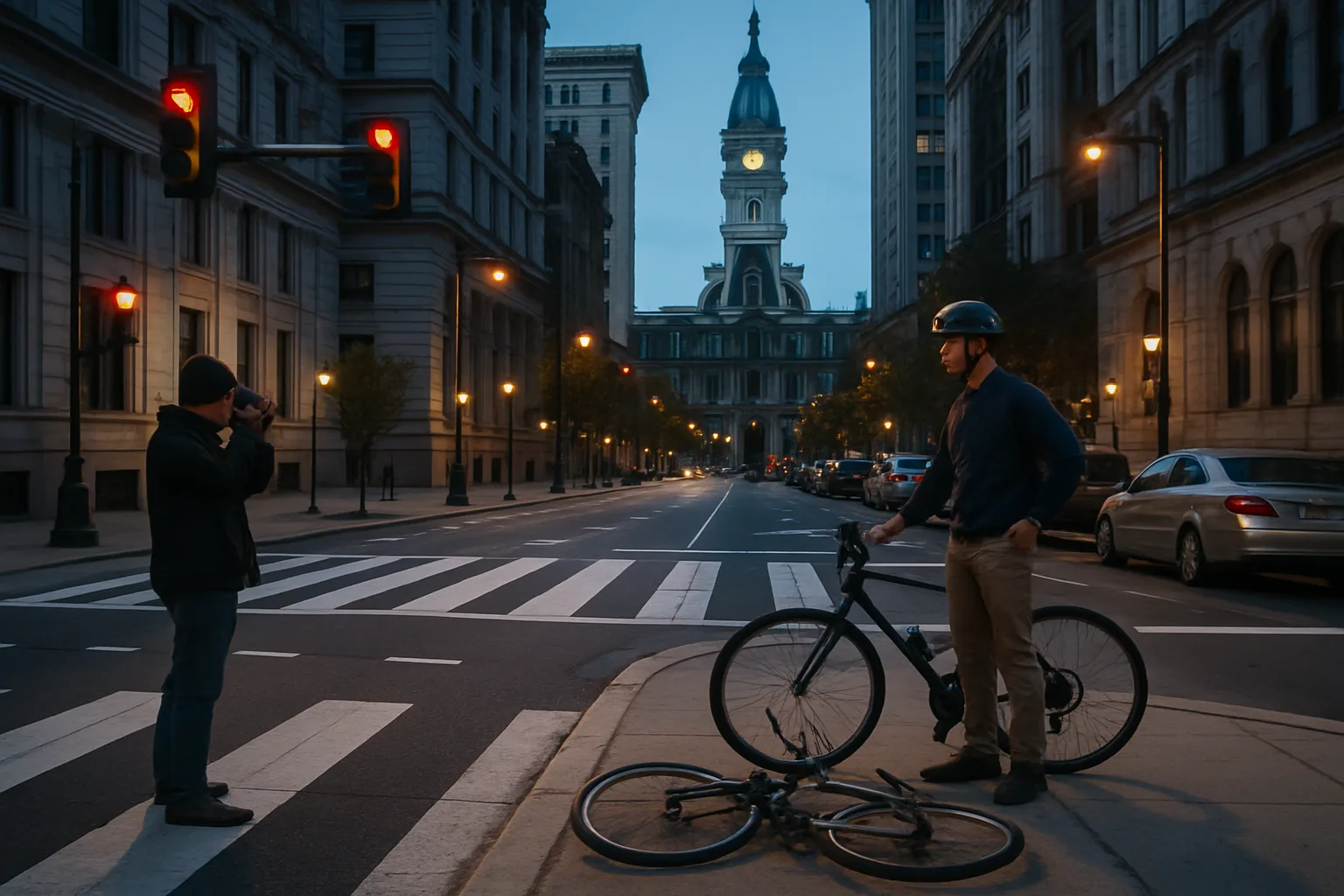
Evidence involving Philadelphia crosswalk design and sightlines can include markings, lighting, obstructions, and the positions of road users.
How Do Photos, Video, and Witnesses Explain a Philadelphia Crash?
A photograph should capture more than a close-up of an injury or a damaged bicycle. Safe, well-framed images may show the entire intersection, lane configuration, crosswalk markings, traffic signs, curb area, parked vehicles, construction barriers, lighting, and possible obstructions. Take notes about weather, surface conditions, time of day, and whether streetlights or vehicle headlights appeared to be operating. Conditions can change after a crash, so the original images and their metadata may be useful.
Nearby video may come from businesses, residences, traffic cameras, transit locations, or vehicle systems. Record the names and locations of possible sources, but do not trespass or pressure a property owner. Video systems may overwrite recordings, and access may require a formal request or legal process. A lawyer can assess preservation options under the circumstances.
Right-of-way and driver attention
In a disputed intersection crash, the relevant details may include the pedestrian’s or cyclist’s path, the driver’s turn, the signal phase, the crosswalk timing, sightlines, and whether parked vehicles or other objects limited visibility. A person’s confident memory is not always enough to establish timing. This is why Philadelphia traffic-signal evidence in a disputed intersection crash may include signal information, intersection video, photographs, and competing accounts.
Witnesses should be identified promptly. Record names and contact information when possible, along with where each person was standing and what they appear to have observed. Avoid coaching witnesses or asking them to adopt a particular description. A neutral account of what a witness saw, heard, or did not see may be more useful than a conclusion about who was at fault.
Which Medical, Vehicle, and Roadway Records Matter Most?
Medical documentation helps connect the crash to reported injuries and the care that followed. Seek appropriate evaluation based on the circumstances and accurately describe symptoms to medical providers. Keep discharge paperwork, visit summaries, imaging information, referral records, prescriptions, bills, and work-related documentation. Symptoms can develop or change over time, so the record should reflect the person’s experience accurately rather than minimizing or exaggerating it.
This medical evidence connecting injuries to a Philadelphia crash explains why emergency records, follow-up notes, imaging, and consistent reporting may matter. Medical records do not automatically resolve questions about fault, but they can help establish timing, treatment, and the claimed effect of the collision.
Vehicle and bicycle evidence can answer different questions. Damage patterns, broken lights, paint transfer, debris, and the final positions of objects may help reconstruct contact, but interpretation often requires qualified analysis. The striking vehicle may also contain electronic event data concerning matters such as braking, speed, or airbag deployment. Such data is not present in every vehicle, may be limited in scope, and may require formal preservation or legal process. Information about Philadelphia vehicle event data that may clarify a crash should be evaluated in context rather than treated as automatic proof.
A helmet can be relevant evidence, but its presence or absence does not by itself answer every legal question. Preserve the helmet and photograph its condition. Whether helmet use, lighting, clothing, or other conduct matters depends on the facts and applicable Pennsylvania law. Similarly, roadway design may raise questions about sightlines, lighting, signal placement, lane configuration, or construction. Those issues should be documented without assuming that a condition alone establishes responsibility.
What Common Evidence Mistakes Should Crash Victims Avoid?
People involved in a Philadelphia pedestrian or bicycle crash sometimes focus only on the police report. The report can be important, but it may not capture every witness, video source, signal phase, visibility condition, or later medical development. A careful evidence file may include:
- Original photographs and videos, not only edited or compressed copies.
- Witness names, contact details, and location at the time of the collision.
- Clothing, helmet, bicycle, lights, and other equipment preserved without cleaning or repair.
- Notes about weather, lighting, traffic, road surface, construction, and obstructions.
- Medical records, bills, treatment instructions, and documentation of missed work.
- Insurance correspondence and records of requests for statements or authorizations.
Do not post detailed theories, photographs, or arguments about fault on social media. Do not delete relevant posts or messages either; preservation should be handled carefully and consistently. Avoid giving a recorded statement or signing a release without understanding what it covers. Depending on the circumstances, an attorney may review communications and explain potential concerns.
Pennsylvania rules and procedures can differ from those in other states and may change over time. Questions involving comparative responsibility, insurance coverage, evidence preservation, or a possible claim should be evaluated under Pennsylvania law by a qualified lawyer familiar with the relevant Philadelphia process.
Frequently Asked Questions
Should I keep my bicycle after a Philadelphia crash?
Generally, preserving the bicycle in its post-crash condition can be useful. Do not discard, repair, clean, or sell it before photographs and an appropriate evaluation are considered. Store it safely and avoid further damage. The importance of particular defects or damage depends on the collision and the available evidence. If storage is difficult, a lawyer may help evaluate reasonable preservation options.
Can nearby business video help prove a pedestrian hit by car claim?
It may. Exterior cameras can sometimes show traffic signals, vehicle movement, a turn, a cyclist’s path, or what happened immediately before impact. Record the location and possible camera sources promptly because systems may overwrite footage. Do not assume video exists or shows the entire event. Access may require cooperation from the owner or formal legal procedures, depending on the source.
What if I do not know any witnesses in Philadelphia?
You may still be able to identify potential witnesses through scene photographs, emergency records, nearby businesses, transit locations, or other people who were present. Write down what you remember about where observers stood and what they said, without guessing at names or contact details. A lawyer can evaluate reasonable methods of locating witnesses and preserving their accounts.
Does not wearing a helmet decide a bicycle accident claim?
No single fact automatically decides a claim. Helmet use, lighting, clothing, road position, traffic signals, and other circumstances may be considered differently depending on the facts and applicable Pennsylvania law. Preserve the helmet and related equipment, and avoid making assumptions about how one detail will affect the matter. A licensed attorney can discuss the issue in context.
How Eric A. Shore Can Help
Eric A. Shore is dedicated to helping injured pedestrians and cyclists organize the evidence surrounding a Philadelphia crash. The firm is committed to fighting for clients’ rights while examining physical evidence, witness accounts, medical documentation, roadway conditions, vehicle damage, and available digital information. Because evidence can be incomplete or disputed, the team is ready to evaluate the circumstances carefully and explain potential legal options without promising a particular result.
If you or a family member was involved in a pedestrian or bicycle collision, contact Eric A. Shore for a free consultation or case evaluation. Preserve what you can safely, and seek advice specific to your situation.
The information in this article is for educational purposes only and does not constitute legal advice. Contact a qualified attorney licensed in Philadelphia, PA for advice specific to your situation.