Winter conditions can change between the time a person leaves home and the moment a fall occurs. Snow may melt, water may drain across a walkway, and freezing temperatures may turn a damp surface into an almost invisible layer of ice. For someone researching Philadelphia ice slip and fall evidence, the central question is often not simply whether it snowed, but when the dangerous condition formed, how long it remained, and whether the responsible party had a reasonable opportunity to address it.
Eric A. Shore explains how Philadelphia snow and ice lawyers assess winter claims, including the relationship between weather, drainage, notice, and responsibility. Weather records can be an important part of that analysis, but they work best when paired with photographs, witness accounts, clothing, medical documentation, and evidence identifying who controlled the location. This article explains what to document, how weather information may fit into a claim, and common mistakes that can weaken the evidence.
How Philadelphia Ice Slip and Fall Evidence Uses Weather Records
Weather records may help create a timeline. Depending on the location and available sources, an attorney may review precipitation observations, temperature readings, snowfall information, wind, and freeze-thaw patterns from the National Weather Service, NOAA, or other reliable records. A nearby observation station may not reflect conditions at the exact sidewalk or parking lot, so the distance and location of the source matter.
What weather data may help show
A weather record could help place several questions in context:
- When precipitation began and whether it was rain, sleet, or snow.
- Whether temperatures were near or below freezing when the fall occurred.
- Whether melting during the day could have been followed by refreezing.
- Whether accumulated snow or ice may have remained after a storm.
- Whether a sudden change in conditions makes a precise timeline especially important.
This evidence does not automatically prove negligence. Pennsylvania law governs many premises claims in Philadelphia, and liability can depend on issues such as control of the property, notice, the character of the hazard, and the circumstances of the person’s conduct. Weather information is most useful when it supports a larger factual picture rather than being treated as a stand-alone answer.
Why timing matters
A storm that ended shortly before a fall may raise different questions from a recurring icy patch that remained for hours or days. Records may help an attorney compare the reported fall time with precipitation, temperature changes, and likely melting or refreezing. They may also help identify inconsistencies between a property account and objective conditions, without deciding the legal issue by themselves.
What Should You Document at a Philadelphia Ice Fall Location?
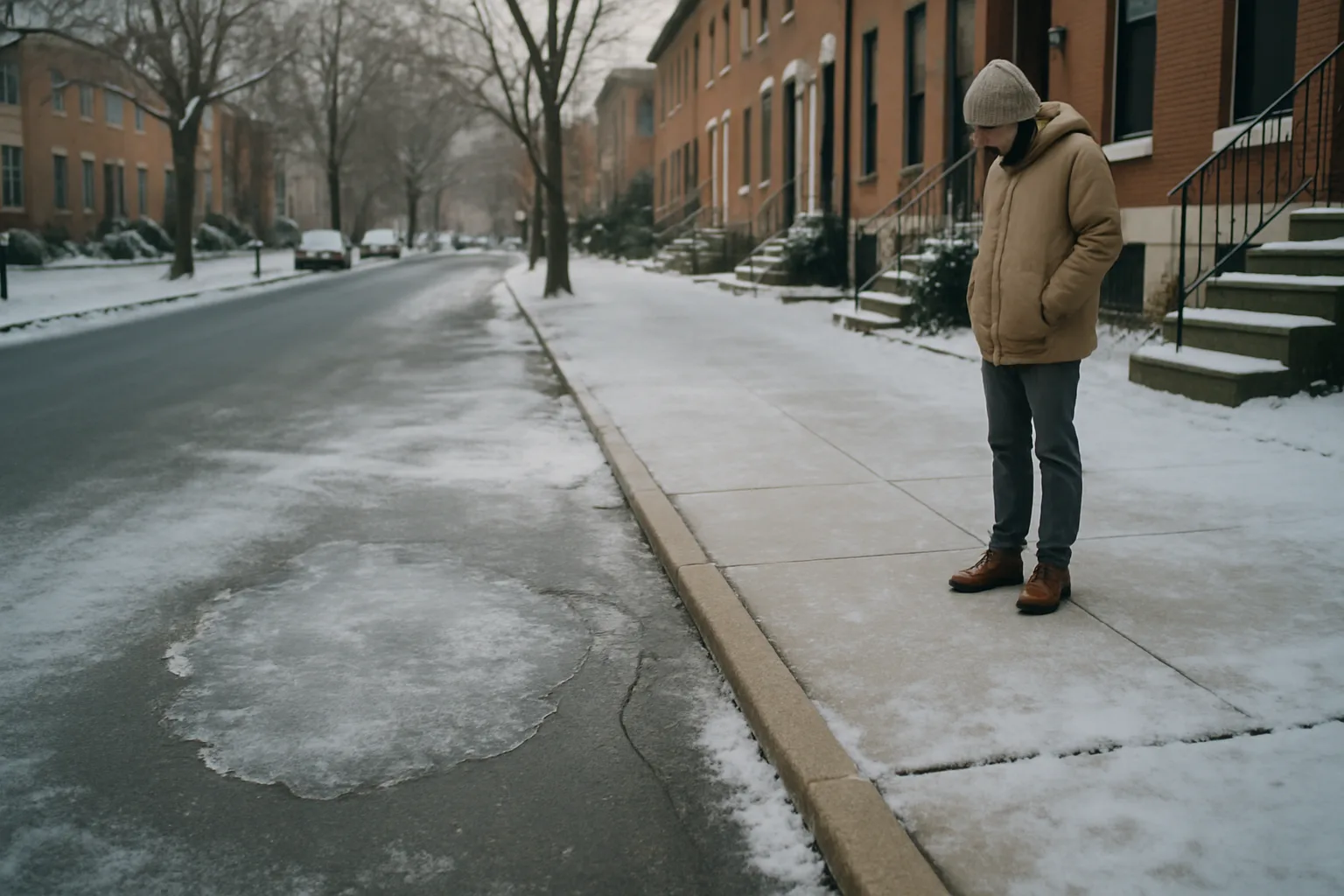
The physical scene may disappear quickly. Salt, plowing, sunlight, foot traffic, drainage, and rising temperatures can change the surface before photographs are taken. If it is safe to do so, prompt documentation can preserve details that weather records alone cannot show.
Photograph the condition and the surrounding path
Photographs should generally show more than a close-up of the ice. A useful set may include:
- The precise area where the person fell, from several angles.
- The approach route, including curb transitions, stairs, ramps, and changes in elevation.
- Nearby addresses, entrances, businesses, landmarks, or other features that identify the location.
- Drainage features, downspouts, gutters, snow piles, shaded areas, and places where water could collect.
- Lighting conditions, including whether the area was dark, obstructed, or difficult to inspect.
- Footprints, tire tracks, salt, slush, or untouched snow that may show how people were navigating the area.
For more on documenting a Philadelphia sidewalk accident claim, the exact location, surrounding walkway, and possible maintenance responsibility should be preserved before the scene changes. Avoid placing yourself or another person in danger to recreate a fall or obtain a photograph.
Preserve physical and personal evidence
Clothing and footwear may retain ice, moisture, salt, mud, or other material that helps describe the surface. In many cases, it is sensible to preserve the items as they were after the incident rather than immediately washing or discarding them, while avoiding any assumption that they will prove fault.
Treatment records, discharge paperwork, photographs of visible conditions, and a contemporaneous description of pain or limitations may connect the event to later care. Medical decisions belong with qualified healthcare professionals; the evidence point is to preserve records and communicate accurately about what happened and when.
How Can You Show Who Knew About the Winter Hazard?
Weather records may support an argument about when a condition could have formed, but a claim may also require evidence concerning who owned, occupied, maintained, or controlled the area. In Philadelphia, the potentially responsible party may differ depending on whether the fall occurred near a private building, retail property, apartment complex, parking area, or public sidewalk. Identifying the location precisely is therefore important.
For guidance on identifying who controlled the Philadelphia property, record the full address, business or building name, entrance, property features, and any available maintenance contact. Do not assume that the nearest business or a municipality is responsible without investigating the property arrangement.
Evidence that may address persistence and notice
Depending on the facts, relevant materials may include:
- Snow-removal or salting schedules.
- Inspection and maintenance logs.
- Incident reports and communications about the fall.
- Prior complaints involving the same walkway or recurring drainage problem.
- Statements from employees, residents, delivery workers, or nearby observers.
- Surveillance video showing the condition, foot traffic, warnings, or maintenance activity.
Records concerning prior Philadelphia hazard complaints and maintenance history may help show whether a condition was recurring or whether someone had information about it. They do not necessarily establish that a legal duty was breached, but they may help develop questions about duration, notice, and response.
Preserve witness information without coaching
A witness may remember the fall time, lighting, footprints, warnings, weather, or whether the ice was visible before anyone intervened. Obtain names and contact information when possible, and write down what each person personally observed. Avoid asking witnesses to speculate about fault or telling them what their account should say. Preserving accurate Philadelphia witness accounts can be valuable because memories and conditions may change.
A simple incident record should include the date, approximate time, exact location, weather as personally observed, footwear, clothing, photographs taken, witnesses, reported symptoms, and treatment received. For a broader framework concerning the strongest evidence for a Philadelphia injury claim, organize original photographs, messages, records, and reports rather than relying only on edited screenshots or memory.
What Mistakes Can Weaken Philadelphia Winter-Condition Evidence?
Several evidence problems arise because snow and ice conditions are temporary. Waiting several days to photograph the area may mean the condition has been salted, shoveled, melted, or covered by new precipitation. A later photograph can still provide context, but it may not show what existed at the time of the fall.
Other common problems include:
- Recording only a close-up. Without landmarks, an image may not establish where it was taken or whether it shows the precise fall location.
- Ignoring lighting and drainage. Visibility and water flow may be central to whether the hazard could be seen and how it formed.
- Discarding clothing or footwear. Those items may contain useful condition evidence, even though they do not determine liability alone.
- Failing to note the exact time. A weather record is difficult to compare with an event described only as “sometime that morning.”
- Assuming a weather report proves fault. It may show temperature or precipitation, but usually does not identify the responsible property party or establish notice by itself.
- Posting inconsistent accounts online. Public statements, photographs, or messages may later be compared with testimony and formal records.
A person should generally avoid altering the scene, confronting property staff, or making statements about legal responsibility before understanding the facts. Depending on the circumstances, an attorney may help preserve video, request records, identify the appropriate property parties, and evaluate whether the available evidence supports a claim under Pennsylvania law. Laws and procedures can vary by location and may change after publication.
Frequently Asked Questions
Can weather records prove that a Philadelphia sidewalk was dangerous?
Weather records may help show that freezing temperatures, precipitation, melting, or refreezing were possible at a particular time. They generally do not prove every element of a Philadelphia sidewalk ice injury claim by themselves. Photographs, witness accounts, maintenance records, lighting observations, and evidence about the property’s control may be needed to explain what actually existed at the fall location and whether a responsible party had notice.
What if the ice melted before I could photograph it?
A missing photograph does not necessarily end an inquiry. Weather records, photographs taken by others, witness observations, messages, incident reports, clothing, and the timing of treatment may help reconstruct the event. A later inspection can document drainage, shade, grading, or recurring problem areas, although it may not perfectly show the original condition. The value of each item depends on how closely it relates to the time and place of the fall.
Do footprints help a snow and ice accident claim?
Footprints may provide context about whether people walked through a snowy area, avoided a particular patch, or compacted snow into a smoother surface. They can also help identify the path involved. However, footprints can be altered by later traffic and do not automatically prove how long a condition existed or who was responsible. Photographs should show the surrounding area and be accompanied by the approximate time they were taken.
Should I speak with a snow and ice accident lawyer in Philadelphia?
A consultation may help a person understand what evidence could matter, which property parties may need investigation, and how Pennsylvania law may apply to the facts. A lawyer may also discuss preservation of surveillance video, weather information, witness details, clothing, and medical records. No attorney can promise a particular result, and the usefulness of a consultation depends on the specific circumstances and available documentation.
How Eric A. Shore Can Help
Eric A. Shore is dedicated to examining the details that can distinguish a brief weather event from a condition that may have persisted or recurred. The firm is committed to fighting for clients’ rights by evaluating the fall location, weather timeline, lighting, drainage, footprints, clothing, treatment, witnesses, maintenance evidence, and property control.
The team is ready to evaluate your situation and explain potential legal options in light of the available evidence. If you were injured in a Philadelphia ice or snow fall, contact Eric A. Shore for a free consultation or case evaluation.
The information in this article is for educational purposes only and does not constitute legal advice. Contact a qualified attorney licensed in Philadelphia, PA for advice specific to your situation.