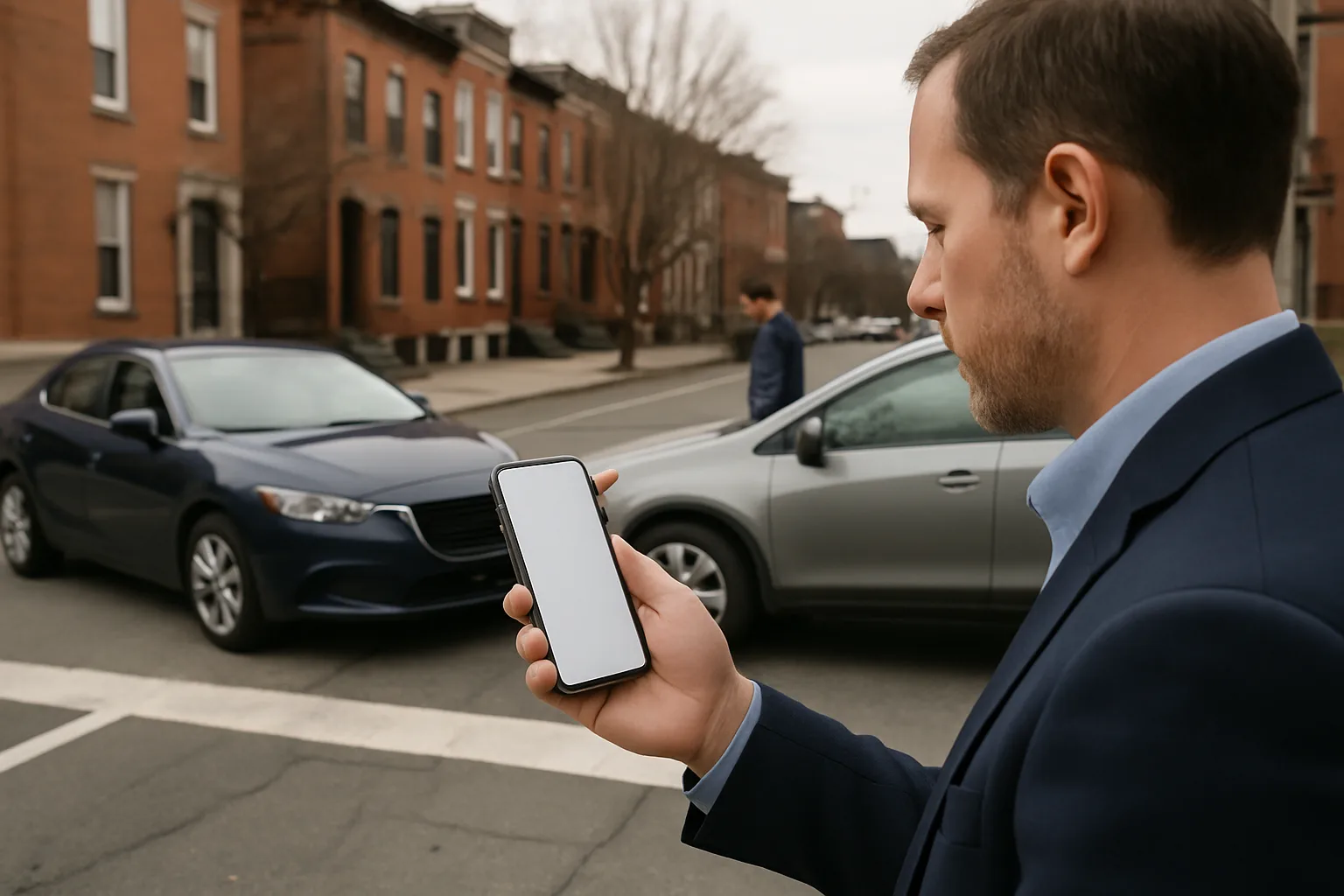
A rideshare collision can leave more than damaged vehicles and injury paperwork behind. The Uber or Lyft app may also contain a time-stamped record of where a driver was, what trip stage had begun, and who was connected to the ride. If that information is not preserved, important details may become harder to confirm later.
For anyone researching Philadelphia rideshare accident evidence, the key question is often whether the driver was offline, available for a ride, traveling to pick up a passenger, or carrying a passenger when the crash occurred. Screenshots and receipts can help identify the trip and vehicles involved. A Philadelphia rideshare injury lawyer may also help explain preservation issues when several people or insurers are involved. Eric A. Shore provides guidance to injured passengers, drivers, cyclists, and pedestrians seeking to understand their options. This article discusses the app records that may matter, related crash evidence, insurance concerns, and common preservation mistakes.
Which Philadelphia Rideshare Accident Evidence Shows the Driver’s App Status?
A rideshare driver’s status at the time of impact can affect how an insurance claim is evaluated. The relevant facts may include whether the driver was signed out, logged in and waiting for a request, traveling to a pickup location, or transporting a passenger. The precise coverage available depends on the policies, facts, and applicable law.
App records that may clarify trip activity
Potentially useful records include:
- Screenshots showing the trip screen, driver status, pickup point, destination, or route;
- The passenger’s electronic receipt, fare summary, or trip history;
- In-app messages or call records connected to the ride;
- Trip request, acceptance, cancellation, or arrival notifications;
- Timestamps, GPS information, and map details visible in the account;
- Emails or text messages confirming a booking or completed trip.
A screenshot is most useful when it preserves the date, time, and surrounding account context without editing. The driver’s own records may be different from the passenger’s records, so both perspectives can matter. Information about Philadelphia rideshare insurance layers may help readers understand why the difference between “available,” “en route,” and “on a trip” deserves careful attention.
What Should You Preserve After an Uber or Lyft Collision?
App information is only one part of a potential claim. In Philadelphia, a crash report, photographs, medical records, and insurance information may help establish what happened and who was involved. The Philadelphia Police Department or another responding agency may create an incident record, but availability and access can depend on the circumstances and the agency’s procedures.
After immediate safety and medical concerns are addressed, a person may consider preserving:
- The rideshare receipt, trip confirmation, driver name as displayed in the app, and vehicle information.
- Screenshots of the trip map, status, route, pickup location, and in-app communications.
- Photographs of vehicles, roadway conditions, traffic signals, visible damage, and the surrounding scene.
- The incident or crash report number, responding agency information, and insurance details exchanged at the scene.
- Names and contact information for witnesses, nearby businesses, and other people who may have observed the collision.
- Records of medical evaluation and treatment, without altering the original documents or online account history.
For a Lyft-related collision, readers can review these Lyft accident claim steps after a crash while organizing their records. It is generally wise to keep original screenshots and emails in their original form, make backup copies, and avoid deleting app information simply because a trip appears complete. Philadelphia guidance after an Uber or Lyft crash can provide broader context about documenting the event and communicating with involved parties.
How Do App Records Fit With Insurance and Other Crash Evidence?
A rideshare app record does not automatically establish fault. It may help show timing, location, and trip status, but those details should be compared with physical evidence and other accounts. For example, a GPS point may place a vehicle near an intersection, while photographs, traffic-camera footage, vehicle damage, and witness observations may help explain how the collision occurred.
Philadelphia vehicle event data after a crash may supplement app information with data concerning braking, speed, restraints, or airbags, depending on the vehicle and what information remains available. Preserved witness accounts in a Philadelphia crash claim may also help when an app record is incomplete or the parties disagree about the driver’s movements.
Insurance issues can be especially layered. Depending on the driver’s status and the people involved, a claim may involve the rideshare company’s coverage, the driver’s personal policy, another driver’s insurance, or coverage connected to an injured passenger. An injured passenger should preserve the trip receipt, vehicle plate information, crash report, insurer contact details, and proof of medical care while coverage is investigated. This general discussion does not determine which policy applies in any individual case. Readers may find information about insurance coverage for an injured rideshare passenger useful as a starting point.
Common mistakes include guessing about the driver’s app status, posting assumptions about fault, sending altered screenshots, or assuming that one insurer represents everyone’s interests. If an adjuster requests a recorded statement, it may be helpful to identify the insurer, preserve claim numbers and messages, and understand whether to give an insurer a recorded statement before responding. Depending on the circumstances, an attorney can help evaluate what information should be gathered and how the evidence fits together.
Frequently Asked Questions
Can a rideshare passenger obtain the driver’s complete app history after a crash?
Usually, a passenger sees only the trip information available through the passenger account. The driver’s complete account history, internal dispatch records, and backend location data may not be directly available to the passenger. Depending on the dispute and litigation status, an attorney may evaluate formal information requests or other lawful methods of obtaining relevant records. The availability and scope of records can vary by platform, account, and circumstances.
What if the rideshare app no longer shows my completed trip?
Look for related email receipts, bank or card statements, text notifications, screenshots, calendar entries, and communications with the driver. Do not create or alter records to fill gaps. A missing trip screen does not necessarily resolve what happened, because police records, witness accounts, vehicle information, and other digital evidence may provide additional context. Preserve whatever original information remains and note when and how it was obtained.
Do cyclists and pedestrians need rideshare app records after a crash?
They may not have direct access to the app, but app information can still be relevant if a rideshare vehicle was involved. A cyclist or pedestrian should preserve the vehicle’s identifying information, photographs, witness contacts, responding-agency details, and any information provided by the driver. The platform may hold trip-status or location records that could help establish what the vehicle was doing at the time, subject to lawful access and privacy limits.
Can an app receipt prove who caused the Philadelphia crash?
An app receipt generally helps identify a trip, passenger, vehicle, or timing; it does not by itself prove negligence or legal responsibility. Fault may depend on roadway evidence, traffic rules, witness accounts, vehicle damage, statements, and other facts. In Philadelphia, Pennsylvania law and the specific circumstances can affect how evidence is evaluated. A licensed attorney can discuss how the available records may relate to an individual claim.
How Eric A. Shore Can Help
Eric A. Shore is dedicated to helping injured people understand the evidence and insurance issues that can arise after an Uber or Lyft collision. The firm is committed to fighting for clients’ rights while carefully reviewing trip receipts, app screenshots, crash reports, witness information, medical documentation, and communications from insurers. The team is ready to evaluate your situation and explain potential next steps based on the available facts.
If you were injured as a passenger, driver, cyclist, or pedestrian, contact Eric A. Shore for a free consultation or case evaluation. Early organization of app and crash records may help an attorney understand the circumstances and explore your legal options.
The information in this article is for educational purposes only and does not constitute legal advice. Contact a qualified attorney licensed in Philadelphia, PA for advice specific to your situation.