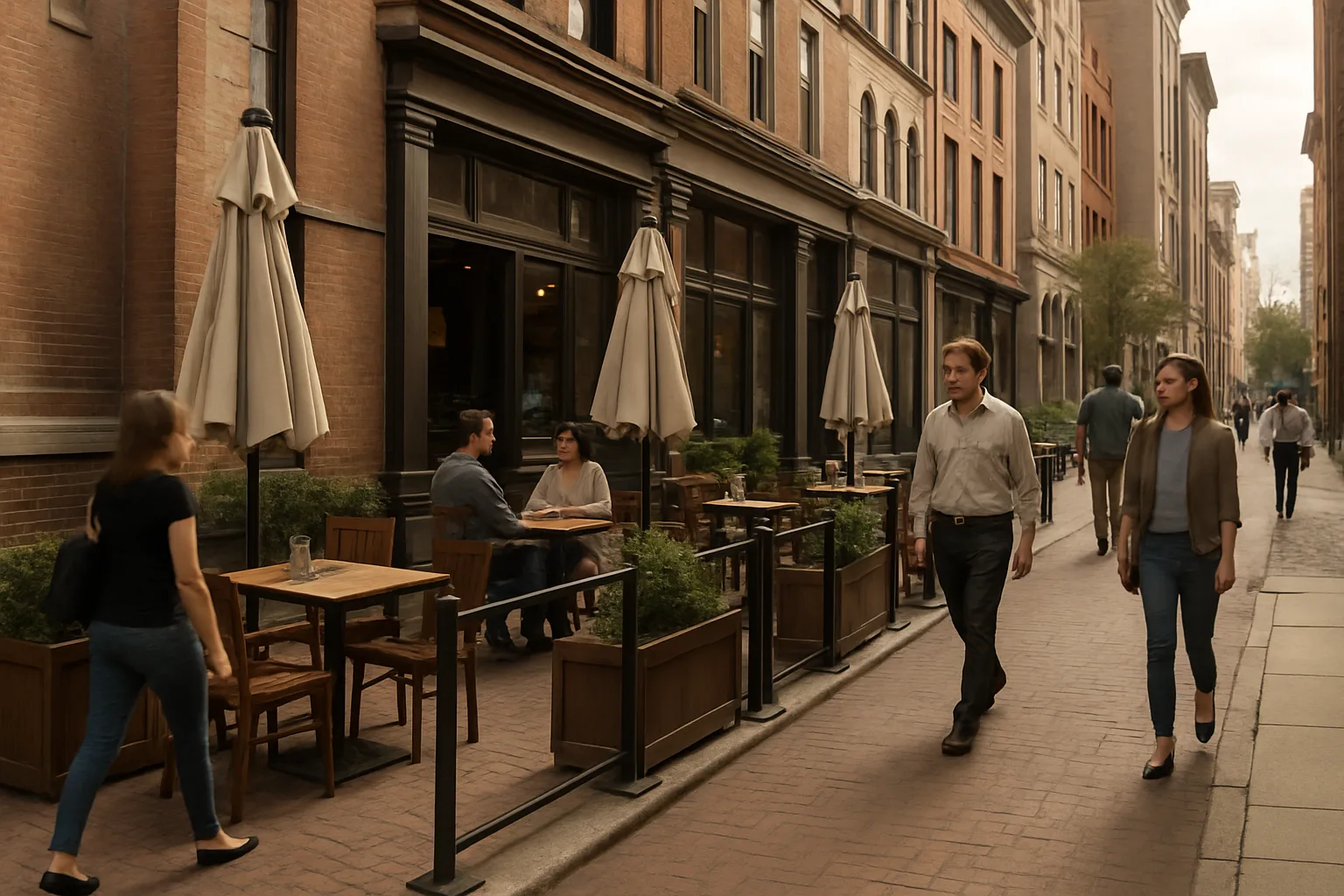
A crowded restaurant patio can change the way people move along a Philadelphia sidewalk. Tables, chairs, planters, heaters, umbrellas, barricades, and waiting lines may narrow the normal walking area or redirect pedestrians around the outdoor dining space.
After an incident, a Philadelphia personal injury lawyer may examine more than the point where a person fell or was struck. The business operating the space, the property owner, a contractor, or another party may have relevant information about the layout and maintenance of the route.
Could a Philadelphia Restaurant Patio or Sidewalk Café Create a Pedestrian Hazard? In Philadelphia, PA, it may, depending on the condition of the route, the placement of equipment, available warnings, lighting, crowd conditions, and who controlled the area. This article explains what an injured pedestrian should photograph and report, how responsibility may be evaluated, and why prompt documentation can matter. Eric A. Shore can serve as a knowledgeable resource for people evaluating their legal options after a pedestrian injury.
How Can a Philadelphia Sidewalk Café Create a Pedestrian Hazard?
Outdoor dining does not automatically establish legal responsibility. The important question is often whether the route was reasonably safe under the circumstances and whether the party controlling the space knew or should have known about a dangerous condition. Pennsylvania premises-liability analysis can depend on control, notice, foreseeability, and the facts surrounding the incident.
Objects that can change a pedestrian route
Potentially important conditions may include:
- Chairs or tables extending beyond the designated patio boundary
- Heaters, planters, umbrellas, or service stations placed near the walking path
- Barricades that narrow the sidewalk without a clear alternative route
- Cords, mats, or stabilizing equipment crossing a pedestrian path
- Queues or diners blocking the remaining passage
- Equipment that obstructs a curb ramp, crossing approach, or sightline
A photograph should show the entire area, not just one chair or object. Wide images can help show how a person approached the location, where the sidewalk narrowed, and whether another reasonably visible route existed. Close-up images may document uneven surfaces, protruding equipment, loose cords, or the absence of warnings.
Who controlled the space?
The restaurant may have operated the patio, while a landlord, property manager, contractor, or public entity controlled another part of the sidewalk. Document the storefront, patio boundary, outdoor furniture, menus or blank-facing permits if present, and any business identifiers without altering the scene. If possible, ask for the manager on duty and record the restaurant’s legal or commonly used business name. These details can help address who controls a Philadelphia sidewalk accident claim.
What Evidence Should an Injured Pedestrian Preserve in Philadelphia?
Evidence can change quickly. Furniture may be moved, umbrellas may be closed, heaters may be removed, and a crowd may disperse. In Philadelphia, PA, a careful record of the scene may help an attorney assess whether the business, property owner, or another party had notice of the condition and whether the route was adequately managed.
Photograph the route, not only the injury site
If it is reasonably safe and does not interfere with emergency care, photographs and video may show:
- The pedestrian’s approach from several directions
- The full width of the available walkway
- The location of chairs, tables, planters, heaters, umbrellas, barricades, and service areas
- Any detour, bottleneck, queue, or competing direction of travel
- Lighting, shadows, glare, weather, and nighttime visibility
- Whether diners, pedestrians, or vehicles blocked a clear view
- The nearest usable crossing or curb ramp if the normal route was obstructed
For an accessible-route concern, document the blocked ramp, the distance to the nearest usable alternative, the objects causing the blockage, and the route a pedestrian was forced to take. A Philadelphia blocked curb ramp injury claim may involve more than the ramp itself; the surrounding route and available alternatives can also matter.
Report the condition and identify witnesses
Depending on the circumstances, an injured person may report the incident to the restaurant manager, property manager, or appropriate emergency service. Note the date and approximate time, the name or description of the person receiving the report, and whether an incident report was created. Witness names and contact information can be valuable, especially when the layout or crowd conditions later change.
Avoid discarding shoes, clothing, mobility equipment, or other items involved in the incident. Medical records and photographs of visible injuries may also help document what happened, although they do not by themselves establish legal liability. For additional general guidance, review what to do immediately after a Philadelphia pedestrian accident.
How Are Detours, Lighting, and Shared Fault Evaluated?
A sidewalk café injury may involve a complicated sequence rather than one isolated defect. A pedestrian might encounter a narrowed route, move around a planter, lose sight of approaching traffic beneath an umbrella, and then enter a poorly lit area. The evaluation may consider the entire setting, including whether the business offered a clear and reasonably safe path.
Document the full pedestrian detour
Photograph from the direction the injured person was traveling and from the opposite direction. Include the approach, the obstruction, the route around it, and what a pedestrian could see at eye level. The same approach used for Philadelphia pedestrian detour evidence can help show whether a route was understandable or confusing.
Record whether signs, barricades, patio edges, or staff instructions directed people somewhere specific. Also note whether the detour led toward traffic, uneven pavement, a curb, a driveway, or a congested entrance. Do not move objects to recreate the scene; instead, describe what was present and preserve original photographs when possible.
Consider visibility and comparative fault
Lighting and sightlines may be important. Take photographs in similar lighting conditions when possible, including shadows cast by umbrellas or buildings, glare from fixtures or vehicles, and whether a patio structure blocked a pedestrian’s view of the sidewalk or roadway. Philadelphia crosswalk visibility and lighting evidence may be relevant when a redirected route brings a pedestrian near a crossing or vehicle path.
The business or another party may argue that the pedestrian was partly responsible—for example, by looking away, walking outside the suggested route, or failing to notice an object. Pennsylvania comparative-fault principles are fact-specific, and an allegation of partial responsibility does not eliminate the value of evidence about the obstruction, warnings, visibility, crowd density, and available alternatives. More information about Pennsylvania pedestrian accident comparative fault rules may help explain that issue.
Frequently Asked Questions
Does a restaurant automatically pay if a pedestrian trips near its patio?
No. A restaurant’s presence near an incident does not automatically establish liability. The analysis may involve who controlled the space, whether a dangerous condition existed, whether the business knew or should have known about it, and whether the condition caused the injury. The property owner, manager, contractor, or another entity may also have responsibilities. The facts and applicable Pennsylvania law should be reviewed before drawing conclusions.
What if the patio equipment was on a Philadelphia sidewalk rather than inside the restaurant’s property?
Sidewalk location alone may not resolve responsibility. A restaurant may control outdoor dining equipment, while another party may own or maintain the underlying property. Municipal rules, authorizations, maintenance duties, and the specific arrangement can matter. Photographs of the patio boundary, furniture placement, storefront, and surrounding sidewalk may help identify the parties involved. An attorney can evaluate control and potential claims under the circumstances.
Should I photograph the patio after the restaurant rearranges it?
Photographs taken after a change may still provide useful information, but they may not show the original condition. Preserve any earlier photographs or videos, note when each image was taken, and write down what changed. Witness accounts, business records, surveillance footage, and incident reports may also help establish the prior layout. Avoid confrontation or attempting to move equipment yourself while documenting the scene.
Can a pedestrian claim exist if there was no warning sign?
The absence of a warning may be relevant, but it is not automatically decisive. A claim may depend on the condition’s visibility, the available walking space, lighting, crowd conditions, the nature of the obstruction, and whether a safer route was provided. Other evidence can include photographs, witness information, medical documentation, and reports made to the business. Pennsylvania law may apply differently depending on the facts and parties involved.
How Eric A. Shore Can Help
Eric A. Shore is dedicated to helping injured pedestrians understand how evidence, property control, and Pennsylvania premises-liability principles may affect a potential claim. The firm can evaluate photographs, witness information, medical documentation, business identity, and the relationship among the restaurant, landlord, property manager, and other parties.
A careful review may also consider whether outdoor dining equipment narrowed or redirected the route, whether lighting or crowd conditions affected visibility, and whether comparative-fault arguments could arise. Eric A. Shore is committed to fighting for clients’ rights while providing a realistic assessment of available options. Contact the firm for a free consultation or case evaluation.
The information in this article is for educational purposes only and does not constitute legal advice. Contact a qualified attorney licensed in Philadelphia, PA for advice specific to your situation.